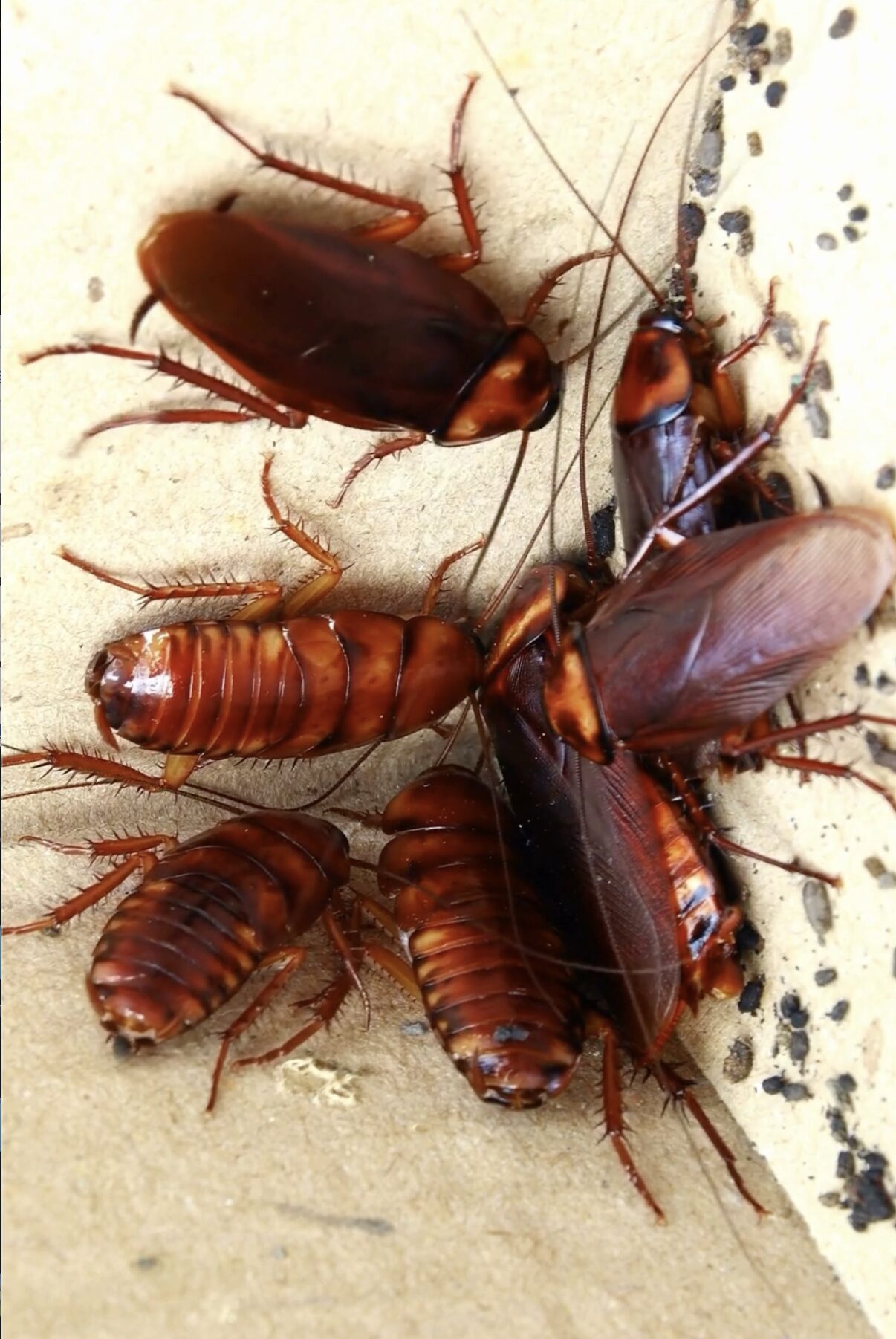
When winter temperatures plummet in Canadian cities like Toronto and Vancouver, urban homes, multi-family buildings, and high-rise apartments experience a massive surge in cockroach infestations. This seasonal outbreak is driven entirely by thermal biology. If a product you already placed is being ignored, our guide to why roach bait stops working covers the five usual causes and the fix.
The Thermal Seeking Drive
Cockroaches are cold-blooded insects that require warm environments to survive and incubate their egg capsules. During the freezing Canadian winter, outdoor micro-habitats become completely uninhabitable. Pests migrate deeper into the warm core of residential buildings, nesting around active heating systems, boiler shafts, radiator pipes, and steam lines.
Why Steam Radiators and Utility Penetrations Are Highways
High-rise radiator steam pipe penetrations provide perfect crawling corridors. As steam pipes heat the floor junctions, they create micro-gaps due to thermal expansion. Cockroaches climb these vertical highways from basement utility shafts directly into individual kitchens and bathrooms, seeking the warmth of residential heating coils.
Establishing a Durable Warm-Climate Barrier
To eliminate winter infestations safely without enqueuing messy, discolored gel baits or smelly chemical sprays in your heated home, follow this surgical guide:
- Target Radiator pipe penetrations: Apply high-temperature sealant around radiator floor flanges.
- Deploy High-Heat Stable Sachets: Place RoachBuster dry active sachets directly behind baseboard registers, next to hot-water radiator lines, and under bathroom vanity gaps.
- Thermal Stability: Our premium dry active powder never melts, runs, or releases foul chemical fumes under radiator temperatures, providing a highly-converting, odorless barrier all winter long.
The mechanism: thermal refuge, not migration
Cockroaches do not migrate in the way birds do. What happens in a Canadian autumn is simpler and more mechanical. German cockroaches cannot survive sustained sub-zero exposure, so any population living in unheated or semi-heated space, garages, parkades, service tunnels, wall cavities on exterior walls, is squeezed inward as those spaces cool. They move along the temperature gradient toward heat, and in a Canadian building the heat is concentrated in exactly the places that also offer water and shelter: boiler rooms, laundry rooms, plumbing risers, radiator chases and the wall cavities behind kitchens.
This is why the same building can look clean in September and busy in December without any change in occupant behaviour. Nothing new arrived. The existing population simply concentrated into the heated core, which happens to be where people live.
The cold-weather concentration effect
| Month | Outdoor and unheated space | Heated core |
|---|---|---|
| September | Population dispersed, low indoor visibility | Baseline activity |
| October | Cooling begins, movement inward starts | Rising activity at risers and utility rooms |
| November to January | Effectively uninhabitable | Peak concentration and peak sightings |
| February to March | Still cold, population fully indoors | High but no longer rising |
| April to May | Warming, population disperses outward again | Falling sightings, population not eliminated |
| June to August | Recolonised by dispersal | Low visibility, ideal window for sealing |
The single most useful implication of that table is timing. A full treatment round placed in late September or early October intercepts the population as it concentrates, when it is moving through a small number of predictable corridors. The same round placed in January has to work against a population that has already settled and bred in the heated core.
Where to place in a cold-climate building
- Plumbing riser penetrations under kitchen sinks and behind bathroom vanities, on every floor that has activity.
- Radiator or baseboard heater cavities, adjacent to but not touching the element.
- Boiler room and mechanical room floor corners.
- Laundry room appliance bases and wall penetrations.
- Garage and parkade thresholds where they meet heated space.
- Service tunnel and crawl space access points.
- Suite entry thresholds, since corridors are the main horizontal route.
For a single dwelling, eight to fourteen placements covers this. For a multi-unit building, treat the whole heated core plus every suite on an affected stack in one pass, which is set out in our multi-unit plan. Placement counts per room are in the coverage guide.
Why Toronto and Vancouver need different emphasis
Both cities see the same inward concentration, but the limiting factor differs. In Toronto and other continental-cold cities, heat is the scarce resource, so the population concentrates tightly around heat sources and the treatment follows the heating system. In Vancouver and other coastal-damp cities, heat is milder but water is everywhere, so the population stays more dispersed and the treatment follows the plumbing and the damp shared rooms. Practically: in a Toronto building start at the radiators and risers, in a Vancouver building start at the laundry room, the parkade and the wet walls.
What to avoid in winter
- Waiting for a spring treatment. Winter is when the population is concentrated and easiest to reach. Spring lets it disperse.
- Spraying wall voids and riser gaps. Repellent products scatter a concentrated population deeper into the structure, which is the mechanism explained in our method comparison.
- Treating one suite in a heated stack. The core repopulates it. Whole-stack treatment is the only version that holds.
- Sealing before treating. Sealing a warm void with a live population inside forces it into occupied space.
- Stopping at the first quiet week. Egg cases hatch on their own schedule; the second wave lands around weeks four to six, as described in our progress guide.
Questions cold-climate residents ask
Will a hard freeze kill them?
Only in genuinely unheated space with sustained sub-zero temperatures. It has no effect on the population living in the heated core, which is the one causing your sightings.
Why is my brand new building affected?
New buildings have the same continuous services and often tighter, warmer envelopes. Construction-phase introductions and deliveries do the rest.
Should I run heating differently?
No. Trying to cool a void to control insects is impractical and risks condensation and freezing damage. Remove water and food access instead, and treat the corridors.
When is the best month to start?
Late September to mid-October in most Canadian cities. Second best is right now, whenever now is.
The short version
Canadian winter does not create infestations, it concentrates them into the heated core of the building. Place in late September or early October, follow the heating system in continental-cold cities and the plumbing in coastal-damp ones, treat the whole heated core, and never spray a riser gap. One box covers a single dwelling for a full heating season, and a five-box case covers a small stack, with a 30-day money-back guarantee.
Always use any bait product as directed on its label, and keep placements out of reach of children and pets. This is general operational guidance, not legal, veterinary or regulatory advice.
Secure Your Canadian Winter Defense Symmetrically
Intercept hot steam pipe migrations. Protect your apartment space with RoachBuster’s high-heat stable dry sachets.
Free shipping, secure Stripe checkout, and a 30-day money-back guarantee.
Next steps: how many sachets a full round actually takes, how to tell whether a treatment is working, and how powder, sprays and foggers differ.
Treating an active infestation? One box treats one room, once. The 3-Box Kit — $120 (150 sachets, save $59.97) covers a full apartment through the complete 3-4 week treatment cycle; a $47 single box (50 sachets) covers a single-room problem. Ships within 1 business day, typical delivery 6-10 days · Free tracked shipping · 30-day money-back guarantee.
Choose your kit →