
Dorm Room Roaches: Shared Kitchens and Move-In Week
Student housing concentrates every risk factor for roaches. What to check on move-in, how to report properly, ho...

Treating one flat in a block with a shared void is the most expensive mistake in residential pest control, because it looks like it worked for about six weeks. Multi-unit buildings need a different plan from a single house: a survey that crosses unit boundaries, a treatment window that covers every unit at once, and a maintenance layer at the penetrations. This is how to scope, quantify and sequence that work as a landlord, managing agent or block committee. For rented and multi-unit settings, see whether roaches are the landlord or tenant responsibility alongside this plan.
A block shares more than walls. Soil stacks, riser cupboards, ceiling voids, common basements, refuse rooms and cable runs all connect units that appear separate. When one flat is treated in isolation the population does not disappear, it moves along the shared route into a neighbouring unit, breeds there undisturbed, and returns when your placements expire.
That is why the reporting pattern in blocks is so recognisable: a complaint from flat 3, a treatment, quiet for a month, then a complaint from flat 5, then flat 3 again. Each individual treatment appeared to work. The building was never treated at all.
Work in placements per unit, plus placements per shared space, plus a top-up allowance. The per-unit figures are the same as any home; the difference is that you multiply them and add a communal layer.
| Scope | First-round placements | Notes |
|---|---|---|
| Studio or one-bed unit | 18–26 | Kitchen, bathroom, appliance voids |
| Two-bed unit | 30–42 | Second bathroom and wardrobe bases |
| Three-bed unit | 45–65 | Add utility and additional bedrooms |
| Riser or service cupboard | 2–4 per floor | At every pipe and cable penetration |
| Refuse room | 4–8 | Behind and beneath bin stands, wall gaps |
| Basement or plant room | 6–12 | Around drainage runs and warm equipment |
| Communal kitchen or laundry | 6–10 | Appliance voids and plinths |
| Top-up allowance | 35% of the above | Diarise for three weeks after round one |
For a small block of six one-bed flats with two risers and a bin store, that is roughly 130 to 180 placements for round one and another 45 to 65 for the top-up. The per-unit method behind those numbers is set out in the room-by-room coverage math, which is worth reading before you order, because running out mid-round in a block is the fastest way to lose the whole treatment window.
Wider reading: the complete Roach Control Guide maps every article on the site by the question you are trying to answer — first 48 hours, identification, method, room by room, comparisons, safety, rentals and local conditions.
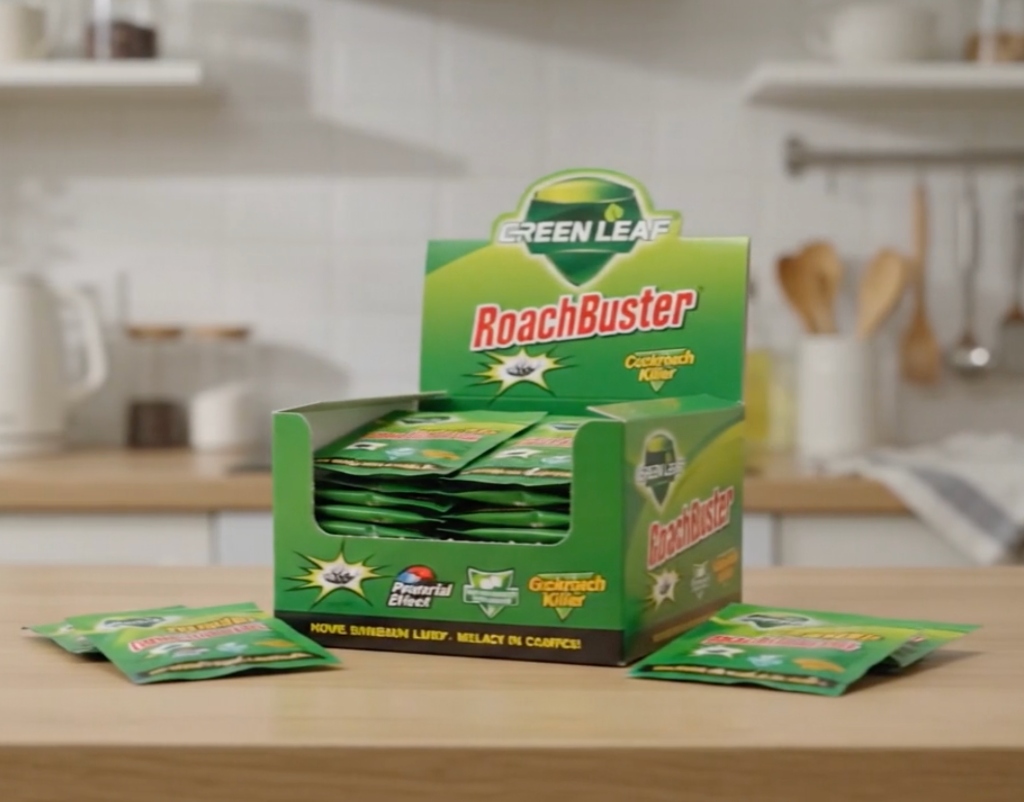
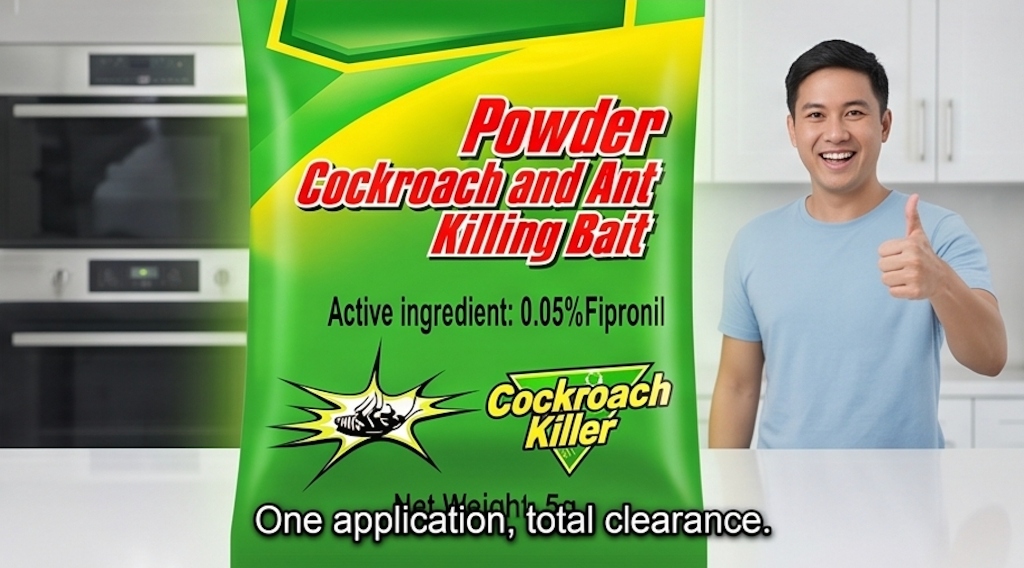
Using RoachBuster for this? Building rounds are where bulk quantities stop being an upsell and start being the correct order size. A single box is $47 with 50 odorless, stainless dry powder sachets, free shipping, and a 30-day money-back guarantee. See the box and bundles.
Always use as directed on the product label, and keep placements away from children and pets.
The single most important scheduling principle is that every connected unit should be treated inside the same short window. A week is workable. A month is not, because the untreated units act as a reservoir.
After a successful building round, the recurring cost is small and the failure mode is predictable. Keep permanent placements at the penetrations between units and shared voids, inspect the refuse room monthly, and keep a trap in each riser cupboard as an early-warning system. A single trap catch in a riser is far cheaper to act on than three tenant complaints.
Documentation protects everyone. Keep a dated log of reports received, inspections carried out, placements made by location, repairs completed, and tenant communications sent. In a dispute, a treatment log with dates is worth considerably more than a recollection of having dealt with it.
Responsibility for pest control in rented property varies by jurisdiction and by the terms of the individual agreement, and it often turns on whether the cause was structural, communal, or attributable to how a unit was kept. This is general operational guidance rather than legal advice, and the position where you are may differ. The overview of landlord and pest responsibilities covers the usual shape of these situations, and the condo board strategies guide looks at the committee-level version.
In a connected building, yes. Untreated units are where the population survives the round. At minimum, trap them and treat any that show catches.
Access rights depend on your agreements and local rules. In practice, explaining that nothing is sprayed and nobody needs to leave the property resolves most objections.
Operationally it is simpler: nothing airborne, no vacating, no surface residue to clean, and placements lift out whole at the end of a tenancy, which reduces arguments about condition.
You cannot treat what you do not control, so the answer is exclusion plus permanent placements at the boundary penetrations, and a monitoring trap so you know early.
For suspected drainage defects, inaccessible voids, food-business premises, or any block where a properly executed round has not held. The cost comparison sets out where that crossover sits.
Survey across unit boundaries before you buy, quantify per unit plus a communal layer plus a 35 per cent top-up, treat every connected unit inside one week, fix water and access defects first, and then keep permanent placements and monitoring traps at the penetrations. Log everything. Always use products as directed on the label, and keep placements away from children and pets.
Treating an active infestation? One box treats one room, once. The 3-Box Kit — $120 (150 sachets, save $59.97) covers a full apartment through the complete 3-4 week treatment cycle; a $47 single box (50 sachets) covers a single-room problem. Ships within 1 business day, typical delivery 6-10 days · Free tracked shipping · 30-day money-back guarantee.
Choose your kit →
Student housing concentrates every risk factor for roaches. What to check on move-in, how to report properly, ho...
How infestations travel on moving day, how to inspect a new home before you sign, packing rules for cardboard an...

A practical cost comparison of sprays, DIY baiting, and professional service: indicative price ranges, hidden co...
Your anonymous feedback helps us improve our educational home defense resources.