
Roach Control for Multi-Unit Buildings: A Landlord Treatment Plan
Treating one flat in a connected block fails predictably. How to survey across unit boundaries, quantify a build...

For landlords and property managers, a cockroach outbreak is an operational and financial liability long before it becomes a legal one. Most residential tenancy frameworks require a landlord to maintain a habitable dwelling, and pest infestation in a multi-unit building is generally treated as falling within that obligation. The practical exposure is rarely the treatment cost. It is rent withholding, repair-and-deduct claims, tribunal or court time, vacancy, and turnover. If the property is rented, our guide to whether roaches are the landlord or the tenant responsibility covers who owes what — and what residents can do while they wait.
This is a practical operational guide rather than legal advice. Tenancy law varies substantially between jurisdictions and specific outcomes turn on local statutes and the facts of each case, so verify your obligations locally and take professional advice where the stakes justify it.
The most expensive mistake in rental pest management is treating the unit that complained. German cockroaches move between units through shared wall voids, ceiling cavities, plumbing risers, and service ducts. A population in unit 3 is very often a population in units 2, 3 and 4 with only one tenant reporting it, because the others have not yet seen enough to complain.
Treating only the reporting unit produces a predictable cycle: the tenant is satisfied for a few weeks, the untreated adjacent population re-seeds the unit, and you receive a second complaint that now reads as a failure to act. Two or three rounds of this is how a routine maintenance item becomes a dispute. The dynamics are covered in preventing migration through shared walls.
The second structural mistake is the default baseboard spray. A repellent product applied along skirting does not eliminate a colony living inside a cabinet carcass or a wall void; it makes the treated surface unattractive and disperses the population deeper into the structure and sideways into adjacent units. The tenant sees a technician attend, notices fewer insects for a fortnight, and then reports a worse problem across more rooms.
From a liability standpoint this is the worst of both worlds: you have incurred cost, created a documented service history that shows repeated ineffective attendance, and made the underlying infestation harder and more expensive to resolve. The mechanism is explained in why sprays make roaches scatter and the service-model version of the problem in why a monthly spray is not working.
The approach that reduces both cost and exposure is to treat the building as one system, on a documented schedule, using non-repellent methods that do not require tenants to vacate.
This is not an aesthetic point in a rental context. Three specific costs attach to wet, scented products in occupied units.
Dry sachet placement inside enclosed cavities avoids all three: nothing to smell, nothing to run onto a finish, and no requirement for the tenant to leave. It also survives the three to six week window without reapplication, which reduces the number of access appointments you need to arrange, and access is usually the hardest part of managing a block.
In most disputes the deciding factor is not whether the infestation existed but whether the landlord responded reasonably and promptly. That is a documentation question.
A tidy file showing prompt acknowledgement, block-level inspection, documented treatment, structural repairs, and declining monitor counts is a materially different position from a stack of three identical spray invoices.
Broadly, and subject to local law, obligations tend to divide along these lines. Verify against your own jurisdiction, because the details differ significantly and some places allocate responsibility very differently.
| Typically the landlord | Typically the tenant | Commonly contested |
|---|---|---|
| Building-wide or multi-unit infestations | Sanitation inside the unit | Whether the source was the building or the unit |
| Structural defects: unsealed risers, failed seals, gaps | Reporting promptly | Delay between first sighting and first report |
| Plumbing leaks and drainage faults | Providing reasonable access | Repeatedly refused access appointments |
| Common areas: bins, laundry, basements, corridors | Not obstructing treatment | Infestations traced to a tenant’s own items |
| Pre-existing infestation at move-in | Following written treatment instructions | Whether an infestation was pre-existing |
Two practical notes. First, in many jurisdictions a tenant is not permitted to withhold rent unilaterally, but a landlord who has not responded reasonably is in a weak position regardless of the procedural rules. Second, tenant-caused infestations are hard to establish and rarely worth pursuing unless the evidence is unambiguous; resolving the problem quickly is almost always cheaper than allocating blame for it.
The other cost centre is void periods. An infestation discovered during a viewing loses the letting, and an infestation discovered after move-in produces an early termination request. Treating vacant units at turnover is far cheaper and faster than treating occupied ones, because access is unlimited, cabinets are empty, and there is nobody to inconvenience. Our guide to fast lease-prep turnovers covers the sequence, and the moving checklist is worth issuing to incoming tenants.
Not universally, but in multi-unit residential property the obligation to maintain a habitable dwelling commonly places responsibility with the landlord, particularly where the infestation affects more than one unit or arises from a structural or plumbing defect. Local law governs, and allocation differs between jurisdictions.
Rules differ widely. Some jurisdictions permit repair-and-deduct or rent escrow subject to strict procedure; others do not permit withholding at all. Either way, the landlord’s documented response is usually the decisive factor if the matter is adjudicated.
Many frameworks require action within a reasonable period, and some specify a number of days for habitability issues. As an operational rule, acknowledge in writing within one business day and inspect within a few days, because delay is the most commonly cited failing.
Treat the reporting unit plus all directly adjacent units, including above and below, and monitor the wider cluster. Treating only the reporting unit is the single most common reason a building develops a recurring problem.
Sometimes, where local law allows it and the evidence clearly attributes the infestation to the tenant. In practice this is difficult to establish in a multi-unit building and frequently disputed, so it is usually a poor use of management time.
The operational summary is short. Treat clusters of units rather than individual complaints, use non-repellent baiting that does not require tenants to vacate or leave marks on finishes, repair the structural and plumbing faults that make reinfestation inevitable, and keep a written record of every report, attendance, and monitor count. That combination reduces both the recurrence rate and the exposure.
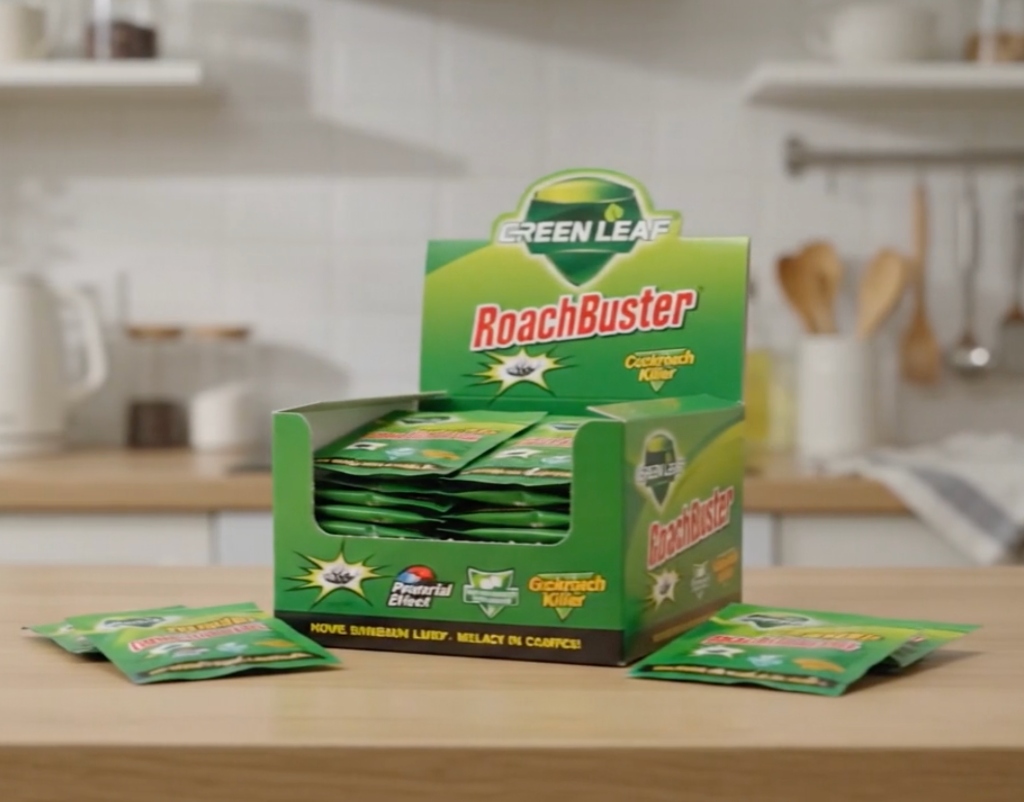
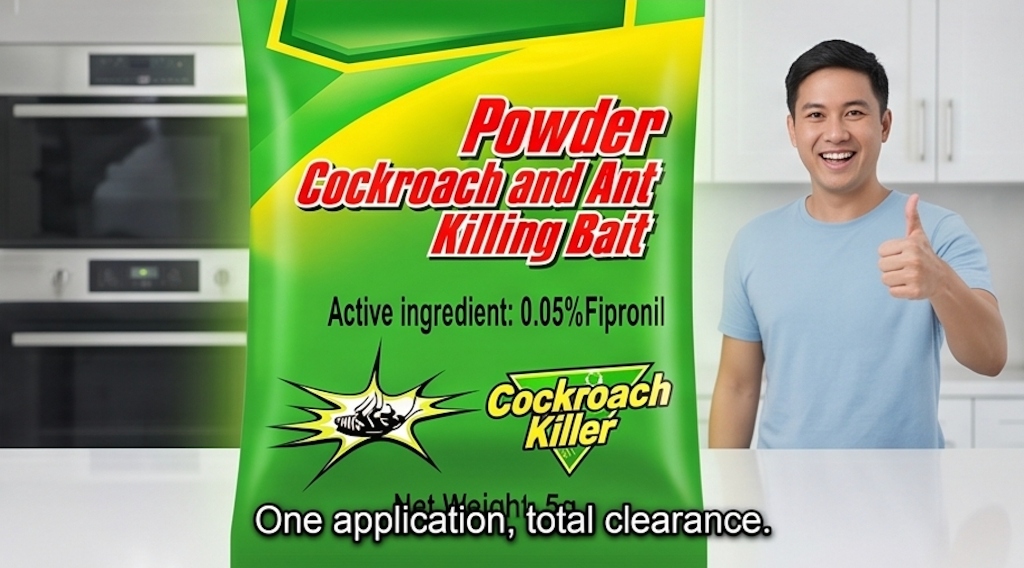
For occupied-unit work, GreenLeaf RoachBuster fits the constraints well: 50 odorless, stainless dry powder sachets per box for placement inside cabinet, sink and appliance cavities, with no odour complaints, no staining at make-good, and no requirement for tenants to leave the property. Always use as directed on the product label, keep placements away from children and pets, and inform tenants in writing where placements have been made.
Next steps: the building-wide plan for multi-unit properties, why roaches come back after treatment, and how many sachets a full round actually takes.
Treating an active infestation? One box treats one room, once. The 3-Box Kit — $120 (150 sachets, save $59.97) covers a full apartment through the complete 3-4 week treatment cycle; a $47 single box (50 sachets) covers a single-room problem. Ships within 1 business day, typical delivery 6-10 days · Free tracked shipping · 30-day money-back guarantee.
Choose your kit →
Treating one flat in a connected block fails predictably. How to survey across unit boundaries, quantify a build...
Student housing concentrates every risk factor for roaches. What to check on move-in, how to report properly, ho...
How infestations travel on moving day, how to inspect a new home before you sign, packing rules for cardboard an...
Your anonymous feedback helps us improve our educational home defense resources.