
Roach Control for Multi-Unit Buildings: A Landlord Treatment Plan
Treating one flat in a connected block fails predictably. How to survey across unit boundaries, quantify a build...
Most people who develop a roach problem in a new home did not inherit it from the building. They carried it in, usually inside three things: free cardboard boxes, a secondhand item bought in the weeks before the move, and small kitchen appliances that were never opened up and cleaned. A move is the single easiest moment to transport a population, and also the single easiest moment to stop one. Pair this with our prevention plan that sticks so a cleared home stays cleared.
This is a practical checklist for moving into a new place without importing an infestation, and for leaving an infested property without taking it with you.
Three things happen at once. You acquire large amounts of corrugated cardboard, which is arguably the best harbourage material available: dark, fibrous, warm, and full of starch-based glue. You pack items from dark, undisturbed places you never normally look inside. And you transport all of it into a home where you will not unpack everything for weeks, giving anything that travelled with you an undisturbed month to establish and lay egg cases.
The critical detail is that you do not need to move live insects for this to happen. A single egg case tucked into a box flute will hatch on its own schedule in your new kitchen, which is why problems often appear three or four weeks after a move rather than immediately. Our guide to cockroach egg cases covers what they look like and where they hide.
Twenty minutes with a phone torch before your possessions arrive is the highest-value inspection you will ever do, and if you are renting it is far easier to raise before you sign than afterwards.
Evidence in an empty property means an existing population, and it is a landlord conversation before move-in rather than your problem afterwards. If you find nothing but the building is a multi-unit block, plan for migration pressure regardless; that is the situation described in preventing migration through shared walls.
Free boxes from behind a supermarket, a restaurant, or a liquor store are the most common way a population changes address. Those boxes have been stacked in warm storerooms and loading bays, which are prime harbourage. If you use them at all, use them for garage and garden items only, break them down and remove them from the property within a day of unpacking, and never store them flat under a bed or in a cupboard.
If you pack one room carefully, make it this one. Discard opened dry goods rather than moving them, particularly anything in cardboard or paper packaging. Transfer anything you keep into sealed rigid containers. Wipe down every jar, tin, and bottle before it goes into a crate, because pheromone-marked droppings on the outside of a container are an attractant in themselves.
Toasters, microwaves, kettles, coffee machines, and air fryers all have warm internal cavities. Empty the crumb tray, shake the unit out over a bin outside, and vacuum the vents with a crevice tool. Where a base panel is accessible with a screwdriver, check inside it. This is where established populations survive a move intact, and it is covered further in getting rid of roaches in kitchen appliances.
Wash and dry all fabrics on the hottest setting the material allows and pack them into sealed bags straight from the dryer. For electronics, check inside the housing gaps of anything with a fan, a set-top box, a router, or a games console, all of which are warm and dark. Do not pack electronics loosely in used cardboard.
Furniture, appliances, and mattresses acquired secondhand deserve a hard rule: nothing enters the home unchecked. Inspect on the pavement, in the garage, or on a balcony, not in the kitchen.
The same discipline applies to items coming out of a storage unit, which are frequently warm, dark, and adjacent to other people’s belongings for months at a time.
Leaving a property with an active population requires the reverse process, and the temptation to skip it is strong because you are already exhausted.
Whatever you do, assume something may have travelled with you, and set up so that if it did, it walks into bait rather than into an unmonitored cupboard.
Easily. A journey of a few hours is trivial for them, and an egg case needs no food or water at all. Corrugated cardboard provides shelter throughout the trip, which is why the boxes matter more than the distance.
Preventive placement in an empty kitchen is quick, cheap, and far easier than treating around a full one. It is particularly worthwhile in a multi-unit building or if the previous occupant left recently, since departing neighbours often push populations into adjacent units.
Inspect the base, seams, welts, and any hollow frame sections in good light before it goes indoors, then vacuum it thoroughly outside. If anything about the source concerns you, decline the item; a free sofa is not worth a two-month treatment.
Live insects usually reveal themselves within days. A transported egg case typically produces its first visible nymphs around three to four weeks after the move, which is why the four-week monitoring window matters.
Moving is the rare pest situation where prevention is almost entirely under your control. Skip the free cardboard, open up your appliances, quarantine anything secondhand, and monitor the new kitchen for a month. That sequence prevents most post-move infestations outright.
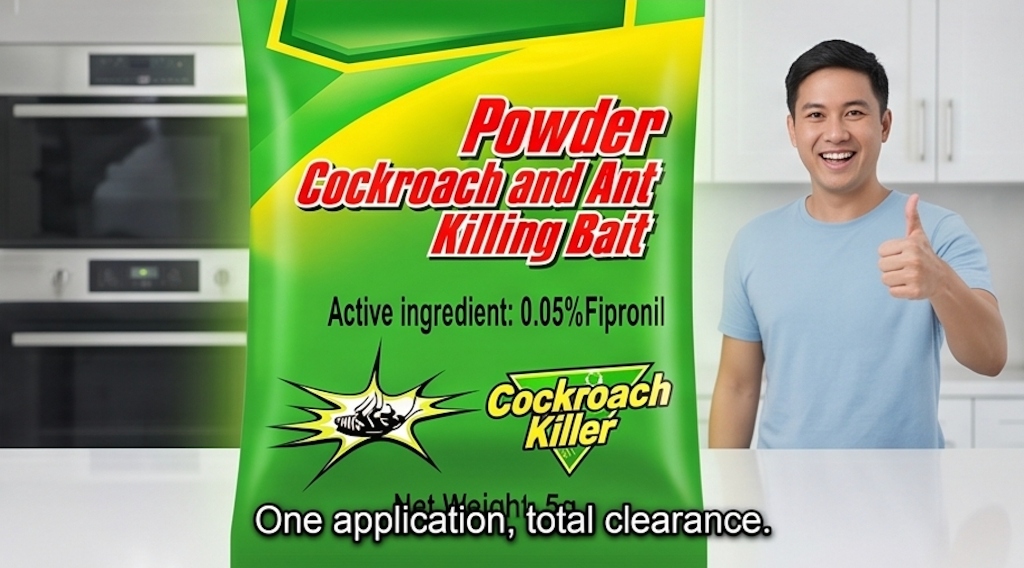
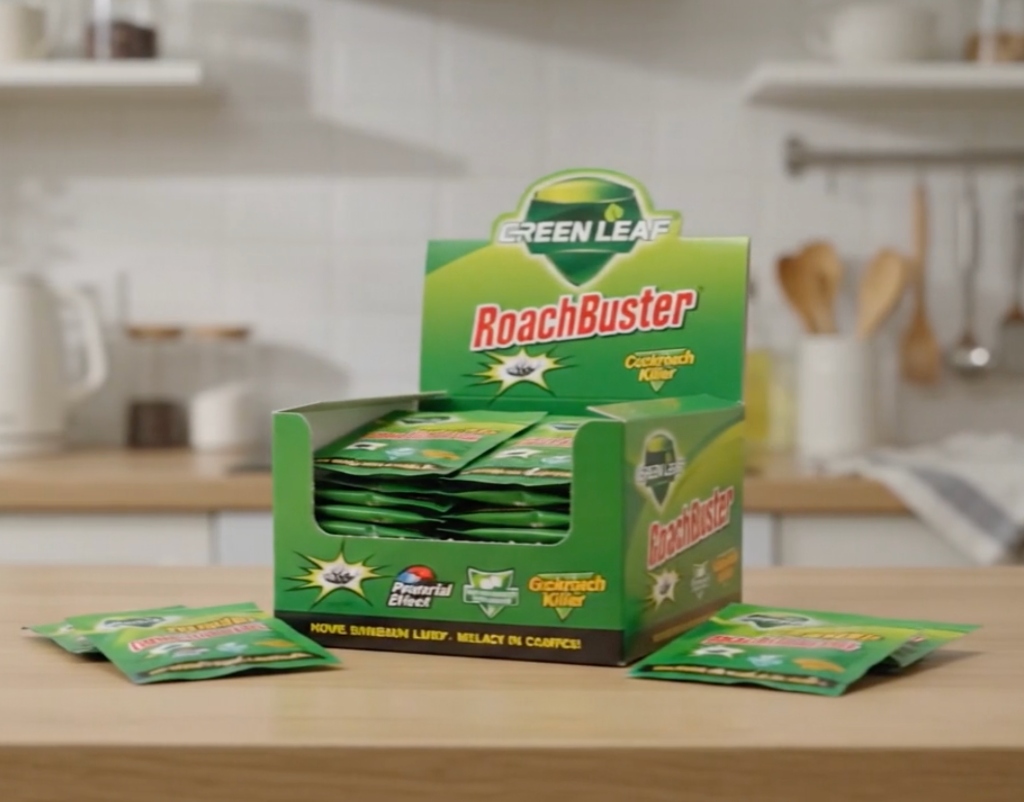
For the preventive placements, GreenLeaf RoachBuster gives you 50 odorless, stainless dry powder sachets per box, which is enough to cover an empty kitchen and bathroom on day one and still keep maintenance placements running through the first month. Always use as directed on the product label, and keep placements away from children and pets.
Moving into shared student accommodation has its own set of rules. See dorm room roach control for the move-in week checklist.
Wider reading: the complete Roach Control Guide maps every article on the site by the question you are trying to answer — first 48 hours, identification, method, room by room, comparisons, safety, rentals and local conditions.
Claim the 50-sachet GreenLeaf RoachBuster box today. Free shipping, secure Stripe checkout, a 30-day money-back guarantee, and targeted odorless dry powder sachets built for kitchens, cabinets, gaps and appliances.
Use only as directed on the product label. Keep away from children and pets.
Treating an active infestation? One box treats one room, once. The 3-Box Kit — $120 (150 sachets, save $59.97) covers a full apartment through the complete 3-4 week treatment cycle; a $47 single box (50 sachets) covers a single-room problem. Ships within 1 business day, typical delivery 6-10 days · Free tracked shipping · 30-day money-back guarantee.
Choose your kit →

Treating one flat in a connected block fails predictably. How to survey across unit boundaries, quantify a build...
Student housing concentrates every risk factor for roaches. What to check on move-in, how to report properly, ho...

A practical cost comparison of sprays, DIY baiting, and professional service: indicative price ranges, hidden co...
Your anonymous feedback helps us improve our educational home defense resources.