
Roach Control for Multi-Unit Buildings: A Landlord Treatment Plan
Treating one flat in a connected block fails predictably. How to survey across unit boundaries, quantify a build...
Student housing concentrates every risk factor for a cockroach problem into one building. Occupancy turns over completely each year, dozens of people carry cardboard and secondhand furniture in over a single weekend, kitchens are shared by people with no shared cleaning routine, and the rooms themselves are small, warm, and full of enclosed cavities. Add a maintenance system that responds on a ticket queue rather than immediately, and populations get a long head start. Finding the harborage is half the job — our guide to finding a roach nest in 48 hours shows exactly where to look first.
This guide covers what you can actually control in a dorm or shared student flat, what your institution is usually responsible for, and how to treat a single room without breaching your housing rules.
This comes first because it genuinely matters. Most universities and halls prohibit residents from applying pesticides in their rooms, and some prohibit any pest product at all, including traps, on the grounds that self-treatment interferes with the building-wide programme. Applying something yourself may also void the institution’s obligation to treat, which is not a trade you want to make.
Non-chemical measures, which is most of what follows, are almost never restricted and are also the measures that make the biggest difference in a shared building.
The single highest-risk window is the weekend everyone arrives. Cardboard boxes, secondhand furniture, and mini-fridges bought from a departing student all arrive at once, and a large share of the year’s introductions happen in three days.
Our full moving checklist goes into more detail on inspecting and packing, and it applies directly to a move into halls.
A study bedroom has fewer harbourage sites than a house, which makes a thorough check quick.
Small dark specks resembling coarse pepper in any of these locations are the evidence to photograph and report. Our guide to identifying droppings covers how to distinguish them from dust and coffee.
A shared kitchen is the one space where your own habits have limited effect, which is frustrating but worth understanding clearly. It is warm, used at all hours, cleaned by nobody in particular, and full of enclosed cavities behind communal appliances. Realistically you cannot control it, so the aim is to control the interface between it and your room.
The dynamics are very similar to an apartment block with shared walls, and the same containment logic applies; see preventing migration through shared walls.
If your agreement allows it, the approach for a study bedroom is straightforward, and it is the opposite of aggressive.
Expect the same pattern as anywhere else: activity may rise briefly, then fall through week two, then a wave of small nymphs around week three as existing egg capsules hatch. The stages are set out in our week-by-week timeline.
Two specific risks here. Leaving food in a room over a long vacation gives a population an undisturbed month with a food supply and nobody watching. And packing up an infested room into cardboard boxes is how a problem follows you to your next address or into your family home.
Practice varies by institution and jurisdiction, and it usually depends on whether the infestation is judged to originate from the building or from a resident. This is precisely why a dated written record of when you reported it matters. Report early, in writing, and keep copies.
No, for two separate reasons. Many housing agreements prohibit it, and aerosols disperse a population into wall voids and adjacent rooms rather than reducing it. If self-treatment is permitted, a non-repellent bait placed in enclosed cavities is both more effective and less likely to breach your agreement.
Focus on what is in your control: sealed food storage, nothing edible in your bedroom, no cardboard, and maintenance placements in your own room. Then use the official reporting channel for the shared space, because a documented ticket about the communal kitchen is more effective than an argument in it.
It is uncommon in a room with no food, and much more likely where snacks are kept near the bed or in a desk drawer. Undisturbed stored fabric is more attractive than bedding in daily use. Removing food from the room addresses most of it.
In student housing you will not eliminate the building’s problem yourself, and it is a mistake to try. What works is reporting properly and in writing, refusing cardboard and unchecked secondhand items, keeping every crumb of food out of your room and in sealed containers, and maintaining a small number of well-placed stations in the cavities where activity actually happens.
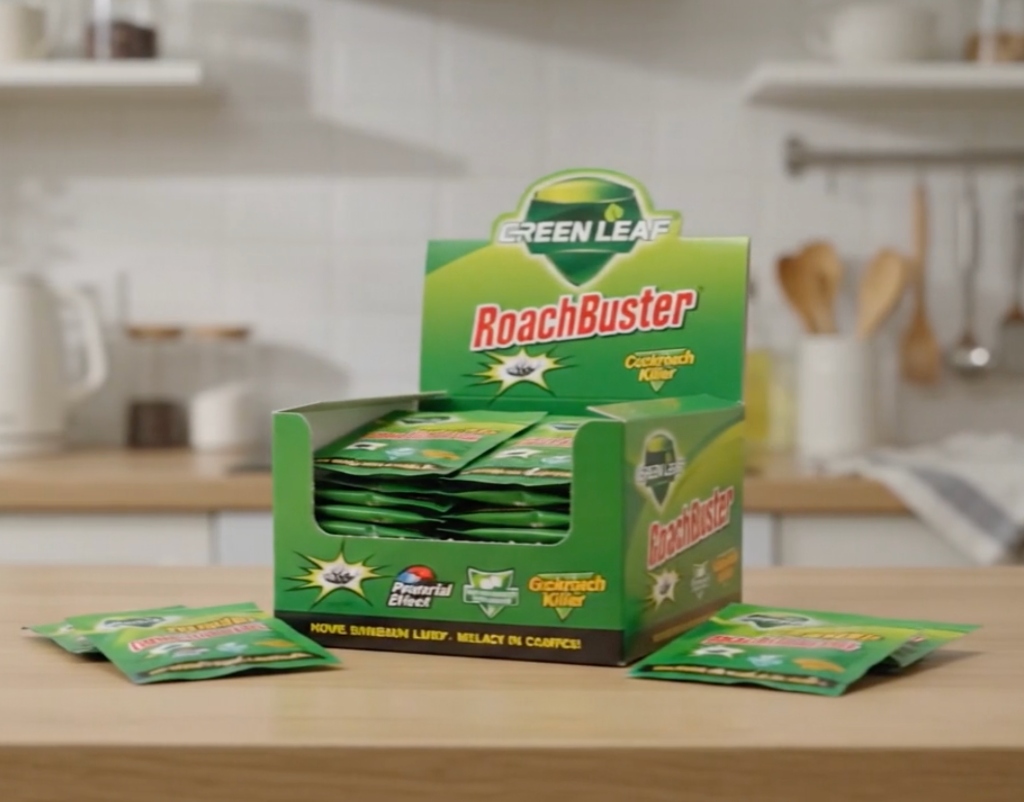
Where your agreement permits it, GreenLeaf RoachBuster suits a study bedroom well: the sachets are odorless and non-staining, so there is nothing to smell in a small room and nothing to mark furniture you may be charged for, and a single 50-sachet box covers a room and a shared kitchen area for a full year. Always use as directed on the product label, keep placements away from children and pets, and check your housing rules first.
Wider reading: the complete Roach Control Guide maps every article on the site by the question you are trying to answer — first 48 hours, identification, method, room by room, comparisons, safety, rentals and local conditions.
Claim the 50-sachet GreenLeaf RoachBuster box today. Free shipping, secure Stripe checkout, a 30-day money-back guarantee, and targeted odorless dry powder sachets built for kitchens, cabinets, gaps and appliances.
Use only as directed on the product label. Keep away from children and pets.
Treating an active infestation? One box treats one room, once. The 3-Box Kit — $120 (150 sachets, save $59.97) covers a full apartment through the complete 3-4 week treatment cycle; a $47 single box (50 sachets) covers a single-room problem. Ships within 1 business day, typical delivery 6-10 days · Free tracked shipping · 30-day money-back guarantee.
Choose your kit →

Treating one flat in a connected block fails predictably. How to survey across unit boundaries, quantify a build...
How infestations travel on moving day, how to inspect a new home before you sign, packing rules for cardboard an...

A practical cost comparison of sprays, DIY baiting, and professional service: indicative price ranges, hidden co...
Your anonymous feedback helps us improve our educational home defense resources.