
Is Your Roach Treatment Working: Signs of Progress and Stalling
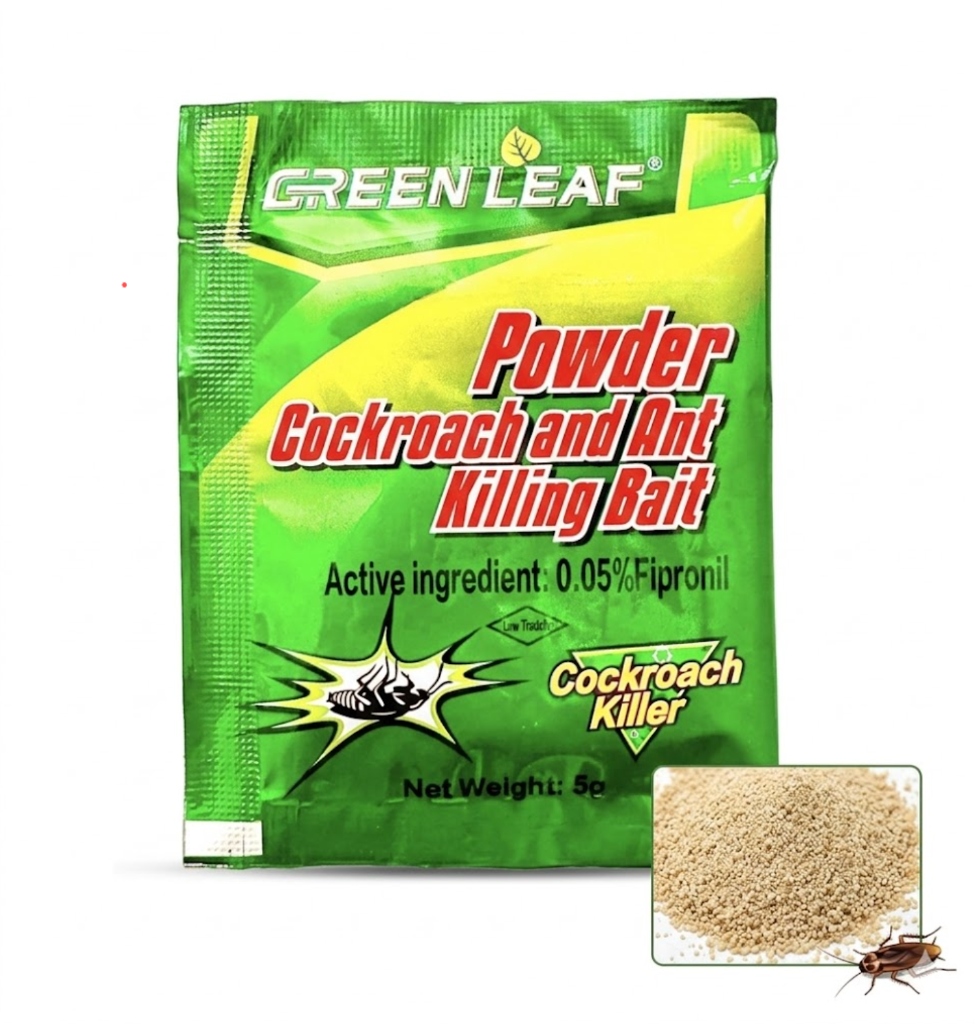
Live sightings are the worst measure of progress. How to read fresh droppings, dead insects and trap catch rates...

If you have a cockroach infestation, your immediate instinct might be to reach for a can of heavy aerosol pest spray. However, pest science proves that spraying active cockroach nests with repellent chemical liquid is one of the primary reasons infestations become chronic and spread throughout the home. If a product you already placed is being ignored, our guide to why roach bait stops working covers the five usual causes and the fix.
Standard household pesticide sprays rely on highly volatile synthetic pyrethroid chemicals. These compounds act as powerful contact repellents. When you spray baseboards or cabinetry, the strong chemical scent alerts the cockroaches. Rather than crawling through the toxin and dying, the majority of the colony scatters, escaping deeper into wall cavities, electrical lines, and adjacent rooms.
When female German cockroaches are exposed to chemical stress or toxic sprays, they undergo a survival mechanism known as “stress-induced aborting.” They immediately release their oothecae (egg capsules) in hidden wall crevices before they die. A single capsule holds up to 48 baby roach nymphs. Within a few weeks, these eggs hatch inside the walls, creating a massive, secondary outbreak that is completely shielded from your sprayed baseboards.
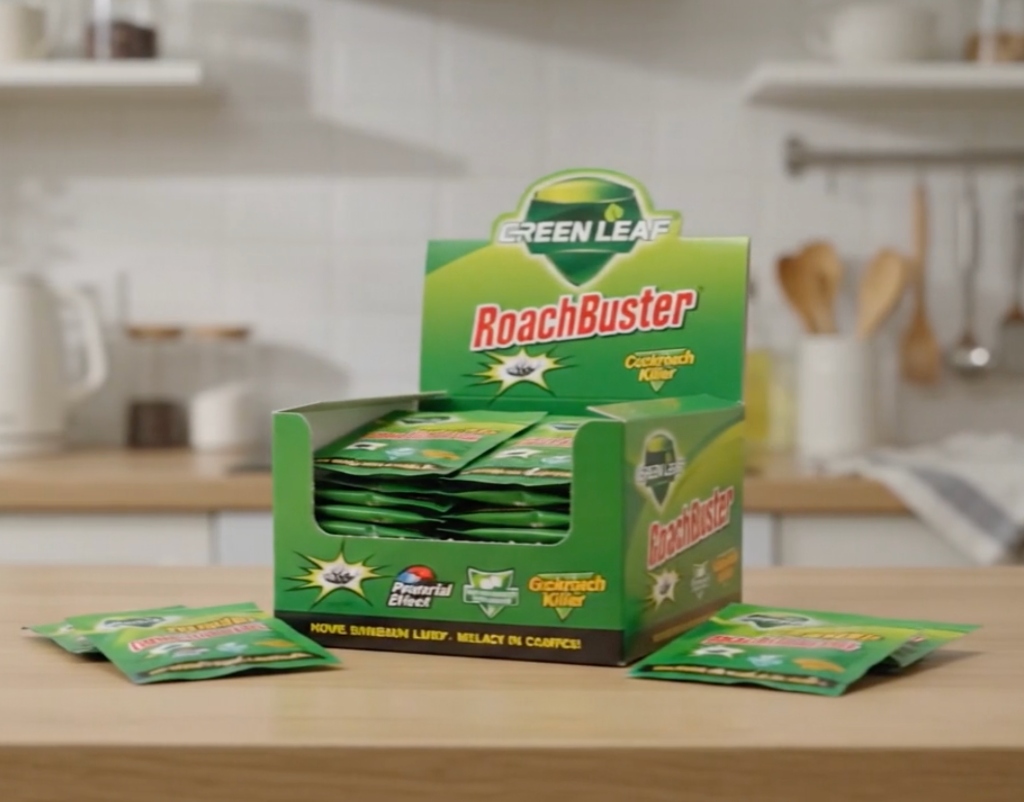
To eliminate a cockroach infestation permanently, you must use a targeted, non-repellent active formula that attracts pests rather than repelling them. The RoachBuster dry active sachet system uses a surgical attractant matrix:
When a repellent insecticide contacts a German cockroach aggregation, the population does not simply try to escape the room. It disperses, which is a specific behavioural response with survival value. Individuals move away from the irritant along the paths of least resistance, which in a building means wall cavities, plumbing chases, electrical conduit and floor voids. Because aggregation is maintained by pheromone deposits rather than by physical structure, a dispersed population can establish several new aggregations very quickly wherever it lands. One harbourage becomes three or four, in rooms that were previously clean.
This is why the same householder can report that spraying worked at first and then things got much worse. Both observations are accurate. The visible insects in the treated room left, and the population as a whole spread out and grew.
| Before spraying | After dispersal | Consequence |
|---|---|---|
| One known harbourage | Three or four unknown harbourages | You lose the information advantage |
| Population concentrated near bait | Population spread across voids | Bait uptake drops sharply |
| Treatment confined to one room | Treatment now needed in several | Cost and time multiply |
| Neighbouring units unaffected | Population pushed along shared services | A unit problem becomes a building problem |
| Insects foraging normally | Insects avoiding treated surfaces | Any subsequent bait placed there is ignored |
| One treatment cycle | Repeated cycles | The treadmill most households end up on |
A non-repellent bait is designed to be undetectable as a threat. Insects walk over it and feed on it without any avoidance response, so aggregation behaviour continues normally and material moves inward toward the harbourage through feeding, grooming and secondary transfer. Nothing disperses. The population declines where it lives, which is both faster in practice and far less disruptive. The trade-off is patience: you do not get the immediate visual satisfaction of insects running out of a cabinet, and counts often rise in the first week because normal foraging continues while insects begin dying in the open. That first-week rise is the signal that the approach is working, not failing, and it is described in our guide to reading treatment progress.
The full comparison of what each format does and does not achieve is in our powder versus spray versus fogger article.
A targeted professional application has a role in some integrated programmes, for example as a limited exterior perimeter treatment. Untargeted indoor aerosol use in an active harbourage is where the damage happens.
Sightings appear in rooms that were previously clean, especially bathrooms and adjacent kitchens, and bait uptake in the original room is poor.
Yes. Wash off the residue, place densely across the wider area, use monitors to locate the new aggregations, and allow four to eight weeks.
Less so, because they are not aggregating breeders indoors in the same way. The dispersal problem is most acute with German cockroaches.
Repellent sprays trigger a dispersal response that converts one known harbourage into several unknown ones and drives populations along shared services. Stop spraying, wash the residue off, inspect wider, place non-repellent bait densely, use overnight monitors, and allow a longer timeline. One box of fifty sachets gives you enough placements to cover a dispersed population properly, with a 30-day money-back guarantee.
Always use any product as directed on its label, and keep placements out of reach of children and pets. Product formulations and labels differ between markets and change over time, so read the label of the specific product you buy rather than relying on general category descriptions.
Stop chemical scattering. Attract and eliminate cockroach colonies safely with the RoachBuster 50-Sachet Box.
Free shipping, secure Stripe checkout, and a 30-day money-back guarantee.
Next steps: how powder, sprays and foggers differ, how to tell whether a treatment is working, and how many sachets a full round actually takes.
Treating an active infestation? One box treats one room, once. The 3-Box Kit — $120 (150 sachets, save $59.97) covers a full apartment through the complete 3-4 week treatment cycle; a $47 single box (50 sachets) covers a single-room problem. Ships within 1 business day, typical delivery 6-10 days · Free tracked shipping · 30-day money-back guarantee.
Choose your kit →
Live sightings are the worst measure of progress. How to read fresh droppings, dead insects and trap catch rates...

Found roaches tonight? The first 48 hours decide whether your treatment works. Hour one containment, the after-d...
Coverage is about cavities, not square footage. Room-by-room sachet counts, realistic totals for studios through...
Your anonymous feedback helps us improve our educational home defense resources.