
Roach Control for Multi-Unit Buildings: A Landlord Treatment Plan
Treating one flat in a connected block fails predictably. How to survey across unit boundaries, quantify a build...

Living in a multi-family apartment building presents a unique challenge: you do not have complete control over your walls. If your neighbors are battling an infestation, or if construction starts down the street, pests will travel through shared plumbing stacks, electrical channels, and wall voids straight into your living space. If you are treating an active problem rather than preventing one, start with the 21-day treatment plan, then use our after-treatment prevention plan to keep the home clear.
Many apartment tenants rely on building-scheduled exterminators who visit once a month for a brief five-minute walkthrough. These routine services almost always fail to solve recurring infestations for three reasons:
To keep an apartment permanently free of pests, you need a DIY approach built around **persistence, containment, and attraction**:
1. Build a Structural Perimeter: Focus your defense on travel lanes. Instead of placing bait in open floor spaces, tuck dry powder sachets directly along common wall voids, behind cabinet backs, beneath kitchen plumbing access points, and inside electrical outlet panel boundaries.
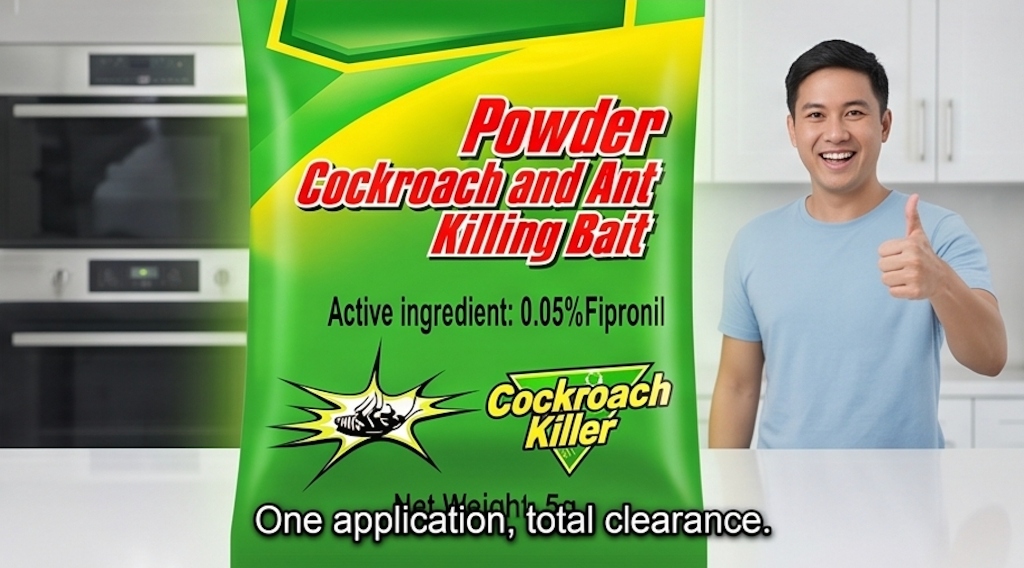
2. Leverage Non-Repellent Baits: Use a high-performance active bait powder. Pests must not realize the powder is a threat. They must walk through it, ingest it naturally, and transfer the active ingredient throughout the hidden harborages behind your drywall.
3. Keep Baits Constant: Because neighbors may not treat their homes, new pests will periodically search for entry routes into your apartment. Keeping static, odorless powder sachets active in cabinets and behind appliances ensures that any new insect entering your space is eliminated before it can establish a breeding cycle.
By shifting your strategy from short-lived, toxic sprays to persistent, targeted bait placement, you can establish an active protective barrier that keeps your apartment safe regardless of what is happening in the units next door.
Before you place anything, spend three nights mapping the nest with sticky monitors, then follow the week-by-week timeline so you know which stage you are in.
If you are seeing insects in daylight rather than at night, that changes the severity assessment. See what daytime sightings really mean.
Next steps: the building-wide plan for multi-unit properties, why roaches come back after treatment, and how many sachets a full round actually takes.
The most common apartment experience is a technician who arrives, sprays the kitchen perimeter and the bathroom, and leaves within twenty minutes. That visit cannot succeed, and the reason is structural rather than personal. In twenty minutes nobody can pull out a fridge, remove a plinth panel, take off a bath access panel, inspect the riser cupboard and coordinate access to the neighbouring units. Those five actions are what determine the outcome, and none of them fit in the appointment. The spray is not the problem in itself; the absence of diagnosis and building coordination is.
| Location | Placements | Why |
|---|---|---|
| Under-sink cabinet at pipe penetrations | 2 to 3 | Main vertical route from the stack |
| Behind and under the fridge | 2 | Warmest cavity in the flat |
| Dishwasher or washing machine side gap | 1 to 2 | Heat plus moisture |
| Kitchen plinth void | 2 | Continuous harbourage |
| Bathroom vanity rear corners | 2 | Second wet zone |
| Bath panel void | 1 to 2 | Largest void |
| Shared-wall skirting corners | 2 to 4 | Boundary interception |
| Entry door threshold | 1 to 2 | Corridor route |
Twelve to eighteen placements for a one or two-bedroom flat. Full arithmetic is in our coverage guide, and the reason single-unit work needs building support is in our multi-unit plan.
A provider who answers those confidently is worth keeping. One who cannot is selling a schedule, which is the pattern our article on why treatments fail and populations return describes.
Bait before is fine and does not interfere. Do not spray before, because repellent residue reduces the effectiveness of anything placed afterwards.
Two weeks for visible reduction, four to six weeks for a quiet flat, longer if the neighbouring unit is untreated.
Yes. A door sweep, sealed penetrations and a maintained bait line substantially reduce what reaches you and reduce the neighbouring population over time.
Short visits fail because they skip diagnosis and building coordination, not because spraying is inherently useless. Pull the appliances, open the plinth and bath panel, fit a door sweep, run twelve to eighteen placements, and push the building to treat the stack. One box covers a flat for a year, with a 30-day money-back guarantee.
Always use any bait product as directed on its label, and keep placements out of reach of children and pets.
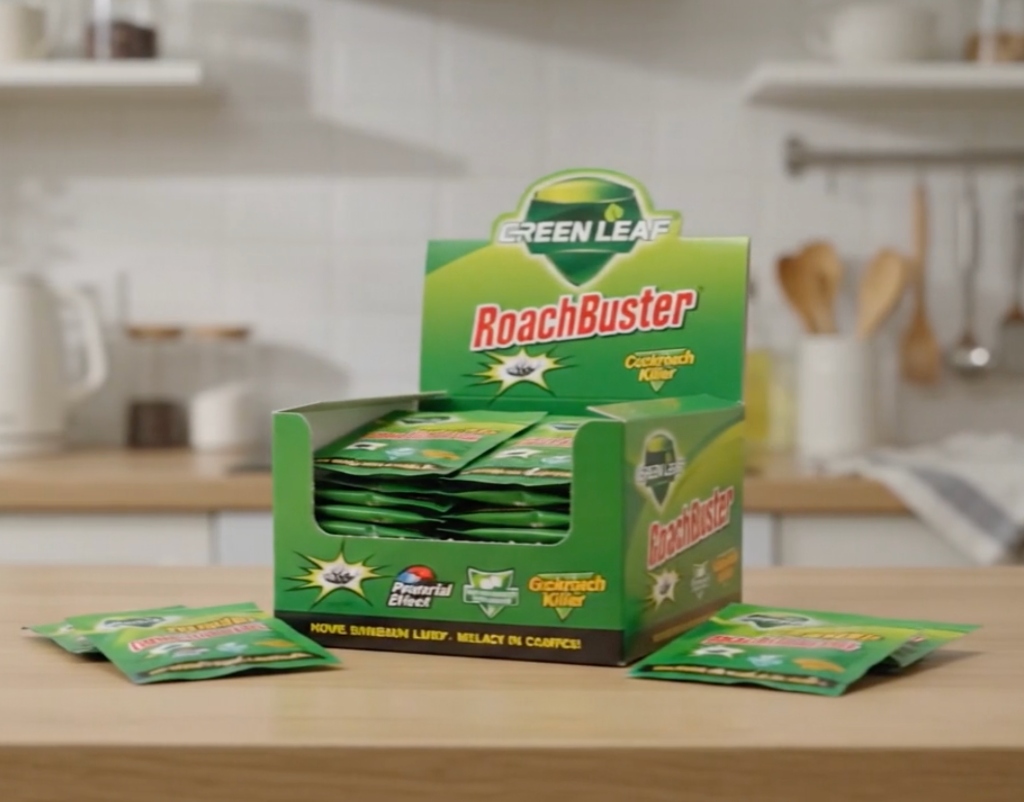
Treating an active infestation? One box treats one room, once. The 3-Box Kit — $120 (150 sachets, save $59.97) covers a full apartment through the complete 3-4 week treatment cycle; a $47 single box (50 sachets) covers a single-room problem. Ships within 1 business day, typical delivery 6-10 days · Free tracked shipping · 30-day money-back guarantee.
Choose your kit →
Treating one flat in a connected block fails predictably. How to survey across unit boundaries, quantify a build...
Student housing concentrates every risk factor for roaches. What to check on move-in, how to report properly, ho...
How infestations travel on moving day, how to inspect a new home before you sign, packing rules for cardboard an...
Your anonymous feedback helps us improve our educational home defense resources.