
Roach Control for Multi-Unit Buildings: A Landlord Treatment Plan
Treating one flat in a connected block fails predictably. How to survey across unit boundaries, quantify a build...

The most common question people ask after their first night of treatment is simple: how long does it take to get rid of roaches? The honest answer is that a small, contained problem usually clears in two to three weeks, while an established German cockroach population in an apartment building can take six to eight weeks of consistent baiting. Anything that promises overnight elimination is either selling a repellent that scatters the colony or counting only the insects you can see. For honest expectations before you start, see how long roach treatment actually takes, method by method, and our prevention plan for after you are clear.
This guide walks through what a normal, successful treatment timeline actually looks like day by day, so you can tell the difference between progress and failure without guessing.
Those ranges assume you are using a non-repellent bait and leaving it undisturbed. Switch products every few days, spray over your bait stations, or clean them away during a deep clean, and the clock restarts.
Three biological facts set the pace, and no product can shorten them by much.
A female German cockroach carries an egg case, or ootheca, containing roughly 30 to 40 eggs. That case is a sealed capsule. Bait does not penetrate it, dust does not penetrate it, and sprays do not penetrate it. Those eggs will hatch on their own schedule regardless of how well your treatment is working, which is why week three usually brings a fresh wave of tiny nymphs. We covered how these capsules are produced and dropped in our guide to insect growth regulators and the German roach breeding cycle.
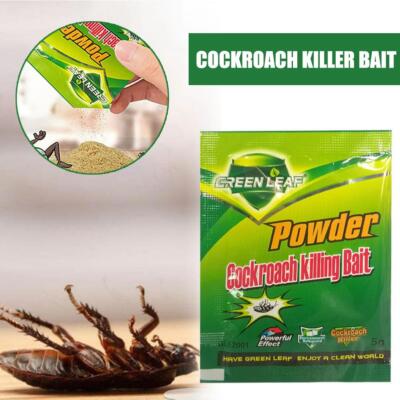
A dry powder bait relies on foraging insects carrying the active material back into harbourage areas, where it spreads through contact and grooming among individuals that never left the wall void. That secondary spread is what actually collapses a colony, and it takes days, not minutes. Contact killers feel faster because you watch something die on the countertop, but they only remove the small percentage of the population that was out in the open.
Pest professionals generally work on the assumption that visible activity represents a small share of the true population. If you are seeing five insects a night, the nest is considerably larger. Judging success by sightings alone in week one is like judging a bank balance by the coins in your pocket.
This is the stage where most people panic and make their treatment worse. When you introduce a food-based bait into a space, foraging insects become more active as they move toward it. You will likely see insects you had never noticed before, sometimes in rooms you thought were clear.
This is not failure. It is the population revealing itself. The critical discipline in these three days is to do nothing reactive: no aerosol sprays, no bombs, no wiping down the areas where you placed bait. Spraying now pushes the colony deeper into wall voids and adjacent units, a scattering effect explained in why chemical sprays make German roaches scatter.
If you spray on day two, you have not sped anything up. You have converted a two-week job into a two-month job and possibly spread the nest into your neighbour’s kitchen.
Somewhere between the fourth and the tenth day, the pattern changes. You start finding dead insects rather than live ones, often in open floor areas or in the middle of a countertop, because dying cockroaches lose their instinct to stay hidden. Nightly sightings drop noticeably by the end of week two.
Two things matter in this window. First, check whether the bait is being consumed; untouched bait usually means placement is wrong rather than that the product failed. Second, resist the urge to add more product on top of working stations. Move on to placements in areas you have not yet covered, such as appliance cavities and cabinet hinge recesses.
This is the stage that convinces people their treatment failed, and it is actually the strongest sign it is working. Egg cases laid before you started treatment hatch during this window, releasing small, dark, fast-moving nymphs. Because they hatched after your initial placement, they were never exposed to anything.
The key detail is what you are seeing: if the population is now mostly tiny nymphs with very few adults, your adult breeding population has collapsed. That is progress. If you are still seeing large adults in equal numbers, your placements are missing the main harbourage. Our guide to identifying baby cockroaches and nymphs covers how to tell nymphs apart from pantry beetles, which people routinely confuse.
Nymphs forage aggressively and stay close to where they hatched, so they encounter fresh bait quickly. Keep placements live through this window and the second generation dies before it reaches breeding age, usually within seven to ten days.
By week five, most homes have no live sightings at all. The mistake here is declaring victory and removing everything. A single surviving gravid female can rebuild a visible population in about eight weeks, so the last phase is verification rather than treatment.
Fourteen consecutive days with no sightings, no fresh droppings, and no odour is a reasonable definition of eliminated.
Keep a note on your phone for three weeks with one line per night: how many insects seen, how big, and where. Three numbers trending down is objective proof; a vague feeling that things seem better is not. If your log shows adults declining and nymphs appearing around week three, you are exactly on schedule. If your log is flat after ten days, the problem is almost always placement, not the product, and the fix is to move bait closer to harbourage rather than to add more of it.
Increased visible activity in the first few days is normal. Foraging insects move toward a new food source, and dying insects leave sheltered areas. Sightings should begin dropping by the end of week two.
In a detached home with sealed entry points, control is usually durable once you reach two weeks with no activity. In an apartment with shared walls or plumbing risers, expect to keep low-level placements running indefinitely, because the pressure from outside your unit never stops.
No. Cockroaches consume very small amounts, and overloading a single spot wastes product while leaving other harbourage untreated. Coverage across many small placements beats volume in one place every time.
Clean thoroughly first to remove competing food, then place bait and leave those areas alone. Cleaning over placements mid-treatment is one of the most common reasons a timeline stretches out.
Roach control rewards patience and consistent placement far more than aggressive chemistry. If you understand that days one to three look worse, week two turns the corner, and week three brings a nymph wave you have already planned for, you will stop making the reactive decisions that stretch a three-week job into a three-month one.
GreenLeaf RoachBuster is built for exactly this kind of sustained placement: 50 odorless, stainless dry powder sachets per box, designed to sit undisturbed in cabinets, sinks, gaps, and appliance cavities for the full treatment window rather than drying out in a week. Always use as directed on the product label, and keep placements away from children and pets.
If you are seeing insects during daylight hours, the timeline is likely to sit at the longer end of these ranges. See what daytime sightings mean.
Wider reading: the complete Roach Control Guide maps every article on the site by the question you are trying to answer — first 48 hours, identification, method, room by room, comparisons, safety, rentals and local conditions.
Claim the 50-sachet GreenLeaf RoachBuster box today. Free shipping, secure Stripe checkout, a 30-day money-back guarantee, and targeted odorless dry powder sachets built for kitchens, cabinets, gaps and appliances.
Use only as directed on the product label. Keep away from children and pets.
Treating an active infestation? One box treats one room, once. The 3-Box Kit — $120 (150 sachets, save $59.97) covers a full apartment through the complete 3-4 week treatment cycle; a $47 single box (50 sachets) covers a single-room problem. Ships within 1 business day, typical delivery 6-10 days · Free tracked shipping · 30-day money-back guarantee.
Choose your kit →

Treating one flat in a connected block fails predictably. How to survey across unit boundaries, quantify a build...
A resurgence at three weeks and a resurgence at three months are different problems. The six causes of reinfesta...

Found roaches tonight? The first 48 hours decide whether your treatment works. Hour one containment, the after-d...
Your anonymous feedback helps us improve our educational home defense resources.