
Roach Control for Multi-Unit Buildings: A Landlord Treatment Plan
Treating one flat in a connected block fails predictably. How to survey across unit boundaries, quantify a build...

For rental property managers and leasing agents, speeding up tenant lease turns is essential for protecting cash flow and occupancy metrics. During the tight window between lease ends and new tenant move-ins, ensuring the rental unit is 100% pest-free is a critical step. If the property is rented, our guide to whether roaches are the landlord or the tenant responsibility covers who owes what — and what residents can do while they wait.
If a new tenant moves in and spots cockroaches inside kitchen drawers or vanities, it triggers immediate tenant disputes, rent withholding, and negative reviews. Spraying baseboards with traditional chemical pesticides leaves strong warning odors that raise instant red flags. Gels run and dry into hard discolored stains on expensive cabinetry.
To secure rental units quickly and permanently during tenant turns, apply the **RoachBuster lease-turn protocol**:
A tenanted unit is a negotiation. An empty unit between tenancies is the one period when you have unrestricted access, no notice requirements, no complaints about smell, no furniture in the way and no risk of disturbing anyone. Every hour of a vacancy is worth several hours of access to an occupied unit, and the cost of using that window is a fraction of the cost of chasing a complaint six weeks into a new tenancy. Landlords who systematically treat at turnover report far fewer mid-tenancy pest disputes, for the simple reason that the incoming tenant inherits a treated unit rather than a dormant population.
| Room | Placements | Position |
|---|---|---|
| Kitchen | 5 to 7 | Sink cabinet rear corners, behind and under fridge, dishwasher gap, oven base cavity, pantry corners |
| Bathrooms | 2 per bathroom | Vanity rear corners, tub access panel if present |
| Laundry | 2 | Behind washer, at supply and drain penetrations |
| Living and bedrooms | 1 to 2 each | Baseboard corners on shared walls, behind wall-mounted units |
| Entry | 1 to 2 | Corridor door threshold, corners only |
| Utility or mechanical | 2 | Water heater base, riser or pipe penetrations |
Twelve to eighteen placements for a one or two-bedroom unit. The coverage arithmetic explains why the number is higher than most people expect, and our multi-unit plan covers what to do when the neighbouring units are the actual source.
Three documents do most of the work. A turnover inspection record with photographs and a note of what was found and treated. A placement log listing room, position and date, so the next person to enter knows what is there. And a written handover note to the incoming tenant describing the preventive measures and the reporting process. Together these establish that the unit was delivered in a treated condition, which is the fact most likely to be in dispute if a problem emerges in month three. Keep them for the length of the tenancy plus your normal retention period.
For a one-bedroom, roughly thirty to forty minutes including pulling appliances forward, plus twenty minutes of sealing. It fits inside a normal make-ready day.
That depends entirely on your jurisdiction, your lease and whether damage or neglect can be evidenced. Photographs taken before cleaning are what make any such claim arguable. Take advice locally before deducting from a deposit.
Yes, in writing. It reads as diligence rather than as a warning, and it prevents placements being thrown away during move-in.
At twelve to eighteen placements per unit, a five-box case covers roughly twelve to eighteen turnovers, which is why landlords with more than a few doors buy at case level.
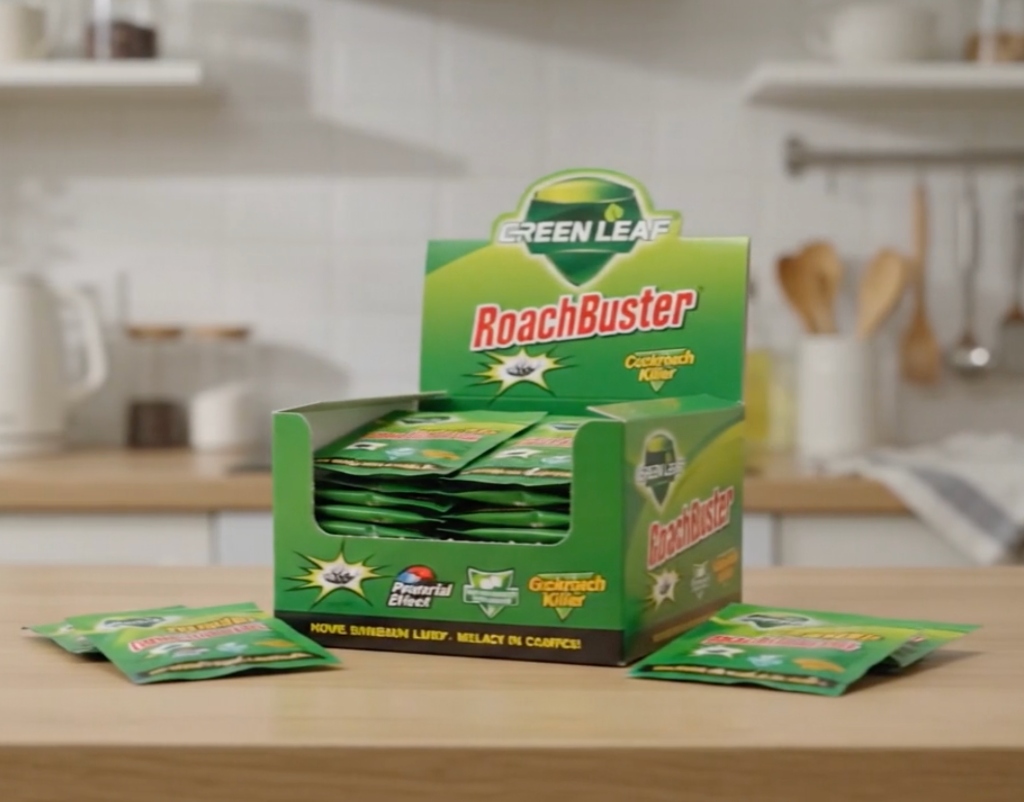
Vacancy is the cheapest access you will ever have. Inspect before cleaning, photograph everything, pull the appliances out, place twelve to eighteen dry sachets, seal the penetrations, log it, and hand over in writing. A five-box case covers a dozen or more turnovers at about eighty cents per sachet, backed by a 30-day money-back guarantee.
Always use any bait product as directed on its label, and keep placements out of reach of children and pets. Nothing here is legal advice; local codes and association rules vary.
Speed up lease cycles. Protect apartments and flats with the RoachBuster 5-Box landlord Bundle today.
Free shipping, secure Stripe checkout, and a 30-day money-back guarantee.
Next steps: the building-wide plan for multi-unit properties, why roaches come back after treatment, and how many sachets a full round actually takes.
Treating an active infestation? One box treats one room, once. The 3-Box Kit — $120 (150 sachets, save $59.97) covers a full apartment through the complete 3-4 week treatment cycle; a $47 single box (50 sachets) covers a single-room problem. Ships within 1 business day, typical delivery 6-10 days · Free tracked shipping · 30-day money-back guarantee.
Choose your kit →
Treating one flat in a connected block fails predictably. How to survey across unit boundaries, quantify a build...
Student housing concentrates every risk factor for roaches. What to check on move-in, how to report properly, ho...
How infestations travel on moving day, how to inspect a new home before you sign, packing rules for cardboard an...
Your anonymous feedback helps us improve our educational home defense resources.