
Roach Control for Multi-Unit Buildings: A Landlord Treatment Plan
Treating one flat in a connected block fails predictably. How to survey across unit boundaries, quantify a build...

Condo and strata boards face a version of this problem that individual owners do not: the pest does not respect unit boundaries, but the budget, the access rights and the blame all do. A cockroach population living in a riser or a shared basement will surface in whichever unit is currently the most hospitable, which means the complaint log tells you almost nothing about where the problem actually lives. Coordinating a boundary-barrier strategy at building level is what breaks the cycle. If the property is rented, our guide to whether roaches are the landlord or the tenant responsibility covers who owes what — and what residents can do while they wait.
The default process in most buildings is reactive: an owner reports activity, the board authorises a treatment for that unit, the unit goes quiet, and four to eight weeks later a different unit reports. Each treatment looks successful in isolation. Collectively, nothing has changed, because the population has simply relocated along a shared route and returned once placements expired.
The cost of this pattern is not just the repeated call-outs. It is the erosion of owner confidence, the disputes about who pays, the disclosure problem when units come to sell, and eventually a much larger remediation bill. A single coordinated round is almost always cheaper than eighteen months of individual ones.
Before authorising any expenditure, the board needs data rather than a complaint list. A two-night monitoring survey across common areas and volunteer units is inexpensive and changes the entire conversation at the next meeting.
The strategy that holds in multi-unit buildings is not blanket treatment. It is treatment plus barriers at the boundaries, so that once a route is cleared it stops being a route.
| Layer | What it does | Who normally owns it |
|---|---|---|
| Unit-level placements | Clears the population inside each dwelling | Owner or occupier, coordinated by the board |
| Riser and void placements | Treats the shared corridor between units | Board / common property |
| Penetration sealing | Removes the physical route permanently | Board for common property, owner inside units |
| Refuse and basement control | Removes the reservoir | Board / managing agent |
| Monitoring traps | Early warning before complaints start | Board, checked monthly |
| Drainage and leak repairs | Removes the water supply | Board or owner depending on location |
The sealing layer is the one boards most often defer and most often regret deferring. Treatment without exclusion means you are committing to permanent recurring cost. Exclusion without treatment traps a population in place. Both together is what produces a building that stays quiet.
The single most important scheduling rule is that every connected unit is treated inside the same short window. A week works. Spread over a quarter, the untreated units act as a reservoir and the whole exercise is wasted.
Boards need a number, not a range of adjectives. Work in placements per unit plus placements per shared space plus a top-up allowance. Roughly 18 to 26 placements for a one-bed unit, 30 to 42 for a two-bed, two to four per riser cupboard per floor, four to eight for a refuse room, six to twelve for a basement or plant room, and then add 35 per cent for the top-up. The room-by-room coverage math shows how those figures are derived, and the multi-unit treatment plan sets out the same exercise from a landlord perspective.
Two budget notes that save arguments later. First, buy enough to complete the round and the top-up in one authorisation, because a second approval cycle is exactly how the three-week window gets missed. Second, quantities at building scale change the unit economics considerably, which is why bulk purchasing is usually the correct line item rather than an optional extra.
One trap catch in a riser cupboard costs a fraction of what three owner complaints cost. That is the entire economic argument for monitoring.
Keep a dated register of reports received, surveys carried out, placements made by location, repairs completed, and communications issued. Boards that can produce a treatment log with dates are in a far stronger position on disclosure, on cost apportionment, and on any dispute about whether the building acted reasonably.
Responsibility for pest control between an owners corporation and individual owners varies by jurisdiction and by the building’s own governing documents, and it usually turns on whether the source is common property, structural, or attributable to how a unit has been kept. This is general operational guidance rather than legal advice, and the position where your building sits may differ. The overview of landlord and pest responsibilities covers the shape these disputes usually take, and the guide to reinfestation explains why a resurgence is not automatically evidence that the contractor failed.
It depends on the governing documents and local legislation. In practice, explaining that nothing is sprayed and nobody needs to leave resolves most refusals, and a clearly communicated window with two weeks’ notice achieves far higher participation than short notice does.
Usually yes. Central purchase means one format, one method and one window, which is the whole point of coordination. Leaving it to owners produces a patchwork of products applied over three months.
Treat everything around them, place at the penetrations into that unit, and keep a monitoring trap on the boundary. Document the refusal. A single hold-out slows the result but does not have to defeat it.
Communicate before the round, not after. Explain plainly that contact sprays scatter the population and leave residues that reduce uptake, so one resident’s aerosol can extend the timeline for their whole floor.
For suspected drainage defects, inaccessible structural voids, buildings with a commercial food tenancy, or any block where a properly executed coordinated round has not held. The cost comparison sets out where that crossover usually sits.
Stop treating complaints and start treating the building. Survey across boundaries first, publish a single treatment window, fix water and access defects before placing anything, quantify per unit plus a communal layer plus a 35 per cent top-up in one authorisation, seal the penetrations once it is quiet, and keep monthly monitoring in the risers and refuse room. Log everything. Always use products as directed on the label, and keep placements away from children and pets.
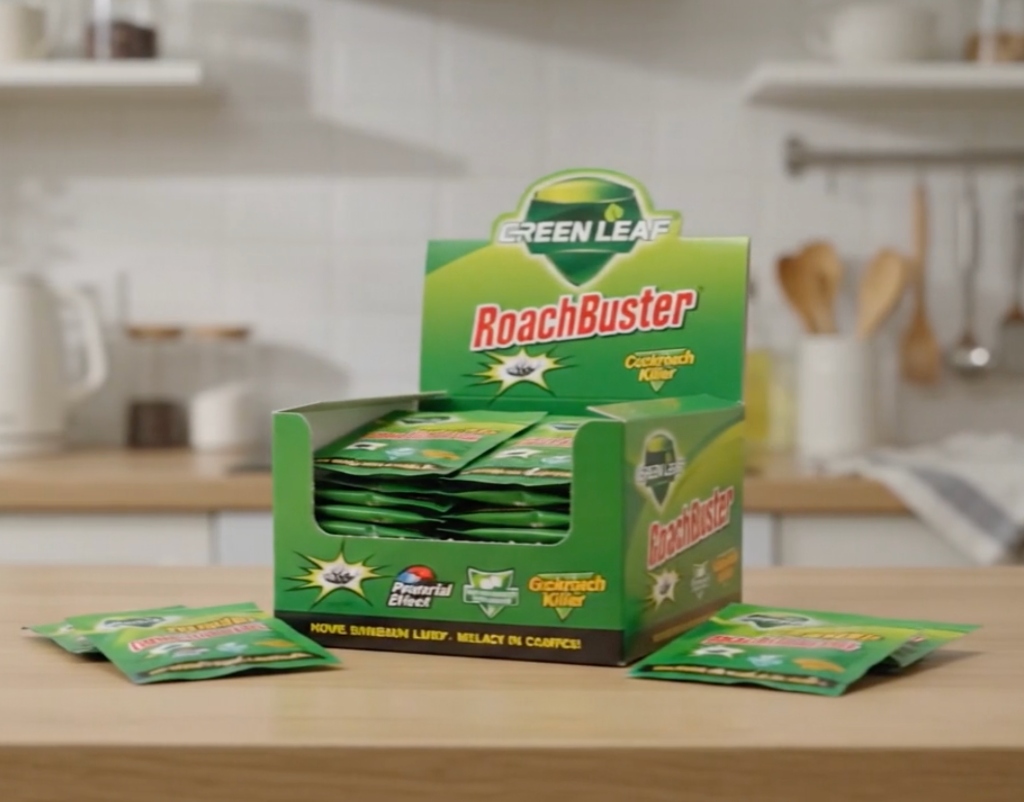
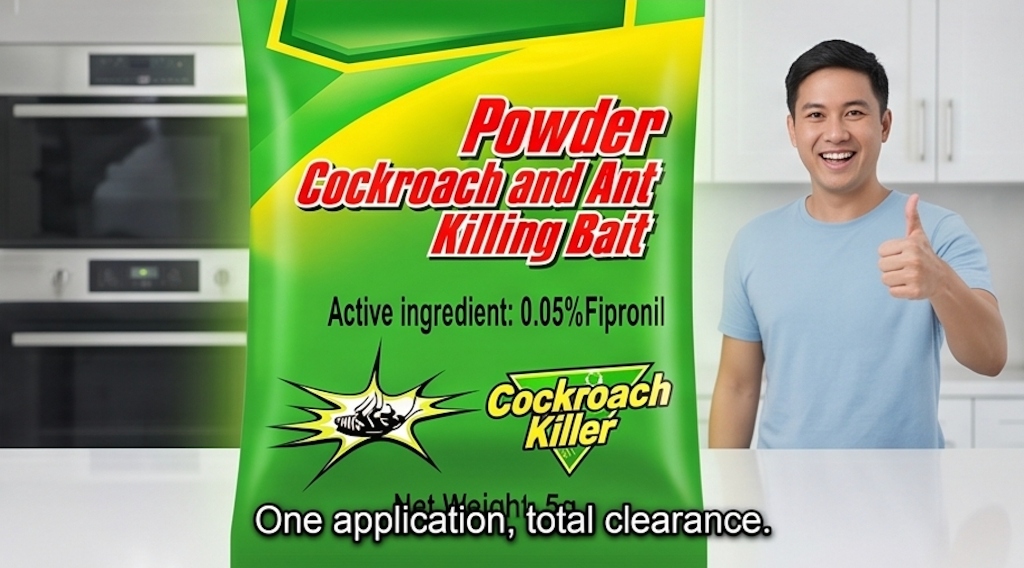
Coordinate structural boundary defense. Protect multi-family complexes with the RoachBuster 5-Box landlord Bundle today.
Free shipping, secure Stripe checkout, and a 30-day money-back guarantee.
Next steps: the building-wide plan for multi-unit properties, why roaches come back after treatment, and how many sachets a full round actually takes.
Treating an active infestation? One box treats one room, once. The 3-Box Kit — $120 (150 sachets, save $59.97) covers a full apartment through the complete 3-4 week treatment cycle; a $47 single box (50 sachets) covers a single-room problem. Ships within 1 business day, typical delivery 6-10 days · Free tracked shipping · 30-day money-back guarantee.
Choose your kit →
Treating one flat in a connected block fails predictably. How to survey across unit boundaries, quantify a build...
Student housing concentrates every risk factor for roaches. What to check on move-in, how to report properly, ho...
How infestations travel on moving day, how to inspect a new home before you sign, packing rules for cardboard an...
Your anonymous feedback helps us improve our educational home defense resources.