
Roach Control for Multi-Unit Buildings: A Landlord Treatment Plan
Treating one flat in a connected block fails predictably. How to survey across unit boundaries, quantify a build...

The most demoralising thing about a cockroach problem is the assumption behind it. People treat an infestation as a verdict on their housekeeping, which is both unfair and unhelpful, because the resources a colony actually needs have very little to do with whether your worktops are wiped. A spotless kitchen with a slow-dripping trap and a warm dishwasher cavity is a better habitat than a messy one that is completely dry. Pair this with our prevention plan that sticks so a cleared home stays cleared.
Here is what actually attracts and sustains cockroaches in a clean home, in rough order of how much difference each one makes.
This is the single most useful thing to understand. Cockroaches can survive a remarkably long time without food, but only a matter of days without water. That inverts the usual priority list. A kitchen with no crumbs anywhere and a weeping compression fitting under the sink is supporting a population; a kitchen with crumbs and no moisture is much less able to.
If you fix nothing else, fix these. Every product you use afterwards works better, because the colony loses the resource it cannot substitute.
Warmth accelerates the entire life cycle. It shortens the time an egg capsule takes to hatch and the time a nymph takes to reach breeding age, which is why the same population grows faster behind a refrigerator than in an unheated garage. Modern kitchens are full of permanently warm enclosed cavities, and those cavities are the reason a very clean home can hold a substantial population entirely out of sight.
This combination of heat and enclosure is why appliance cavities are usually the primary nest site rather than the floor or the worktop. Our guide to roaches in kitchen appliances covers how to open up and treat these zones.
Cockroaches are thigmotactic, which means they seek contact on multiple surfaces at once. What they are looking for is a gap of the right width, not a mess. A brand new fitted kitchen offers an enormous number of these gaps: hinge recesses, the seams where melamine panels meet, drawer runner channels, the void behind a kick board, and the gap between a cabinet carcass and the wall. None of them get dirty, and all of them are ideal.
The cardboard point is worth emphasising because it is the one item on this list that is entirely within your control and is routinely overlooked. A tidy stack of flattened delivery boxes in a utility cupboard is not clutter in any visual sense, and it is one of the best harbourage materials available.
A colony needs a very small amount of food, and it does not need to be on an open surface. Wiping down every evening does not touch any of the following.
That last item surprises people. A bathroom with no food in the conventional sense still offers organic material in the drain and the moisture to go with it, which is why bathrooms are a common secondary zone. The kitchen cabinet audit walks through finding the hidden food sources systematically.
Cleanliness has no bearing on entry. In multi-unit buildings the great majority of introductions are structural rather than behavioural.
This is not a cleaning routine, which is why a clean home can still benefit enormously from it. It is a resource audit, and it addresses the four things a colony needs rather than the one thing that is visible.
Yes, routinely. Cleanliness affects one of four requirements, and only partially. Water, warmth, and enclosed harbourage are largely determined by plumbing, appliances, and construction, none of which respond to wiping surfaces.
Cleaning alone rarely eliminates an established population, because the colony lives inside voids that cleaning does not reach and feeds on residues you cannot see. Cleaning does make bait considerably more effective by removing competing food, so it is worth doing as preparation rather than as the treatment.
Before. Remove competing food first, then place bait and leave those areas undisturbed for several weeks. Cleaning over placements mid-treatment is one of the most common reasons a treatment stretches out, as explained in our treatment timeline.
They may well have them and not know, since a low-level population in a wall void produces no visible sightings. Alternatively your unit may simply hold the better resources, most often because of a plumbing leak, a warmer appliance run, or the layout of the riser.
An infestation in a clean home is a resource problem, not a character flaw. Water, heat, tight gaps, and a way in are what a colony needs, and three of those four are decided by your plumbing and your kitchen construction rather than your habits. Fix the moisture, open up the appliance cavities, remove the cardboard, and put bait where the harbourage actually is.
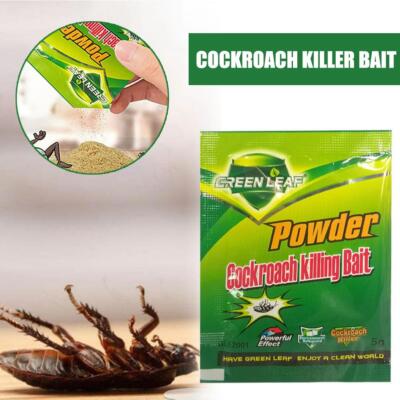
For that last step, GreenLeaf RoachBuster gives you 50 odorless, stainless dry powder sachets per box for placement inside the enclosed cabinet and appliance zones this audit identifies, without a scent or residue that would push the colony elsewhere. Always use as directed on the product label, and keep placements away from children and pets.
Wider reading: the complete Roach Control Guide maps every article on the site by the question you are trying to answer — first 48 hours, identification, method, room by room, comparisons, safety, rentals and local conditions.
Claim the 50-sachet GreenLeaf RoachBuster box today. Free shipping, secure Stripe checkout, a 30-day money-back guarantee, and targeted odorless dry powder sachets built for kitchens, cabinets, gaps and appliances.
Use only as directed on the product label. Keep away from children and pets.
Treating an active infestation? One box treats one room, once. The 3-Box Kit — $120 (150 sachets, save $59.97) covers a full apartment through the complete 3-4 week treatment cycle; a $47 single box (50 sachets) covers a single-room problem. Ships within 1 business day, typical delivery 6-10 days · Free tracked shipping · 30-day money-back guarantee.
Choose your kit →

Treating one flat in a connected block fails predictably. How to survey across unit boundaries, quantify a build...
A resurgence at three weeks and a resurgence at three months are different problems. The six causes of reinfesta...

Found roaches tonight? The first 48 hours decide whether your treatment works. Hour one containment, the after-d...
Your anonymous feedback helps us improve our educational home defense resources.