
Is Your Roach Treatment Working: Signs of Progress and Stalling
Live sightings are the worst measure of progress. How to read fresh droppings, dead insects and trap catch rates...
German cockroaches (Blatella germanica) are notoriously attracted to heat, moisture, and tight dark cavities. This biological drive makes the motors and compressors of home kitchen appliances—especially refrigerators, dishwashers, and microwaves—their absolute primary nesting grounds. If a product you already placed is being ignored, our guide to why roach bait stops working covers the five usual causes and the fix.
Appliance compressors emit continuous warmth, creating a perfect incubation micro-climate for roach egg capsules (oothecae). Additionally, refrigerator condensation pans provide a constant source of water, while food crumbs naturally accumulate underneath these heavy appliances. This combination of shelter, warmth, moisture, and food creates a pest stronghold.
Traditional pest control relies on spraying liquid chemical solvents into these motors. This is highly problematic. Volatile liquid chemicals can short-circuit electronic boards, corrode wires, and vaporize toxic fumes directly into your food-prep air space. Furthermore, the strong odors of chemical repellents cause cockroach populations to scatter deeper into the walls, spreading the nest symmetrically.
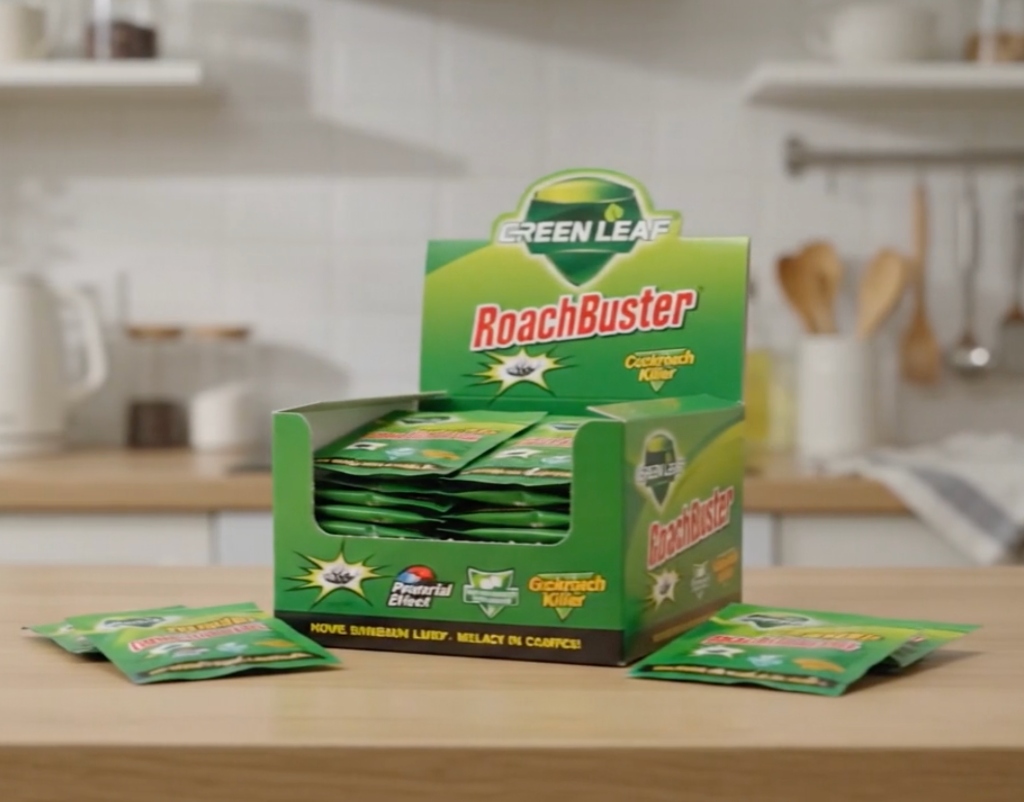
To eliminate appliance nesting safely and effectively, you must utilize a dry, odorless, and non-repellent active formula. The RoachBuster dry active sachet system is specifically engineered for this micro-placement:
A running motor produces a small, stable, permanently warm zone. A fridge compressor sits at forty to fifty degrees Celsius on its casing and cycles all day; a washing machine motor and pump housing hold residual heat for hours; a dishwasher circulation pump combines heat with permanent moisture. To an insect, that is a microclimate with three properties it cannot find anywhere else in the house: constant warmth, shelter from disturbance and, in most cases, humidity. Development speeds up in warmth, so a population harbouring in a compressor bay breeds faster than the same population behind a cupboard.
This is why appliance-based populations are disproportionately persistent. They are not just hiding better, they are reproducing faster.
| Appliance | Cavity | Why it holds population | Access |
|---|---|---|---|
| Refrigerator or freezer | Compressor bay and condenser coil | Warmest, driest, dustiest, never cleaned | Rear panel, usually screws |
| Dishwasher | Circulation pump housing and base tray | Heat plus permanent moisture | Front kickplate |
| Washing machine | Motor, pump filter and drum surround | Heat, lint, residual water | Front filter flap, rear panel |
| Tumble dryer | Motor and lint duct | Warmth and lint as food | Lint housing, rear panel |
| Extractor hood | Fan motor housing | Grease as food, warmth | Canopy, filter removal |
| Microwave | Magnetron and fan housing | Warmth plus food debris | Vents only; do not open |
| Coffee machine | Pump and boiler base | Warmth, moisture, grounds | Drip tray and rear |
| Boiler or water heater | Pump and pipework surround | Constant warmth | External surfaces only |
Aerosols and foggers cannot be used in an electrical cavity, and their propellants and residues are exactly what you do not want near windings and contacts. Loose dust migrates into bearings and fan assemblies. Heat treatment is impractical. A dry, enclosed sachet placed adjacent to the cavity works because the insects come out to forage and go back in, carrying material with them, which reaches the part of the population you cannot physically access. Our method comparison covers the mechanism, and our recurrence guide explains why an untreated appliance cavity is one of the most common reasons a whole-house treatment appears to fail.
Accumulated debris, droppings and dead insects can foul contacts, block drains and reduce airflow, and there are documented cases of electronic control faults. The more common outcome is reduced efficiency from a fouled coil.
A thorough vacuum of the coil and cavity is usually enough. If a control board is faulty or a drain is blocked, use a qualified technician.
Two to six weeks, with the longer end applying where the cavity is largely inaccessible. Keep placements in position through the whole period; progress signals are in our is it working guide.
One to two adjacent positions per appliance, plus the surrounding room count from our coverage arithmetic guide.
Motors create warm, dry, undisturbed microclimates where populations breed faster than elsewhere in the house. Isolate power, pull the appliance out, vacuum the cavity, never introduce liquid, and place dry sachets adjacent to the cavity rather than inside it. One box gives you placements for every appliance in the house plus the surrounding rooms, with a 30-day money-back guarantee.
Always use any bait product as directed on its label, and keep placements out of reach of children and pets. Isolate power before working near any appliance, never introduce liquid into an electrical enclosure, and use a qualified technician for anything that requires opening a sealed unit.
Place RoachBuster dry sachets safely behind refrigerator compressors and appliances. Clean, odorless, and completely stainless.
Free shipping, secure Stripe checkout, and a 30-day money-back guarantee.
Next steps: how many sachets a full round actually takes, how to tell whether a treatment is working, and how powder, sprays and foggers differ.
Treating an active infestation? One box treats one room, once. The 3-Box Kit — $120 (150 sachets, save $59.97) covers a full apartment through the complete 3-4 week treatment cycle; a $47 single box (50 sachets) covers a single-room problem. Ships within 1 business day, typical delivery 6-10 days · Free tracked shipping · 30-day money-back guarantee.
Choose your kit →
Live sightings are the worst measure of progress. How to read fresh droppings, dead insects and trap catch rates...

Found roaches tonight? The first 48 hours decide whether your treatment works. Hour one containment, the after-d...
Coverage is about cavities, not square footage. Room-by-room sachet counts, realistic totals for studios through...
Your anonymous feedback helps us improve our educational home defense resources.