
🛡 30-Day Money-Back Guarantee  |  🚚 FREE Tracked Shipping — ships within 1 business day  |  ⭐ 4.5/5 Stars  |  🌿 100% Eco-Friendly
ORDER NOW — Free Tracked Shipping →

Tag: american cockroaches

  • Houston Humidity Pressures: Summer Palmetto Bug Barriers for Slab Foundations

    Houston Humidity Pressures: Summer Palmetto Bug Barriers for Slab Foundations

    Houston combines three conditions that make palmetto bug pressure unusually severe: sustained summer humidity, heavy rainfall events that flood the drainage network and soil, and a housing stock built predominantly on concrete slab foundations. Together they produce a seasonal pattern most residents recognise. The insects are outdoors and largely invisible for weeks, then a storm passes and they appear inside overnight in numbers. Pair this with our prevention plan that sticks so a cleared home stays cleared.

    This guide explains the specific entry mechanics of a slab-on-grade house in a humid subtropical climate, and what to do about each one.

    Why palmetto bugs surge after rain

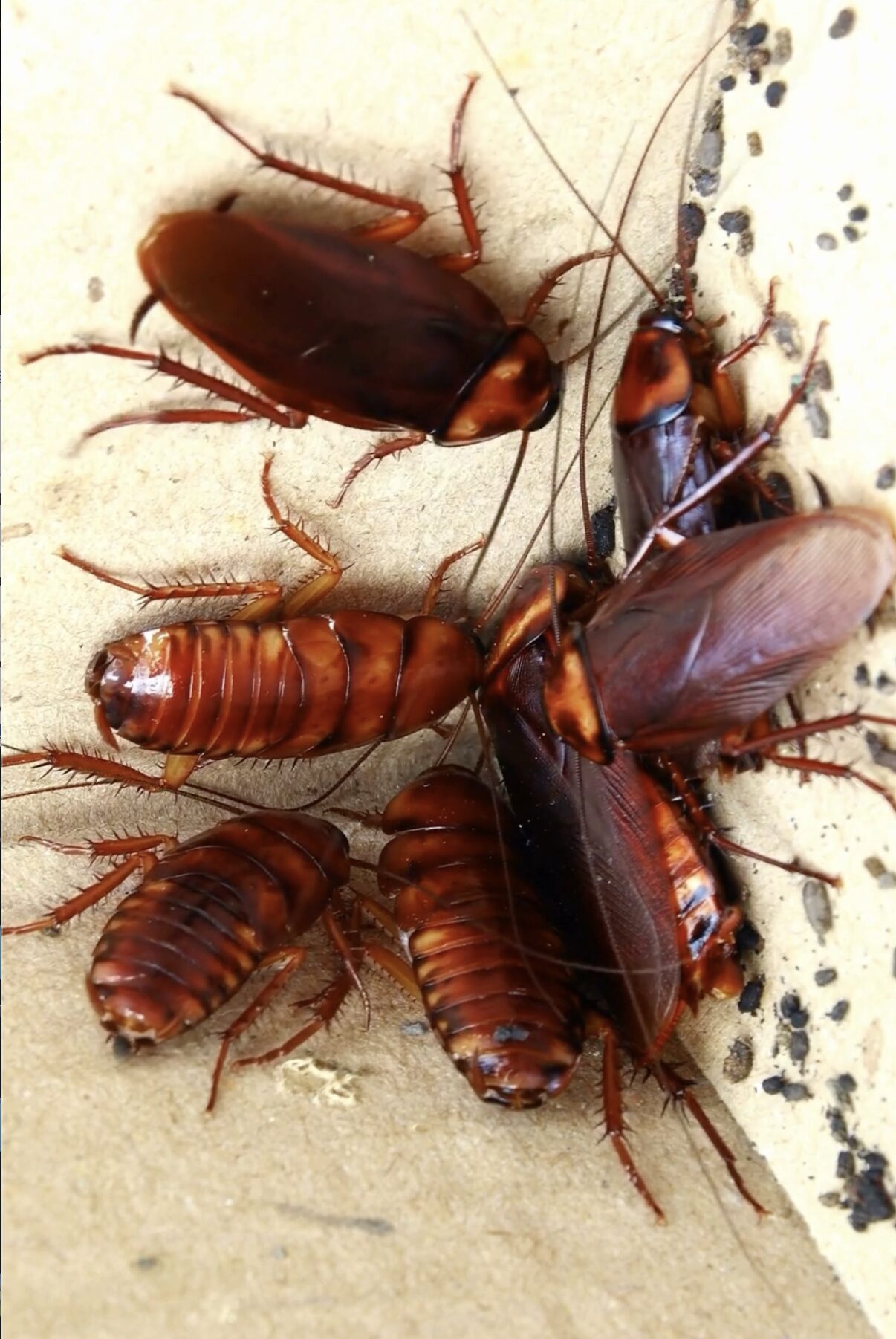
    Palmetto bug is the regional name for the American cockroach and, loosely, for other large outdoor species. Unlike German cockroaches, they live outdoors in damp organic environments: mulched beds, leaf litter, tree cavities, storm drains, and sanitary sewer lines. They are not trying to live in your house. They are displaced into it.

    • Rainfall floods their harbourage. Saturated mulch, storm drains running full, and inundated sewer laterals push populations upward and outward at the same time.
    • Heat and drought do the reverse. During a dry spell they move indoors seeking moisture, which is why surges can also follow weeks with no rain.
    • Soil movement opens gaps. The expansive clay soils common across the Houston area shrink and swell dramatically between wet and dry periods, and that movement is what opens the entry points discussed below.
    • Warm nights extend activity. A long warm season means many more foraging nights per year than in a temperate climate.

    The practical implication is that this is a pressure-management problem, not an eradication problem. The outdoor population is not going away, so the objective is exclusion plus interception rather than treating your kitchen repeatedly. The distinction matters because the two species need opposite strategies, as set out in German versus American cockroaches.

    How they get into a slab-on-grade house

    A slab foundation has no crawl space, which removes one route and creates several others. Plumbing and electrical services pass vertically through the slab, and the annular gap around each penetration is the primary interior entry point.

    • Sub-slab plumbing penetrations. Where the drain and supply lines rise through the slab, usually under the kitchen sink, in bathroom vanity cabinets, behind the washer standpipe, and at the water heater. Soil movement opens these gaps and they lead directly into the wall cavity.
    • Tub and shower access voids. The framed opening under a bath is often unsealed at the slab and connects to the wall cavity.
    • Air-conditioning line sets and condensate drains. The refrigerant line penetration through the exterior wall is frequently sealed only with foam, and the condensate line provides a continuous water source.
    • Weep holes in brick veneer. Necessary for drainage, and large enough to admit a large insect. They should not be blocked; screen them instead.
    • Expansion joints and slab cracks at the garage-to-house threshold and at the patio interface.
    • Garage door thresholds and side seals. A worn bottom seal on a garage door is one of the most common single entry points in a Houston house.
    • Exterior door sweeps and thresholds, particularly on doors that have shifted with the slab.
    • Attic and soffit penetrations, since American cockroaches climb and glide and will use roof-level entry where trees overhang.

    The exterior conditions doing the most damage

    Before treating anything, reduce the pressure at the wall line. In a humid climate these items matter more than any product.

    • Mulch banked against the foundation. Pull it back to leave a dry inspection strip along the wall.
    • Irrigation heads spraying the foundation or the brick veneer.
    • Downspouts discharging beside the wall rather than being extended away from it.
    • Leaf litter in beds, gutters, and against the slab edge.
    • Firewood, pavers, and stored materials stacked against the house.
    • Dense shrubs and ground cover touching the wall, which hold humidity permanently.
    • Overhanging tree limbs providing a route to the roof and soffit.
    • Uncovered or damaged yard and patio drains, and cleanout caps that are cracked or missing. A missing sewer cleanout cap is effectively an open door to the sanitary line.

    A Houston-specific action sequence

    1. Seal the interior slab penetrations first. Open the cabinet under every sink and look at the gap around each pipe where it emerges from the slab or the wall. Pack and seal these properly rather than with tape. This is the highest-value hour you will spend. See our perimeter sealing checklist.
    2. Check the washer standpipe and water heater pan for gaps and standing water.
    3. Fit or replace the garage door bottom seal and side seals, and seal the expansion joint at the garage threshold.
    4. Screen the brick weep holes with purpose-made inserts that maintain drainage.
    5. Seal the air-conditioning line set penetration properly and confirm the condensate line drains away from the slab rather than pooling.
    6. Fit and secure sewer cleanout caps and repair damaged drain covers.
    7. Correct the exterior conditions above: pull mulch back, extend downspouts, adjust irrigation, and cut vegetation off the wall.
    8. Place bait at the interior entry points rather than only in the kitchen: inside sink cabinets near the plumbing collar, at the standpipe, in the utility room, at the water heater, and in the garage along the wall the house shares with it.
    9. Repeat before each wet season and after any significant soil movement, because slab gaps reopen.

    If you are also seeing small tan insects with two dark stripes inside kitchen cabinets, that is a separate and more serious problem: a German cockroach population breeding indoors, which needs interior harbourage baiting rather than exclusion work. Our treatment timeline covers what that looks like, and identifying droppings will tell you quickly which species you have.

    Humidity control indoors

    Gulf Coast humidity is the reason indoor moisture matters more here than in a dry climate. Cockroaches can go a long time without food but not without water, so reducing indoor moisture directly limits what a population can sustain.

    • Keep indoor relative humidity moderate; a dehumidifier in a utility room or garage is often worthwhile in summer.
    • Insulate cold water lines inside cabinets to stop condensation, which is continuous during humid months.
    • Service the air-conditioning condensate tray and line, since a blocked line creates a permanent water source in a warm cavity.
    • Repair weeping shut-off valves and traps under sinks, which are easy to miss because the water evaporates on warm pipes.
    • Run bathroom extractors long enough to actually clear the room, and dry shower trays and floors.
    • Keep the garage dry and avoid storing cardboard there. Cardboard in a humid Houston garage is close to ideal harbourage.

    The broader version of this point, and why a spotless kitchen can still support a population, is in what attracts roaches to a clean home.

    Why perimeter spraying alone underperforms here

    An exterior barrier spray degrades quickly under Gulf Coast conditions. Direct sun, high temperatures, and heavy rainfall shorten residual life considerably, which is why treatments applied on a monthly cycle can leave meaningful gaps in coverage during exactly the storm events that drive the surges. More importantly, insects entering through a sub-slab plumbing gap never cross the treated exterior surface at all; they travel inside the wall cavity from below.

    That is the core reason sealing plus interior interception outperforms repeated exterior spraying in slab-on-grade housing. The general case against relying on spray programmes is in why a monthly spray is not working.

    Frequently asked questions

    Why do palmetto bugs appear after heavy rain in Houston?

    Rainfall floods their outdoor harbourage in mulch, leaf litter, storm drains, and sewer laterals, displacing them upward and into buildings. A dry spell produces the same result for the opposite reason, as they move indoors seeking moisture.

    Are palmetto bugs a sign of a dirty house?

    No. They are outdoor insects entering for shelter or water, and entry is governed by gaps, drainage, and vegetation rather than housekeeping. Interior sanitation matters much more for German cockroaches.

    Should I seal my brick weep holes?

    Do not block them, because they are part of the drainage system for the veneer and blocking them can cause moisture damage. Use purpose-made weep hole screens or inserts that exclude insects while allowing drainage and ventilation.

    Do I need treatment year round in Houston?

    Pressure is highest from late spring through early autumn, but the long warm season means activity rarely stops entirely. Most households do best with sealing work done once and properly, maintenance placements at interior entry points kept in place, and a check before each wet season.

    Seal the slab, then intercept

    Houston palmetto bug problems are almost always about gaps and water rather than cleanliness. Seal the plumbing penetrations under every sink and at the standpipe and water heater, fix the garage and door seals, screen the weep holes, pull mulch and irrigation back from the foundation, and place bait at the interior entry points rather than only in the kitchen.

    For those interception placements, GreenLeaf RoachBuster provides 50 odorless, stainless dry powder sachets per box, which suits humid conditions because there is nothing to dry out or run, and suits sink cabinets, standpipes, utility rooms and garages where you want a placement that survives a whole season. Always use as directed on the product label, and keep placements away from children and pets.

    Next steps: how many sachets a full round actually takes, why roaches come back after treatment, and how to tell whether a treatment is working.

    Treating an active infestation? One box treats one room, once. The 3-Box Kit — $120 (150 sachets, save $59.97) covers a full apartment through the complete 3-4 week treatment cycle; a $47 single box (50 sachets) covers a single-room problem. Ships within 1 business day, typical delivery 6-10 days · Free tracked shipping · 30-day money-back guarantee.
    Choose your kit →

  • Fort Lauderdale Intercoastal Homes: Weather-Proof Baiting for Water-Adjacent Properties

    Fort Lauderdale Intercoastal Homes: Weather-Proof Baiting for Water-Adjacent Properties

    Waterfront homes along the Fort Lauderdale Intercoastal Waterway experience intense, climate-driven Palmetto bug surges. High sea tides, sea walls, and dense canal mulch create massive breeding grounds for these large crawling pests. If a product you already placed is being ignored, our guide to why roach bait stops working covers the five usual causes and the fix.

    The Intercoastal Tidal migration

    During king tides or heavy coastal rainstorms, waterfront seawalls and canal banks become waterlogged. Palmetto bugs migrate inland in large numbers, seeking dry residential foundations. They crawl through sunroom thresholds, sliding door frames, and AC line entries into home living spaces.

    Durable, Moisture-Proof Baiting

    Applying traditional liquid pesticide perimeter sprays around coastal seawalls is highly ineffective. The daily saltwater exposure and humid breezes break down liquid sprays in a few days. The **RoachBuster dry active sachet system** provides an elite alternative:

    • Durable Paper Enclosure: Protects active powder from seaside humidity and sea breezes, preventing clumping or molding.
    • Threshold Placement: Place sachets along sliding door channels, AC conduit entries, and sunroom gaps to intercept tidal pests.
    • Long-Term Protection: Stays fully potent for months, quietly protecting canal-adjacent homes without chemical smells.

    What water-adjacent really changes

    A Fort Lauderdale property on or near the Intracoastal deals with three things an inland home does not. The water table is high, so soil moisture never really drops. Salt air degrades weatherstripping, door sweeps and foam sealant faster than inland exposure does. And landscaping is typically dense, irrigated and mulched right up to the foundation. Together those produce constant outdoor pressure from large roaches, a building envelope whose seals fail early, and a perimeter that is permanently damp.

    The result is a property that can be treated successfully and still see sightings six weeks later, because the envelope keeps reopening. Treating a waterfront home is therefore less about a single strong application and more about a maintained perimeter plus placements that survive humidity.

    The humidity problem with bait placement

    Any dry bait loses effectiveness if it gets wet. On a waterfront property the risk is not rain so much as ambient damp and condensation on cool tile and slab surfaces. Three habits make the difference: choose sheltered positions rather than exposed ones, elevate placements slightly on a dry surface where possible rather than putting them directly on damp concrete, and inspect monthly rather than quarterly. A placement that has gone soft or discoloured should simply be replaced. Budgeting for that replacement rate is normal on the coast and it is one reason multi-box packs work out better per sachet here.

    Perimeter and envelope checklist for a coastal property

    1. Pull mulch back. A hundred and fifty millimetre gravel or bare-soil strip against the foundation removes the most productive harbourage on the property.
    2. Move irrigation heads. Any head spraying the wall keeps the envelope wet and accelerates seal failure.
    3. Check weep holes and soffit vents. Screen them rather than sealing them, since they are drainage and ventilation features.
    4. Replace door sweeps annually. Salt air makes coastal sweeps a consumable, not a fixture.
    5. Reseal utility penetrations. Cable, irrigation control, pool equipment and hose bib penetrations all fail early here.
    6. Screen pool equipment enclosures. Pump housings are warm, damp, sheltered and adjacent to the house.
    7. Trim vegetation off the walls. Any branch touching the structure is a bridge that bypasses your entire ground-level perimeter.

    Placement plan for a waterfront single-family home

    ZonePlacementsPositioning note
    Kitchen sink and dishwasher3 to 4Rear cabinet corners at pipe entries
    Behind and under fridge2Compressor recess, dry surface
    All bathroom vanities2 per bathroomRear corners
    Laundry room2Behind washer, clear of drain water
    Garage and utility3 to 4Water heater base, wall boxes, door track
    Pool equipment enclosure2Sheltered from spray and rain
    Screened patio or lanai corners2 to 3Under furniture, out of the wash-down zone
    Exterior door thresholds, inside1 per doorCorner positions

    Eighteen to twenty-four placements for a mid-size waterfront home, with monthly inspection. If that sounds like a lot, it is the honest number for a property with permanent outdoor pressure; the reasoning is in our coverage arithmetic guide.

    Seasonal rhythm on the southeast coast

    • May to October, wet season. Highest pressure. Full round in early May, top-up inspections monthly, extra attention after any heavy storm or king tide event that floods landscaping.
    • November to April, dry season. Pressure drops but never to zero. This is the window for envelope work: sweeps, sealant, screening and vegetation trimming.
    • After any storm. Flooded soil pushes outdoor populations toward structures within a day or two. A post-storm top-up round is the highest-value single action of the year.

    Mistakes on water-adjacent properties

    • Perimeter spraying alone. A liquid barrier on a coastal property degrades quickly in sun, rain and irrigation, and it does not reduce the population inside the structure. See the comparison of methods.
    • Sealing weep holes. It traps moisture inside the wall assembly and can cause far more expensive problems than the insects.
    • Ignoring the lanai. A screened patio with furniture cushions and a mini fridge is a harbourage suite attached to the house.
    • Annual-only inspection. On the coast, seals and placements are consumables. Monthly beats annual by a wide margin.

    Questions waterfront owners ask

    Will bait work outdoors in this climate?

    Only in sheltered, dry positions such as under a lanai bench, inside a pool equipment enclosure or under a protected door lip. Anything exposed to rain or irrigation should be treated as indoor-only.

    Do I have a German cockroach problem or a palmetto bug problem?

    Both are possible, and the treatment differs in emphasis. Large outdoor roaches call for perimeter interception; smaller kitchen-breeding populations call for dense placement inside cabinets and appliances. Sightings of small, fast, light-brown insects in a kitchen at night suggest the latter.

    How often should I replace placements here?

    Inspect monthly and replace anything damp, discoloured or consumed. In practice many coastal owners replace a third of their placements each month during wet season.

    Does a screened enclosure keep them out?

    It reduces flying-in and casual entry, but ground-level insects walk under and through the frame at the slab joint. Screen plus a treated threshold line is what actually holds.

    The short version

    On the Intracoastal the envelope is the battleground. Pull mulch back, move irrigation off the wall, treat door sweeps as annual consumables, screen weep holes rather than sealing them, and run eighteen to twenty-four sheltered dry placements with monthly inspection and a post-storm top-up. A three-box pack suits a mid-size waterfront home for a full wet season at about eighty cents per sachet, with a 30-day money-back guarantee.

    Always use any bait product as directed on its label, and keep placements out of reach of children and pets. Nothing here is legal advice; local codes and association rules vary.

    Protect Waterfront Properties Symmetrically

    Block coastal Palmetto bug surges. Intercept damp canal pests with the RoachBuster 50-Sachet Box today.

    Free shipping, secure Stripe checkout, and a 30-day money-back guarantee.

    Next steps: how many sachets a full round actually takes, how to tell whether a treatment is working, and how powder, sprays and foggers differ.

    Treating an active infestation? One box treats one room, once. The 3-Box Kit — $120 (150 sachets, save $59.97) covers a full apartment through the complete 3-4 week treatment cycle; a $47 single box (50 sachets) covers a single-room problem. Ships within 1 business day, typical delivery 6-10 days · Free tracked shipping · 30-day money-back guarantee.
    Choose your kit →
  • Atlanta Crawlspace Outbreaks: Stopping Sewer Roaches from Invading Historic Homes

    Atlanta Crawlspace Outbreaks: Stopping Sewer Roaches from Invading Historic Homes

    Atlanta’s older neighbourhoods present a specific and fairly consistent pest profile. Houses in areas such as Midtown, Inman Park, Grant Park and Virginia-Highland typically sit on pier-and-beam or masonry foundations with a ventilated crawl space beneath, connect to aged municipal sewer infrastructure through cast-iron laterals, and sit under mature tree canopy that keeps the ground damp and the gutters full. Each of those characteristics is desirable in almost every respect except one. If activity centers on sinks or floor drains, start with our guide to roaches coming from drains for what is actually happening down there and the fix.

    The result is a seasonal pattern of large cockroaches, locally called palmetto bugs or sewer roaches, appearing indoors in summer. This guide covers the route they take and how to close it without compromising a historic structure.

    The crawl space is the whole problem

    In a slab house the entry points are a handful of pipe penetrations. In a house over a crawl space, the entire underside of the floor is an interface, and the crawl space itself is close to ideal habitat for the species involved: dark, humid, cool relative to the outside in summer, undisturbed for years at a time, and connected to both the sewer lateral and the exterior soil.

    • Aged cast-iron stacks and laterals. Decades-old joints and hub connections develop small failures that admit insects from the sewer line into the crawl space.
    • Subfloor plumbing penetrations. Every drain, supply line and vent passes through the wooden subfloor, and the holes are usually cut generously. These lead directly into sink cabinets, bath voids and laundry areas.
    • Gaps at the sill plate and rim joist, which in older construction are frequently open to both the crawl space and the wall cavity.
    • Masonry foundation joints. Old stone and brick piers with degraded mortar provide continuous voids.
    • Ventilation openings and access hatches, often with missing, rusted or torn screens.
    • Standing water and damp soil, from poor grading, a failed vapour barrier, or a slow supply leak.
    • Ductwork and insulation. Displaced batt insulation and damaged flex duct offer both harbourage and a route up into the living space.

    The insects involved are almost always American or Oriental cockroaches rather than German cockroaches, which matters because the strategy is exclusion and moisture control rather than intensive interior baiting. If you are seeing small tan insects with two dark stripes inside kitchen cabinets instead, that is a different problem; see German versus American cockroaches.

    Why summer triggers it

    Two mechanisms operate at once. As outdoor temperatures and humidity climb, subterranean populations in sewer lines and soil become more active and expand. At the same time the crawl space, which is shaded and ventilated, becomes cooler and more comfortable than the open ground, so it acts as a refuge. Heavy summer thunderstorms then flood the sewer laterals and saturate the soil, displacing insects upward on a short timescale, which is why sightings often appear within a day or two of a storm.

    Working on a historic house without damaging it

    This is the constraint that makes Atlanta’s older housing stock different from newer construction. Aggressive sealing of an older building can trap moisture and cause far more expensive problems than the insects would, and in a designated historic district some exterior alterations are regulated.

    • Do not block crawl space vents wholesale. Older houses often rely on that ventilation to manage moisture. Repair or replace the screening instead of closing the openings.
    • Use appropriate materials on masonry. Repointing old brick and stone requires a soft, lime-based mortar rather than modern hard cement, which can damage the surrounding masonry. This is a job for someone who works on historic buildings.
    • Seal from the inside where you can. Subfloor plumbing penetrations inside sink cabinets and bath voids are the highest-value targets and involve no exterior alteration at all.
    • Check district rules before exterior work, including changes to foundation vents, screens and grading, if your property is in a regulated area.
    • Address water before air. Grading, gutters and downspouts do more than sealant, and they do not risk trapping moisture in the structure.
    • Get the sewer lateral inspected if activity is persistent. A camera survey of an old cast-iron lateral will identify failed joints or root intrusion, and that repair fixes the source rather than the symptom. Our guide to drain and sewer entry routes covers what to look for.

    A practical sequence

    1. Inspect the crawl space properly, with a light and a mask. Note standing water, damp soil, displaced vapour barrier, damaged insulation, plumbing leaks, and any concentration of droppings, which will point to the harbourage.
    2. Fix the water first. Extend downspouts well away from the foundation, clear gutters, correct negative grading, and repair any plumbing leak. In a heavily shaded lot this is the single most effective measure.
    3. Repair or install the vapour barrier over exposed soil, and keep it clear of the sill.
    4. Seal the subfloor penetrations from inside the house. Under every sink, at the washer standpipe, at the water heater, and in the void beneath each bath. See our perimeter sealing checklist.
    5. Re-screen vents and secure the crawl space hatch.
    6. Fit and secure sewer cleanout caps and repair damaged yard drain covers. A missing cleanout cap is a direct opening into the sanitary line.
    7. Clear organic material from the perimeter: leaf litter, mulch banked against the foundation, firewood, and dense vegetation touching the wall.
    8. Place bait at the interior interface points, inside sink cabinets near the plumbing collar, at the standpipe, in the laundry area and at the water heater, rather than only in the kitchen.
    9. Re-inspect before each summer, because masonry joints and penetrations reopen and vapour barriers get displaced.

    If the crawl space itself needs treatment, that is generally a job for a licensed professional with the right equipment and protective gear, and it is one of the clearer cases where paying for a service is justified. Our cost comparison sets out where that line usually falls.

    The tree canopy trade-off

    Mature canopy is one of the best features of these neighbourhoods and it is also a significant contributor to the problem. Shade keeps soil and mulch damp for far longer after rain, leaf fall blocks gutters and fills beds with organic material, and overhanging limbs give climbing species access to the roof, soffits and attic. You do not need to remove trees to manage this, but gutter maintenance, leaf clearance at the foundation, and cutting limbs back off the roof line all matter more here than in an open lot.

    What you will see inside, and what it means

    • Large reddish-brown insects in a bathroom or laundry at night: classic crawl space and plumbing entry. Focus on subfloor penetrations and moisture.
    • Sightings concentrated on the lowest floor: confirms entry from below rather than an established upstairs population.
    • Large ridged droppings in a basement, utility area or under a sink: American or Oriental cockroach activity. Compare against the table in identifying cockroach droppings.
    • Small dark specks and tiny tan insects inside kitchen cabinets: a German cockroach population breeding indoors, which requires interior harbourage baiting on the timeline set out in our week-by-week guide.
    • A musty odour in a closed cabinet: worth investigating properly; see what that odour indicates.

    Frequently asked questions

    Should I encapsulate my crawl space?

    Encapsulation can substantially reduce humidity and harbourage, and in many older Atlanta houses it is a reasonable investment. It needs to be designed properly, usually with conditioning or dehumidification, because sealing a crawl space without managing moisture can create rot problems. Get advice specific to your house rather than a generic recommendation.

    Are sewer roaches the same as palmetto bugs?

    The terms are used interchangeably in the Southeast and generally refer to American cockroaches, sometimes Oriental cockroaches. Both are outdoor and subterranean species, and both are managed through exclusion and moisture control rather than intensive interior treatment.

    Why do they appear in my bathtub?

    The void beneath a bath is usually connected to the crawl space through a generous framing opening, and the tub overflow and drain provide moisture. It is one of the most common indoor arrival points in a pier-and-beam house, and sealing that void makes a noticeable difference.

    Will spraying the outside of the house stop them?

    Only partly. Insects travelling from the sewer lateral into the crawl space and up through a subfloor penetration never cross the exterior wall surface. Sealing the interior penetrations and fixing the water does far more, which is the general point made in why a monthly spray is not working.

    Close the route from below

    In an older Atlanta house the pest problem and the moisture problem are the same problem. Fix the grading and gutters, sort the vapour barrier, get an old cast-iron lateral inspected if activity persists, seal the subfloor penetrations from inside the cabinets, re-screen the vents, and place bait at the interior interface points rather than in the kitchen alone.

    For those placements, GreenLeaf RoachBuster provides 50 odorless, stainless dry powder sachets per box, which suits humid crawl space adjacent areas because there is nothing to dry out or run, and leaves no marks on original cabinetry or timber. Always use as directed on the product label, and keep placements away from children and pets.

    Next steps: how many sachets a full round actually takes, why roaches come back after treatment, and how to tell whether a treatment is working.

    Treating an active infestation? One box treats one room, once. The 3-Box Kit — $120 (150 sachets, save $59.97) covers a full apartment through the complete 3-4 week treatment cycle; a $47 single box (50 sachets) covers a single-room problem. Ships within 1 business day, typical delivery 6-10 days · Free tracked shipping · 30-day money-back guarantee.
    Choose your kit →

  • Tampa AC Condensation Outbreaks: Why Tampa Homes Face Summer Roach Surges

    Tampa AC Condensation Outbreaks: Why Tampa Homes Face Summer Roach Surges

    Tampa’s blistering summer heat forces residential air conditioning units to run continuously, producing massive amounts of cold water condensation. This AC condensation drainage serves as a major attractant for moisture-seeking American cockroaches (palmetto bugs). If you are treating an active problem rather than preventing one, start with the 21-day treatment plan, then use our after-treatment prevention plan to keep the home clear.

    The AC Drip Pan Hotspot

    AC air handlers and condensation drip pans are located in warm, dark garage utility closets or closet alcoves. As water pools in the drip lines, it creates a highly localized, high-humidity micro-environment that palmetto bugs seek out for water. They nest around AC line penetrations, utilizing the structural gaps to invade your living areas.

    Eliminating Moisture-Seeking Outbreaks Safely

    To secure your Tampa utility closet or air handler safely, deploy the **RoachBuster sachet matrix**:

    • Intercept Entry Points: Place dry active sachets adjacent to the AC condensation drain lines and plumbing penetrations.
    • Moisture Resistance: Our durable paper sachets keep the active powder safe from condensation drips without clumping, running, or dissolving.
    • Odorless Extermination: Zero chemical smell, preventing toxic AC fumes from circulating through the home ductwork.

    The water source almost nobody treats

    Tampa summers put air conditioning under continuous load, and a working system pulls litres of water out of humid indoor air every day. That water has to go somewhere: a drip pan, a condensate line, a drain, and eventually outside. Anywhere that path leaks, sweats or clogs, you get a reliable indoor water supply in a warm dark cavity. That is the single most attractive thing you can offer a cockroach population in July, and it is usually inside an air handler closet, above a ceiling, or beside a garage slab, where nobody looks.

    This explains a pattern that frustrates Tampa homeowners: activity that spikes in June, does not respond to kitchen cleaning, and calms down slightly in the autumn. It is not tracking your food handling. It is tracking your condensate.

    Where to look before you treat

    1. The air handler drip pan. Standing water means the primary drain is partly blocked. Clear it and the population loses its reservoir.
    2. The condensate line exit. A line that discharges against the slab keeps a permanent damp patch at the foundation.
    3. The secondary or emergency drain pan. Often full of rusty water and dust, and rarely inspected.
    4. Ceiling stains under an attic air handler. A slow leak into a ceiling cavity creates a hidden, humid harbourage.
    5. Insulation on refrigerant lines. Degraded insulation makes cold pipe sweat, wetting whatever it passes through.
    6. Duct boot penetrations at ceilings and floors. Gaps around registers connect conditioned space to unconditioned voids.

    Placement plan around an air handler and wet zones

    PositionPlacementsWhy
    Air handler closet floor, dry corners2Main harbourage; keep clear of the pan itself
    Beside the condensate drain penetration1 to 2Travel route into the wall
    Attic platform edge, if the unit is in the attic2Only where a dry, level surface exists
    Water heater base and supply penetrations2Second most common indoor wet zone
    Kitchen sink cabinet at pipe entries2Standard kitchen reservoir
    Both bathroom vanities2 to 4Standard wet zone
    Laundry area behind the washer2Supply and drain penetrations
    Exterior slab at the condensate discharge, sheltered1 to 2Intercepts outdoor traffic drawn to the damp patch

    Fourteen to eighteen placements for a typical Tampa single-family home, weighted toward mechanical and plumbing spaces rather than the pantry. Keep every placement dry; a sachet sitting in condensate stops doing anything. If you want the full room-by-room arithmetic, see our coverage guide.

    Maintenance moves that lower the ceiling on the population

    • Flush the condensate line at the start of the season and again mid-summer, following your equipment instructions.
    • Fit or replace the pan float switch so a blockage shuts the system down rather than quietly filling a pan.
    • Re-insulate any sweating refrigerant or supply line you can reach.
    • Extend the condensate discharge away from the slab so the damp patch is not against the house.
    • Seal duct boot gaps at registers with mastic or foil tape, which also cuts your cooling bill.

    None of this kills insects. All of it removes the reason they chose that cavity, which is what stops the same problem returning next June. Our article on recurrence covers why removing the water source is usually the difference between one treatment and four.

    Questions Tampa homeowners ask

    Why does activity spike right after I run the AC harder?

    Heavier runtime means more condensate. If any part of the drainage path is compromised, more runtime means more standing water and a larger available water supply.

    Is it safe to place bait near HVAC equipment?

    Place on dry, flat surfaces away from moving parts, electrical connections and the drip pan, and follow the product label. Do not place inside ductwork or in the air stream.

    Should I use a spray in the air handler closet?

    No. Aerosols in a mechanical closet can be drawn into the air path and they scatter the population into adjoining voids. Dry, odourless placements are the appropriate tool here, as covered in our odourless control guide.

    How long until the summer surge stops?

    Expect noticeably lower counts within two weeks of a full round, and a quiet house by weeks four to six, assuming the water source has been fixed rather than only baited around.

    The short version

    Tampa summer surges run on condensate, not crumbs. Find the standing water in the drip pan, the drain line, the secondary pan or a ceiling cavity, fix the drainage, then place fourteen to eighteen dry sachets weighted toward mechanical and plumbing spaces. One box covers a typical home with spare sachets for the August top-up, backed by a 30-day money-back guarantee.

    Always use any bait product as directed on its label, and keep placements out of reach of children and pets. Nothing here is legal advice; local rules and licensing requirements vary.

    Secure Your AC Closets Symmetrically

    Stop moisture-driven surges. Protect AC closets and utility zones with the RoachBuster 50-Sachet Box today.

    Free shipping, secure Stripe checkout, and a 30-day money-back guarantee.

    Next steps: how many sachets a full round actually takes, why roaches come back after treatment, and how to tell whether a treatment is working.

    Treating an active infestation? One box treats one room, once. The 3-Box Kit — $120 (150 sachets, save $59.97) covers a full apartment through the complete 3-4 week treatment cycle; a $47 single box (50 sachets) covers a single-room problem. Ships within 1 business day, typical delivery 6-10 days · Free tracked shipping · 30-day money-back guarantee.
    Choose your kit →

  • Jacksonville Garage Invasions: Keeping Palmetto Bugs Out of Attached Utility Rooms

    Jacksonville Garage Invasions: Keeping Palmetto Bugs Out of Attached Utility Rooms

    Suburban homes in Jacksonville often face intense Palmetto bug pressure inside attached garages and utility rooms. Large rubber garage door bottom seals dry out and crack under the Florida sun, creating entry gates for massive, climbing pests. Pair this with our prevention plan that sticks so a cleared home stays cleared.

    The Garage-to-Home Pathway

    Garages host trash bins, recycling containers, water heaters, and storage boxes—creating a goldmine for cockroaches. Once inside the garage, palmetto bugs nest around hot water tanks and crawl through attached entry doors or AC line penetrations straight into the main house.

    Establishing an Attached Garage Barrier

    To permanently stop garage invasions before pests can reach your kitchen, apply this protocol:

    1. Place Sachet Barriers: Set RoachBuster dry active sachets along the interior edges of your garage door threshold, behind trash storage areas, and around water heater casings.
    2. Utility Closet Prep: Slide sachets next to the attached entry door threshold and utility line penetrations.
    3. Durable Residual Protection: The dry active powder stays potent in dusty, unconditioned garages, intercepting palmetto bugs without chemical odors.

    Why the garage is the real front door

    An attached garage in Jacksonville is a transition zone with almost every condition a Florida woods roach needs: warmth, darkness, cardboard, pet food, a water heater, a washing machine and a door seal that has been baking in the sun for years. Palmetto bugs are outdoor insects that wander indoors, so unlike German cockroaches they are not usually breeding in your kitchen. They are commuting. That distinction changes the entire treatment approach, because it means the perimeter and the garage matter more than the pantry.

    The failure most homeowners run into is treating the kitchen where they see the insect, rather than the garage and threshold where it entered. A single large roach in a hallway at midnight almost always walked in through the garage side door, the garage door bottom seal, or the utility room slab gap.

    The seven weak points on an attached garage

    1. The garage door bottom seal. Rubber shrinks and hardens in Florida heat. Close the door, sit inside with the lights off and look for daylight along the bottom. Any daylight is an open door.
    2. The two vertical door jambs. Weatherstrip at the sides fails before the bottom does and is almost never checked.
    3. The interior door threshold. The door from garage to house needs a door sweep, not just a threshold strip.
    4. The water heater platform. Slab penetrations for supply lines are usually finished with foam that has crumbled.
    5. The washer and dryer wall box. An open cavity behind a recessed box is a direct route into the wall.
    6. The attic pull-down hatch. Gaps around the frame connect the garage to the attic, and the attic connects to everything.
    7. Stored cardboard. Not an entry point but a harbourage and an egg-case incubator. Plastic bins solve it permanently.

    Placement plan for garage and utility rooms

    PositionPlacementsNotes
    Along the garage door track, both sides2Keep clear of vehicle tyre paths
    Behind and beside the water heater2Dry surface only, not on the drip pan
    Washer and dryer wall box and behind appliances2Avoid the vibration zone
    Garage to house door threshold, garage side1 to 2Corners rather than the walking line
    Shelving corners and stored-goods perimeter2 to 3Where cardboard was, if you have not replaced it yet
    Attic hatch frame corners1 to 2Only if reachable safely
    Exterior slab line at the garage side door2Sheltered from rain, under the lip

    That comes to twelve to fifteen placements for a garage and utility room, before you treat the kitchen at all. Homeowners routinely underestimate this, which is the whole reason we wrote the coverage arithmetic guide.

    Seasonal timing that suits north Florida

    Jacksonville pressure peaks with the summer rain pattern from June through September, when heavy afternoon storms flood the mulch and soil and push outdoor roaches toward dry shelter. A second, smaller peak arrives with the first cool snap in late autumn. The practical schedule is a full placement round in late May before the rains, a top-up inspection in August, and a lighter refresh in November. Treating reactively in July means you are competing with the weather.

    What not to do

    • Do not fog the garage. A fogger fills open air, not the sealed voids where the insects actually shelter, and it can drive them into the house. See our comparison of powder, spray and fogger.
    • Do not bait on top of standing water. Condensation on a slab in summer will ruin a dry placement. Choose sheltered, elevated, dry positions.
    • Do not leave pet food in the garage overnight. An open bag of kibble outcompetes any bait you place.
    • Do not stop after one dead insect. A single large roach means the route is open. Close the route, then keep bait on the route.

    Questions Jacksonville homeowners ask

    Are palmetto bugs and cockroaches the same thing?

    Palmetto bug is a regional nickname, usually for the American cockroach or the Florida woods roach. They are true cockroaches, just larger and more outdoor-oriented than the German cockroach found in kitchens.

    If they breed outside, why bait indoors at all?

    Because the garage and utility room are where they linger long enough to feed. Bait on the commuting route intercepts them before they reach living space, and it reduces the population that shelters in the structure itself.

    Will sealing the garage door be enough on its own?

    Sealing reduces traffic substantially but rarely to zero, because the same insects use weep holes, soffits and utility penetrations. Sealing plus baiting on the route is what produces a quiet house.

    How fast should I expect results?

    Large outdoor roaches are intercepted individually, so you will notice fewer sightings within one to two weeks rather than a sudden collapse. Progress signals are covered in our is it working guide.

    The short version

    In Jacksonville the garage is the front door. Check the bottom seal for daylight, fit a sweep on the interior door, get cardboard off the floor, and put twelve to fifteen placements on the garage and utility route before you worry about the kitchen. Time the main round for late May. One RoachBuster box covers a garage, utility room and kitchen with sachets to spare, with a 30-day money-back guarantee.

    Always use any bait product as directed on its label, and keep placements out of reach of children and pets. Nothing here is legal advice; building rules and tenancy law vary by jurisdiction.

    Stop Garage Invasions Symmetrically

    Secure garage entries. Intercept Palmetto bugs with RoachBuster’s 100% odorless, dry paper sachet system.

    Free shipping, secure Stripe checkout, and a 30-day money-back guarantee.

    Next steps: how many sachets a full round actually takes, why roaches come back after treatment, and how to tell whether a treatment is working.

    Treating an active infestation? One box treats one room, once. The 3-Box Kit — $120 (150 sachets, save $59.97) covers a full apartment through the complete 3-4 week treatment cycle; a $47 single box (50 sachets) covers a single-room problem. Ships within 1 business day, typical delivery 6-10 days · Free tracked shipping · 30-day money-back guarantee.
    Choose your kit →

  • Miami Palmetto Bug Outbreaks: How to Secure High-Rise Brickell Condos

    Miami Palmetto Bug Outbreaks: How to Secure High-Rise Brickell Condos

    Miami’s tropical climate and heavy summer rainstorms trigger immense palmetto bug pressure. In dense high-rise areas like Brickell and Downtown Miami, these massive flying pests (Periplaneta americana) migrate upwards through shared building voids and HVAC ducts into premium condo units. For rented and multi-unit settings, see whether roaches are the landlord or tenant responsibility alongside this plan.

    The HVAC & Vent Highway

    Modern luxury condos are connected by shared air conditioning shafts, utility ducts, and plumbing corridors. As heavy rains flood subterranean drainage, palmetto bugs travel up the vertical shafts of Brickell towers, entering individual units through AC vent registers. Standard liquid sprays applied to floor baseboards fail to block these high-level aerial invasions.

    Establishing a Symmetrical Dry Sachet Firewall

    To secure your luxury high-rise condo without introducing chemical fumes or messy gels, deploy the **RoachBuster sachet method**:

    1. Bait HVAC Registers: Place dry active sachets safely inside the intake vents of your air handlers and AC registers to intercept incoming flying pests.
    2. Bait Pipe Collars: Tuck sachets along plumbing penetrations beneath kitchen sinks and bathroom vanities.
    3. Durable Fume-Free Protection: Our active dry sachet will never dry out, run, or release chemical odors into your pristine air-conditioned spaces, ensuring absolute home comfort.

    Vertical buildings change the geometry of the problem

    A Brickell tower is not a stack of independent homes. It is one structure with continuous plumbing risers, continuous electrical and data chases, pressurised corridors, shared garbage chutes and a parking podium at the bottom. Every one of those is a continuous pathway from the ground floor to the penthouse, which is why residents on the twentieth floor are genuinely surprised to find large roaches in a bathroom. They did not fly up. They walked up inside a chase, or rode up in a delivery box, or came out of the garbage chute room on their own floor.

    The practical implication is that unit-level cleanliness has less influence on your risk than the condition of the building services on your floor. A resident can still cut their own risk substantially, but only by treating the entry points rather than the countertops.

    The seven building services that actually matter

    • The plumbing riser wall. Behind the kitchen sink and behind the bathroom vanity, where the stack passes vertically. This is route one.
    • The garbage chute room on your floor. Warm, greasy, permanently supplied with food. If it is not treated, your floor has a reservoir.
    • The corridor door gap. Corridor air pressure pushes insects under suite doors. A door sweep is the single cheapest fix in a tower.
    • Electrical and data chases. Panel boxes, intercom units and data enclosures open into wall cavities.
    • The dishwasher and appliance voids. Warm, dark, undisturbed and adjacent to water.
    • Balcony sliders and drains. Balcony scupper drains connect to the exterior of the building and stay damp.
    • Deliveries. Cardboard from a warehouse or restaurant is the most common single introduction event in a high-rise.

    A high-rise placement plan

    ZonePlacementsNote
    Kitchen sink cabinet, riser side2 to 3Directly at pipe penetrations
    Behind and under fridge2Compressor recess
    Dishwasher side gap1 to 2Dry, flat position
    Each bathroom vanity2Rear corners at pipe entries
    Laundry closet2Behind stacked units
    Suite entry threshold1 to 2Corner positions, corridor side of the mat line
    Electrical or intercom enclosure surround1Outside the enclosure, not inside it
    Balcony slider threshold, inside1Dry, sheltered corner

    Eleven to fifteen placements for a typical two-bedroom Brickell condo. The coverage guide explains the arithmetic; the multi-unit plan covers how to raise a stack-wide issue with a building without it turning into a standoff.

    Working with the association rather than around it

    In a Florida condominium, the interior of your unit is your responsibility and the building services are generally the association responsibility, with the exact boundary set out in the declaration. Reporting in writing to management, describing the location precisely, and asking specifically whether the stack and the floor garbage room are on a treatment schedule tends to get a far better response than a general complaint. If several units on a floor report at once, treatment of the shared spaces usually follows quickly, because the association has an obvious exposure. Keep copies of everything.

    Mistakes in tower units

    • Treating only what you can see. The population lives in the riser wall and the chute room, not on your counter.
    • Spraying under the sink. A repellent aerosol at a riser penetration pushes the population along the stack rather than killing it. See the method comparison.
    • Breaking down cardboard inside the unit. Open deliveries at the door or in the corridor and get the cardboard out immediately.
    • Assuming height equals safety. Floor number has very little bearing on risk in a building with continuous services.

    Questions Brickell residents ask

    Why do I only see them at night?

    Cockroaches are nocturnal and thigmotactic, meaning they prefer tight contact with surfaces in darkness. Daytime sightings in an otherwise quiet unit usually indicate a larger population being pushed out of harbourage by crowding.

    Are these palmetto bugs or German cockroaches?

    Large, slow, single insects in bathrooms are usually American cockroaches arriving via plumbing and chases. Small, fast, light brown insects in kitchens indicate a breeding German cockroach population, which needs denser placement inside cabinets and appliances.

    Can one unit fix this alone?

    A unit can protect itself substantially with door sweeps and placements at riser penetrations. It cannot clear a stack. Building involvement is what ends recurrence, as covered in our reinfestation guide.

    Will the association pay for in-suite treatment?

    Usually not, but many will treat shared spaces and risers at no cost to the resident when a documented pattern is reported. Ask specifically about the chute room on your floor.

    The short version

    In a Brickell high-rise the risers, the chute room and the corridor door gap decide your risk. Fit a door sweep, put eleven to fifteen placements at plumbing and service penetrations, never open cardboard inside the unit, and report to management in writing so the shared spaces get scheduled. A single box covers a two-bedroom condo for a full year of monthly checks, with a 30-day money-back guarantee.

    Always use any bait product as directed on its label, and keep placements out of reach of children and pets. This is general operational guidance, not legal or regulatory advice; licensing standards and inspection criteria vary by jurisdiction.

    Protect Your Brickell Condo Symmetrically

    Block HVAC and plumbing migrations. Protect your Miami high-rise with RoachBuster’s 100% odorless dry active sachets.

    Free shipping, secure Stripe checkout, and a 30-day money-back guarantee.

    Next steps: the building-wide plan for multi-unit properties, why roaches come back after treatment, and how many sachets a full round actually takes.

    Treating an active infestation? One box treats one room, once. The 3-Box Kit — $120 (150 sachets, save $59.97) covers a full apartment through the complete 3-4 week treatment cycle; a $47 single box (50 sachets) covers a single-room problem. Ships within 1 business day, typical delivery 6-10 days · Free tracked shipping · 30-day money-back guarantee.
    Choose your kit →

  • Florida Palmetto Bug Defense: Combating Humid Seasonal Pressures

    Florida Palmetto Bug Defense: Combating Humid Seasonal Pressures

    In Florida and other hot, humid southern states, massive American cockroaches (commonly referred to as “palmetto bugs”) present an ongoing, climate-driven challenge. As summer rainstorms flood their outdoor nesting habitats, these large flying pests migrate in massive numbers into air-conditioned residential spaces. Pair this with our prevention plan that sticks so a cleared home stays cleared.

    The Rain-Driven Indoor Migration

    American cockroaches naturally nest in damp mulch, palm trees, and subterranean drainage systems. However, during the Florida summer rainy season, waterlogging forces them out of their nesting zones. They seek the dry shelter of your home, entering through sunroom vents, garage doors, crawl spaces, and AC conduit lines.

    Why Running Chemical Sprays Fail in High Humidity

    Applying traditional liquid pesticide barriers along the outer perimeter of your home is highly ineffective in rainy regions. The daily afternoon rainstorms wash away chemical sprays within a few days. Furthermore, high humidity causes liquid pesticides to break down rapidly, emitting toxic odors into the surrounding air and leaving greasy, discolored residues on external stucco and trim.

    The Symmetrical Dry Barrier System

    To establish a long-term, weather-proof perimeter barrier against palmetto bug invasions, the RoachBuster dry active sachet system provides an elite, highly durable solution:

    • Durable Paper Enclosure: Our dry active bait is protected inside weather-resistant paper sachets, preventing moisture degradation, mold growth, or washouts.
    • Tactile Garage and Entry Placement: Position sachets along garage door seals, sunroom AC lines, and crawlspace vents to intercept bugs as they seek dry indoor shelter.
    • Months of Potency: The dry active formula remains fully potent for months, offering uninterrupted seasonal protection despite high outdoor heat and daily storms.

    A twelve-month pressure calendar for Florida

    Florida does not have a pest season, it has a pest year with peaks. Large outdoor roaches breed continuously in mulch, palm boots, sewers and storm drains, and their movement indoors is driven by weather events rather than by temperature thresholds. Planning around that calendar is what separates households that treat twice a year from households that call someone every month.

    PeriodDriverPriority action
    January to FebruaryCooler dry spells push insects toward warm structuresInterior placements at plumbing and utility penetrations
    March to AprilSwarmer and breeding activity rises, landscaping wakes upPerimeter work: mulch pull-back, sweeps, screening weep holes
    MayFirst heavy rains beginFull placement round before the wet season
    June to SeptemberWet season, daily storms flood soil and drainsMonthly top-ups; extra round within 48 hours of any flooding
    OctoberStorm season tail, insects seek dry shelterTop-up round, focus on garage and utility
    November to DecemberCooler, drier, activity concentrates indoorsInterior round, check attic and wall penetrations

    Reading the weather as an early warning system

    • Heavy sustained rain. Soil saturation forces ground-dwelling insects upward and outward within a day or two. Expect sightings and top up placements.
    • Sudden dry spell after rain. Water-seeking behaviour intensifies and indoor plumbing becomes the target.
    • First cool front. Movement toward heated structures, similar in mechanism to a northern autumn but milder.
    • King tides and storm surge. In coastal areas these flood harbourage and drainage simultaneously; treat it as the highest-risk event of the year.
    • Landscaping work or mulch delivery. A fresh mulch bed against the house is a new harbourage and often a delivered population.

    Species matters more in Florida than almost anywhere

    Florida households routinely mix up three very different problems. The American cockroach, commonly called a palmetto bug, is large, reddish-brown, lives outdoors and enters through drains, weep holes and door gaps. The Florida woods roach is large, dark, slow and strongly associated with mulch and palm debris; it rarely establishes indoors. The German cockroach is small, light brown with two dark stripes, and it does breed indoors, mainly in kitchens. The first two call for perimeter interception and exclusion. The third calls for dense in-cabinet placement. Treating a German cockroach problem with a perimeter approach, or the reverse, is the most common reason Florida treatments underperform. Our coverage guide sets out the placement pattern for each situation.

    The Florida-specific perimeter list

    1. Pull mulch and plant litter back to leave a bare or gravel strip against the foundation.
    2. Remove or trim palm boots and dead frond material, which are prime harbourage.
    3. Screen weep holes and soffit vents with stainless mesh rather than sealing them.
    4. Fit screened covers on all floor drains and maintain trap water in unused fixtures.
    5. Replace exterior door sweeps annually; heat and humidity make them a consumable.
    6. Extend air conditioning condensate discharge away from the slab.
    7. Keep irrigation heads off the walls and repair any that pool water at the foundation.
    8. Trim all vegetation back to a metre from the structure.

    Mistakes that keep Florida homes on a monthly cycle

    • Perimeter spraying only. Liquid barriers degrade quickly in Florida sun and rain and do nothing about any population already inside. See our method comparison.
    • Treating after the rain rather than before. A May round beats a July round by a wide margin.
    • Sealing weep holes. It traps moisture in the wall assembly and creates a more expensive problem than the insects.
    • Ignoring the garage. In most Florida homes the attached garage is the main entry route.
    • Leaving placements in wet positions. Humidity and condensation ruin exposed placements; choose sheltered, dry spots and inspect monthly.

    Questions Florida homeowners ask

    Do palmetto bugs breed inside?

    They can shelter and occasionally reproduce indoors in damp areas such as crawl spaces and utility rooms, but the productive breeding habitat is outdoors. That is why interception at entry points is the priority.

    Is monthly professional spraying necessary?

    Many Florida households reduce sightings substantially with exclusion work plus a maintained placement programme, topped up around weather events. Whether you also keep a contract is a budget decision rather than a technical necessity.

    Why do I see more after it rains, even though the house is dry?

    Because the outdoor habitat has become uninhabitable. The insects are not attracted to your house; they are escaping the water.

    How many placements does a Florida home need?

    Fifteen to twenty-four for a typical single-family home, weighted to garage, utility, plumbing and thresholds, with monthly inspection during wet season.

    The short version

    Work the calendar: perimeter in March and April, full round in May before the rains, monthly top-ups through the wet season, extra round within forty-eight hours of any flooding, interior focus in the cool months. Identify the species before choosing the pattern, and screen rather than seal ventilation openings. A three-box pack covers a Florida home for a full year including storm top-ups, with a 30-day money-back guarantee.

    Always use any bait product as directed on its label, and keep placements out of reach of children and pets.

    Stop Humid Palmetto Bug Invasions Symmetrically

    Block seasonal rainy migrations. Protect your Florida home with RoachBuster’s durable, dry active sachet barrier.

    Free shipping, secure Stripe checkout, and a 30-day money-back guarantee.

    Next steps: how many sachets a full round actually takes, why roaches come back after treatment, and how to tell whether a treatment is working.

    Treating an active infestation? One box treats one room, once. The 3-Box Kit — $120 (150 sachets, save $59.97) covers a full apartment through the complete 3-4 week treatment cycle; a $47 single box (50 sachets) covers a single-room problem. Ships within 1 business day, typical delivery 6-10 days · Free tracked shipping · 30-day money-back guarantee.
    Choose your kit →

  • Sewer Cockroaches in Drains & Sink Overflows: How to Block Them

    Sewer Cockroaches in Drains & Sink Overflows: How to Block Them

    American cockroaches (Periplaneta americana), commonly referred to as palmetto bugs or sewer roaches, live in underground drainage networks and utility lines. When plumbing traps dry out or crack, these massive pests migrate directly up municipal sewer lines into residential sink drains, tub overflows, and laundry lines. Our companion guide to drain roaches covers why they appear at plugholes and how to block the route for good.

    The Drainage Migration Pathway

    Normally, a plumbing P-trap holds a pool of standing water that seals out sewer gases and climbing insects. However, in guest bathrooms, vacant properties, or during hot summer months, this standing water evaporates. This creates an open highway for sewer cockroaches to crawl straight out of the sink or tub drains at night, spreading germs across your clean surfaces.

    Why Traditional In-Drain Treatments Fail

    Pouring bleach, boiling water, or harsh chemical drain openers down the pipes does not provide residual protection. These substances wash away instantly, leaving the pipes completely unprotected within minutes. Liquid chemicals also corrode metal plumbing joints, leading to costly structural leaks.

    Securing Your Plumbing Lines Symmetrically

    To establish a permanent barrier against sewer-line invaders, follow these three steps:

    1. Keep P-Traps Wet: Run water through all sinks, tubs, and floor drains at least once a week to maintain the water barrier.
    2. Place Surgical Barriers: Insert RoachBuster dry active sachets behind the kickplates of bathroom vanities, under sink cabinet penetrations, and inside wall cavities where plumbing lines pass.
    3. Odorless Long-Term Residual: Our active dry powder sachet creates a localized barrier in the warm spaces immediately adjacent to the pipes. When a migrating roach crawls along the plumbing line, it intercepts the active formula, stopping the infestation before it can breach your kitchen or living areas.

    The overflow route people miss

    Most homeowners who suspect drain entry check the plughole and stop there. The sink overflow, the slot near the top rim of a basin or bath, is a second opening into the same waste pipe, and it is not protected by anything. It joins the pipe below the rim and above the trap in many installations, which means it can bypass the water seal entirely if the trap level has dropped. It is also permanently damp, coated in soap and organic film, and completely dark. If you have ever wondered how an insect appeared in a basin with a plug in it, the overflow is usually the answer.

    The same applies to bath overflows, which sit behind an access panel in a large void, and to washing machine standpipes, which have no trap water at all between cycles if the standpipe is dry.

    The five household openings, in order of how often they are the cause

    1. Rarely used fixture with a dried trap. Guest bathroom, basement shower, utility sink. Run water in it for thirty seconds and the route closes.
    2. Sink or bath overflow slot. Clean it, and treat the surrounding cabinet or panel void rather than the slot itself.
    3. Washing machine standpipe. Fit a proper trap if there is none, and cap the pipe when the machine is disconnected.
    4. Floor drain in a utility room or garage. Fit a screened cover or a self-sealing valve; these are the cheapest permanent fixes available.
    5. Failed toilet flange seal. A toilet that rocks slightly has a gap at floor level.

    Cleaning the overflow properly

    An overflow channel that is thick with biofilm is both an attractant and a food source. To clean it, remove the visible plate if it unscrews, push a narrow bottle brush or a flexible cleaning strip into the channel, work it back and forth, then flush with hot water and a normal cleaner. Do not pour undiluted bleach or caustic drain cleaner in; it will not reach far and repeated use damages seals and pipe. Repeat monthly on any fixture where you have seen activity. In a bath, take the access panel off and check for standing water underneath, because a slow leak at the overflow connection creates exactly the damp void that keeps a population alive.

    Where placements go around drains and overflows

    LocationPlacementPositioning
    Under-basin cabinet2Rear corners at the pipe penetration, dry surface
    Bath access panel void1 to 2Dry side, away from any damp patch
    Behind toilet at the flange1Corner position, out of the cleaning path
    Washing machine standpipe wall1 to 2Behind the machine, off the floor water path
    Utility floor drain surround1 to 2On dry floor at least 300 mm from the grating
    Under kitchen sink2At pipe penetrations

    Never place inside a drain, an overflow slot or a wet channel. Wet material stops working, and it will simply wash away. The point of the placement is to sit on the dry surface the arriving insect crosses.

    How to tell whether it is entry or an established population

    • Entry pattern. One or two large insects, usually at night, usually in a bathroom or utility room, no small stages, no droppings, sightings stop when you close a route.
    • Established pattern. Multiple small light-brown insects, kitchen-centred, pepper-like droppings in cabinet corners, shed skins, sightings continue regardless of drain work.
    • Mixed. Both patterns at once, common in older multi-unit buildings, and it needs both the plumbing fixes and a dense in-cabinet placement round.

    Getting this distinction right saves weeks. Our guide to reading treatment progress explains what each pattern should look like as treatment takes effect, and our first 48 hours plan covers the immediate steps when you find an established population.

    Questions homeowners ask

    Should I pour bleach down the drain every night?

    No. It does not affect the sewer population, it damages seals over time, and it does nothing about the opening. Water in the trap and a physical cover achieve far more.

    Do drain covers actually stop them?

    A screened cover with fine mesh stops entry at that fixture. Combined with maintained trap water it is close to a permanent fix for a single opening.

    Why do sightings peak after heavy rain?

    Storm flow floods sewers and storm drains and pushes the resident population upward and outward. A post-rain spike is one of the strongest signals that your problem is entry rather than an indoor population.

    Can I seal an overflow permanently?

    No, it is a safety feature that prevents a basin or bath overflowing. Clean it and maintain the trap water instead.

    The short version

    The overflow slot and the dry trap are the two openings that let sewer roaches into a clean house. Run water in unused fixtures monthly, clean overflow channels with a brush rather than chemicals, fit screened covers on floor drains, and place dry sachets on the surrounding dry surfaces rather than in the pipe. One box covers every fixture in a typical home, with a 30-day money-back guarantee.

    Always use any bait product as directed on its label, and keep placements out of reach of children and pets.

    Block Sewer Roaches Symmetrically

    Block plumbing migrations. Deploy RoachBuster dry active sachets along utility collars and vanity gaps safely.

    Free shipping, secure Stripe checkout, and a 30-day money-back guarantee.

    Treating an active infestation? One box treats one room, once. The 3-Box Kit — $120 (150 sachets, save $59.97) covers a full apartment through the complete 3-4 week treatment cycle; a $47 single box (50 sachets) covers a single-room problem. Ships within 1 business day, typical delivery 6-10 days · Free tracked shipping · 30-day money-back guarantee.
    Choose your kit →

  • German vs. American Cockroaches: Key Differences in Treatment

    German vs. American Cockroaches: Key Differences in Treatment

    Not all cockroaches behave the same way, and the species you have determines almost everything about how you should treat it. German and American cockroaches differ in size, in where they nest, in how they get into a building, and in what actually kills a population. Treating one as though it were the other is the most common reason a competent-looking treatment does nothing. For the full clearance sequence after identification, follow the 21-day German roach infestation treatment plan.

    This guide covers how to tell them apart in a few seconds, why each species requires a different strategy, and what to do first in each case.

    Telling them apart at a glance

    FeatureGerman cockroachAmerican cockroach
    Adult lengthAbout 13 to 16 mm, roughly half an inchUp to 40 to 50 mm, close to two inches
    ColourLight tan to brownReddish-brown with a pale yellowish margin behind the head
    MarkingsTwo dark parallel stripes running down the shield behind the headA pale figure-of-eight or ring pattern on the shield
    FlightWings present but rarely used for sustained flightCapable of gliding flight, especially in warm conditions
    Speed and behaviourVery fast, stays close to harbourage, hides in tight crevicesFast but more willing to cross open floor and travel long distances
    Where it nestsExclusively indoors, in warm humid cavities near food and waterDamp organic outdoor areas, sewers, drains, crawl spaces and basements
    Egg caseCarried by the female until roughly a day before hatchingDropped or glued into a crevice soon after forming
    Eggs per case30 to 4014 to 16
    Typical problemRapidly growing indoor breeding populationRepeated entry from outside or from plumbing

    If the insect is small, tan, and disappeared into a crevice before you got a proper look, assume German. If it is large, reddish, and was crossing a basement or bathroom floor, assume American. If you are looking at something very small and dark, it may be a nymph of either species rather than a different insect; our guide to identifying cockroach nymphs covers the differences.

    German cockroaches: the indoor breeding specialist

    German cockroaches are the species that produces the classic infestation, and they are difficult for one reason above all others: reproductive speed. A female carries an egg capsule of 30 to 40 eggs attached to her abdomen until it is nearly ready to hatch, which means the eggs stay in the safest part of the harbourage right up to the last day. Populations therefore grow in waves and can rebuild from a very small number of survivors.

    They nest exclusively indoors and they will not survive outside in most climates, which is genuinely useful information: if you have German cockroaches, the nest is inside your building, and probably inside a cavity you can identify.

    • They cluster in warm, humid, enclosed cavities within a short distance of food and water.
    • The most common sites are cabinet carcasses, hinge recesses, drawer runner channels, dishwasher and refrigerator motor housings, microwave control panel cavities, and the void behind a kick board.
    • They are strongly thigmotactic, meaning they seek contact on several surfaces at once, so they prefer a tight crevice over a large space.
    • They rarely travel far from harbourage, so the location of droppings is a reliable pointer to the nest.
    • In multi-unit buildings they move between units through shared walls, ceiling voids and plumbing risers.

    What works on German cockroaches

    Precise, non-repellent baiting inside the harbourage cavities, left undisturbed for several weeks. Because the colony lives in voids you cannot reach directly, control depends on foraging insects carrying material back inside. Anything repellent defeats that, which is why aerosols and foggers make the situation worse rather than better; see why sprays make German roaches scatter.

    • Locate the harbourage before treating. Three nights of glue boards will do it; the method is in mapping a nest with sticky traps.
    • Use many small placements inside cavities rather than a few large ones. Coverage matters more than quantity.
    • Remove competing food and fix every moisture point first, as covered in what attracts roaches to a clean home.
    • Expect a nymph wave around week three as pre-existing egg capsules hatch. That is a sign of progress, not failure; see egg cases.
    • Plan on three to five weeks in a house and six to eight in an apartment with neighbour pressure. The stages are in our week-by-week timeline.
    • Watch for bait aversion in populations that have seen a lot of sweet gel, and switch matrix if consumption stalls; see gel versus dry powder.

    American cockroaches: the migrator

    American cockroaches, often called palmetto bugs in the southern United States, are a fundamentally different problem. They breed in damp organic environments, mostly outdoors or in sewers, drains, crawl spaces, and basements, and they enter buildings looking for water or escaping a change in conditions such as heavy rain or drought. Seeing one indoors usually means a route in rather than a nest behind your cabinets.

    • They are most often found near floor drains, basements, laundry areas, utility rooms, water heaters, crawl spaces, and entry thresholds.
    • They travel considerably further than German cockroaches, so where you see one tells you little about where it came from.
    • They tolerate cooler and wetter conditions and can survive outdoors.
    • They can glide, which is why sightings sometimes occur at unexpected heights.
    • They reproduce more slowly than German cockroaches, so indoor populations rarely explode in the same way.

    What works on American cockroaches

    Exclusion and moisture control do most of the work, with baiting used to intercept whatever gets in. Because the source is usually outside the living space, treating the kitchen repeatedly achieves very little.

    • Find and close the entry route. Floor drains, waste stack penetrations, gaps around utility pipes, crawl space vents, weep holes, and worn door thresholds are the usual candidates. See drain and sewer entry and our perimeter sealing checklist.
    • Fit or repair drain covers and keep rarely-used traps topped up so they hold a water seal.
    • Reduce moisture at the perimeter: downpipes discharging against the wall, blocked gutters, irrigation running onto the foundation, and damp mulch or leaf litter banked against the building.
    • Ventilate and dry out crawl spaces and basements where possible.
    • Place bait at the interior entry points and along the travel routes rather than only in the kitchen.
    • Expect this to be a maintenance relationship rather than a one-off eradication, because the outdoor population is not going away.

    The mistake that wastes the most time

    Treating an American cockroach problem with an intensive interior kitchen baiting programme, or treating a German cockroach problem by sealing the exterior and spraying the perimeter. Both are competent work aimed at the wrong species. The tell is location and repetition: if large reddish insects keep appearing near drains and basements no matter what you do indoors, you have an exclusion problem. If small tan insects and droppings keep appearing inside cabinets, you have an indoor nest and no amount of exterior work will touch it.

    A related error is assuming a monthly exterior perimeter spray covers both. For an indoor German cockroach population living inside a cabinet carcass it does almost nothing, which is the situation described in why a monthly spray is not working.

    Two other species you may actually have

    If neither description fits, two more are worth knowing. Oriental cockroaches are dark, almost black, glossy, and strongly associated with damp basements, drains and crawl spaces, and they are treated much like American cockroaches. Brown-banded cockroaches are small and tan like German cockroaches but prefer drier, higher locations such as ceiling corners, picture frame backs, upper cabinets and the inside of electronics, so placements need to go up rather than down.

    Droppings are often the fastest way to settle the question, because size and shape differ clearly between species. Our guide to identifying cockroach droppings includes a comparison table.

    Frequently asked questions

    Are palmetto bugs the same as American cockroaches?

    In most everyday usage yes. Palmetto bug is a regional name applied mainly to the American cockroach and sometimes to other large outdoor species. The treatment approach is exclusion and moisture control rather than intensive indoor baiting.

    Which species is worse?

    German cockroaches are far harder to eliminate because they breed rapidly and exclusively indoors, so a small number becomes a large population quickly. American cockroaches are larger and more alarming to encounter but usually represent entry rather than an established indoor colony.

    Can I have both at once?

    Yes, and it is reasonably common in older buildings, where a German population lives in the kitchen while American cockroaches enter through basement drains. The two require different responses running in parallel: baiting the interior harbourage and sealing the plumbing and perimeter.

    Do they interbreed?

    No. They are separate species and do not hybridise, which is why identification remains reliable and why the treatment distinction holds.

    Identify first, then treat

    Two minutes spent establishing whether the insect is small and tan with two stripes or large and reddish will save you weeks. German cockroaches mean an indoor nest and a sustained, non-repellent baiting programme inside cavities. American cockroaches mean a route in, and the fix is exclusion and moisture control with bait at the entry points.

    For either species, GreenLeaf RoachBuster provides 50 odorless, stainless dry powder sachets per box, which is enough to run interior harbourage placements for a German population or intercept placements along entry routes for an American one. Always use as directed on the product label, and keep placements away from children and pets.

    Treating an active infestation? One box treats one room, once. The 3-Box Kit — $120 (150 sachets, save $59.97) covers a full apartment through the complete 3-4 week treatment cycle; a $47 single box (50 sachets) covers a single-room problem. Ships within 1 business day, typical delivery 6-10 days · Free tracked shipping · 30-day money-back guarantee.
    Choose your kit →