
Roach Control for Multi-Unit Buildings: A Landlord Treatment Plan
Treating one flat in a connected block fails predictably. How to survey across unit boundaries, quantify a build...

Atlanta’s older neighbourhoods present a specific and fairly consistent pest profile. Houses in areas such as Midtown, Inman Park, Grant Park and Virginia-Highland typically sit on pier-and-beam or masonry foundations with a ventilated crawl space beneath, connect to aged municipal sewer infrastructure through cast-iron laterals, and sit under mature tree canopy that keeps the ground damp and the gutters full. Each of those characteristics is desirable in almost every respect except one. If activity centers on sinks or floor drains, start with our guide to roaches coming from drains for what is actually happening down there and the fix.
The result is a seasonal pattern of large cockroaches, locally called palmetto bugs or sewer roaches, appearing indoors in summer. This guide covers the route they take and how to close it without compromising a historic structure.
In a slab house the entry points are a handful of pipe penetrations. In a house over a crawl space, the entire underside of the floor is an interface, and the crawl space itself is close to ideal habitat for the species involved: dark, humid, cool relative to the outside in summer, undisturbed for years at a time, and connected to both the sewer lateral and the exterior soil.
The insects involved are almost always American or Oriental cockroaches rather than German cockroaches, which matters because the strategy is exclusion and moisture control rather than intensive interior baiting. If you are seeing small tan insects with two dark stripes inside kitchen cabinets instead, that is a different problem; see German versus American cockroaches.
Two mechanisms operate at once. As outdoor temperatures and humidity climb, subterranean populations in sewer lines and soil become more active and expand. At the same time the crawl space, which is shaded and ventilated, becomes cooler and more comfortable than the open ground, so it acts as a refuge. Heavy summer thunderstorms then flood the sewer laterals and saturate the soil, displacing insects upward on a short timescale, which is why sightings often appear within a day or two of a storm.
This is the constraint that makes Atlanta’s older housing stock different from newer construction. Aggressive sealing of an older building can trap moisture and cause far more expensive problems than the insects would, and in a designated historic district some exterior alterations are regulated.
If the crawl space itself needs treatment, that is generally a job for a licensed professional with the right equipment and protective gear, and it is one of the clearer cases where paying for a service is justified. Our cost comparison sets out where that line usually falls.
Mature canopy is one of the best features of these neighbourhoods and it is also a significant contributor to the problem. Shade keeps soil and mulch damp for far longer after rain, leaf fall blocks gutters and fills beds with organic material, and overhanging limbs give climbing species access to the roof, soffits and attic. You do not need to remove trees to manage this, but gutter maintenance, leaf clearance at the foundation, and cutting limbs back off the roof line all matter more here than in an open lot.
Encapsulation can substantially reduce humidity and harbourage, and in many older Atlanta houses it is a reasonable investment. It needs to be designed properly, usually with conditioning or dehumidification, because sealing a crawl space without managing moisture can create rot problems. Get advice specific to your house rather than a generic recommendation.
The terms are used interchangeably in the Southeast and generally refer to American cockroaches, sometimes Oriental cockroaches. Both are outdoor and subterranean species, and both are managed through exclusion and moisture control rather than intensive interior treatment.
The void beneath a bath is usually connected to the crawl space through a generous framing opening, and the tub overflow and drain provide moisture. It is one of the most common indoor arrival points in a pier-and-beam house, and sealing that void makes a noticeable difference.
Only partly. Insects travelling from the sewer lateral into the crawl space and up through a subfloor penetration never cross the exterior wall surface. Sealing the interior penetrations and fixing the water does far more, which is the general point made in why a monthly spray is not working.
In an older Atlanta house the pest problem and the moisture problem are the same problem. Fix the grading and gutters, sort the vapour barrier, get an old cast-iron lateral inspected if activity persists, seal the subfloor penetrations from inside the cabinets, re-screen the vents, and place bait at the interior interface points rather than in the kitchen alone.
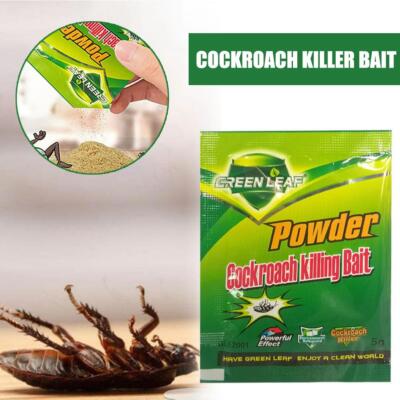
For those placements, GreenLeaf RoachBuster provides 50 odorless, stainless dry powder sachets per box, which suits humid crawl space adjacent areas because there is nothing to dry out or run, and leaves no marks on original cabinetry or timber. Always use as directed on the product label, and keep placements away from children and pets.
Next steps: how many sachets a full round actually takes, why roaches come back after treatment, and how to tell whether a treatment is working.
Treating an active infestation? One box treats one room, once. The 3-Box Kit — $120 (150 sachets, save $59.97) covers a full apartment through the complete 3-4 week treatment cycle; a $47 single box (50 sachets) covers a single-room problem. Ships within 1 business day, typical delivery 6-10 days · Free tracked shipping · 30-day money-back guarantee.
Choose your kit →
Treating one flat in a connected block fails predictably. How to survey across unit boundaries, quantify a build...
A resurgence at three weeks and a resurgence at three months are different problems. The six causes of reinfesta...

Found roaches tonight? The first 48 hours decide whether your treatment works. Hour one containment, the after-d...
Your anonymous feedback helps us improve our educational home defense resources.