🛡 30-Day Money-Back Guarantee  |  🚚 FREE Tracked Shipping — ships within 1 business day  |  ⭐ 4.5/5 Stars  |  🌿 100% Eco-Friendly
ORDER NOW — Free Tracked Shipping →

Tag: sewer line

  • Atlanta Crawlspace Outbreaks: Stopping Sewer Roaches from Invading Historic Homes

    Atlanta Crawlspace Outbreaks: Stopping Sewer Roaches from Invading Historic Homes

    Atlanta’s older neighbourhoods present a specific and fairly consistent pest profile. Houses in areas such as Midtown, Inman Park, Grant Park and Virginia-Highland typically sit on pier-and-beam or masonry foundations with a ventilated crawl space beneath, connect to aged municipal sewer infrastructure through cast-iron laterals, and sit under mature tree canopy that keeps the ground damp and the gutters full. Each of those characteristics is desirable in almost every respect except one. If activity centers on sinks or floor drains, start with our guide to roaches coming from drains for what is actually happening down there and the fix.

    The result is a seasonal pattern of large cockroaches, locally called palmetto bugs or sewer roaches, appearing indoors in summer. This guide covers the route they take and how to close it without compromising a historic structure.

    The crawl space is the whole problem

    In a slab house the entry points are a handful of pipe penetrations. In a house over a crawl space, the entire underside of the floor is an interface, and the crawl space itself is close to ideal habitat for the species involved: dark, humid, cool relative to the outside in summer, undisturbed for years at a time, and connected to both the sewer lateral and the exterior soil.

    • Aged cast-iron stacks and laterals. Decades-old joints and hub connections develop small failures that admit insects from the sewer line into the crawl space.
    • Subfloor plumbing penetrations. Every drain, supply line and vent passes through the wooden subfloor, and the holes are usually cut generously. These lead directly into sink cabinets, bath voids and laundry areas.
    • Gaps at the sill plate and rim joist, which in older construction are frequently open to both the crawl space and the wall cavity.
    • Masonry foundation joints. Old stone and brick piers with degraded mortar provide continuous voids.
    • Ventilation openings and access hatches, often with missing, rusted or torn screens.
    • Standing water and damp soil, from poor grading, a failed vapour barrier, or a slow supply leak.
    • Ductwork and insulation. Displaced batt insulation and damaged flex duct offer both harbourage and a route up into the living space.

    The insects involved are almost always American or Oriental cockroaches rather than German cockroaches, which matters because the strategy is exclusion and moisture control rather than intensive interior baiting. If you are seeing small tan insects with two dark stripes inside kitchen cabinets instead, that is a different problem; see German versus American cockroaches.

    Why summer triggers it

    Two mechanisms operate at once. As outdoor temperatures and humidity climb, subterranean populations in sewer lines and soil become more active and expand. At the same time the crawl space, which is shaded and ventilated, becomes cooler and more comfortable than the open ground, so it acts as a refuge. Heavy summer thunderstorms then flood the sewer laterals and saturate the soil, displacing insects upward on a short timescale, which is why sightings often appear within a day or two of a storm.

    Working on a historic house without damaging it

    This is the constraint that makes Atlanta’s older housing stock different from newer construction. Aggressive sealing of an older building can trap moisture and cause far more expensive problems than the insects would, and in a designated historic district some exterior alterations are regulated.

    • Do not block crawl space vents wholesale. Older houses often rely on that ventilation to manage moisture. Repair or replace the screening instead of closing the openings.
    • Use appropriate materials on masonry. Repointing old brick and stone requires a soft, lime-based mortar rather than modern hard cement, which can damage the surrounding masonry. This is a job for someone who works on historic buildings.
    • Seal from the inside where you can. Subfloor plumbing penetrations inside sink cabinets and bath voids are the highest-value targets and involve no exterior alteration at all.
    • Check district rules before exterior work, including changes to foundation vents, screens and grading, if your property is in a regulated area.
    • Address water before air. Grading, gutters and downspouts do more than sealant, and they do not risk trapping moisture in the structure.
    • Get the sewer lateral inspected if activity is persistent. A camera survey of an old cast-iron lateral will identify failed joints or root intrusion, and that repair fixes the source rather than the symptom. Our guide to drain and sewer entry routes covers what to look for.

    A practical sequence

    1. Inspect the crawl space properly, with a light and a mask. Note standing water, damp soil, displaced vapour barrier, damaged insulation, plumbing leaks, and any concentration of droppings, which will point to the harbourage.
    2. Fix the water first. Extend downspouts well away from the foundation, clear gutters, correct negative grading, and repair any plumbing leak. In a heavily shaded lot this is the single most effective measure.
    3. Repair or install the vapour barrier over exposed soil, and keep it clear of the sill.
    4. Seal the subfloor penetrations from inside the house. Under every sink, at the washer standpipe, at the water heater, and in the void beneath each bath. See our perimeter sealing checklist.
    5. Re-screen vents and secure the crawl space hatch.
    6. Fit and secure sewer cleanout caps and repair damaged yard drain covers. A missing cleanout cap is a direct opening into the sanitary line.
    7. Clear organic material from the perimeter: leaf litter, mulch banked against the foundation, firewood, and dense vegetation touching the wall.
    8. Place bait at the interior interface points, inside sink cabinets near the plumbing collar, at the standpipe, in the laundry area and at the water heater, rather than only in the kitchen.
    9. Re-inspect before each summer, because masonry joints and penetrations reopen and vapour barriers get displaced.

    If the crawl space itself needs treatment, that is generally a job for a licensed professional with the right equipment and protective gear, and it is one of the clearer cases where paying for a service is justified. Our cost comparison sets out where that line usually falls.

    The tree canopy trade-off

    Mature canopy is one of the best features of these neighbourhoods and it is also a significant contributor to the problem. Shade keeps soil and mulch damp for far longer after rain, leaf fall blocks gutters and fills beds with organic material, and overhanging limbs give climbing species access to the roof, soffits and attic. You do not need to remove trees to manage this, but gutter maintenance, leaf clearance at the foundation, and cutting limbs back off the roof line all matter more here than in an open lot.

    What you will see inside, and what it means

    • Large reddish-brown insects in a bathroom or laundry at night: classic crawl space and plumbing entry. Focus on subfloor penetrations and moisture.
    • Sightings concentrated on the lowest floor: confirms entry from below rather than an established upstairs population.
    • Large ridged droppings in a basement, utility area or under a sink: American or Oriental cockroach activity. Compare against the table in identifying cockroach droppings.
    • Small dark specks and tiny tan insects inside kitchen cabinets: a German cockroach population breeding indoors, which requires interior harbourage baiting on the timeline set out in our week-by-week guide.
    • A musty odour in a closed cabinet: worth investigating properly; see what that odour indicates.

    Frequently asked questions

    Should I encapsulate my crawl space?

    Encapsulation can substantially reduce humidity and harbourage, and in many older Atlanta houses it is a reasonable investment. It needs to be designed properly, usually with conditioning or dehumidification, because sealing a crawl space without managing moisture can create rot problems. Get advice specific to your house rather than a generic recommendation.

    Are sewer roaches the same as palmetto bugs?

    The terms are used interchangeably in the Southeast and generally refer to American cockroaches, sometimes Oriental cockroaches. Both are outdoor and subterranean species, and both are managed through exclusion and moisture control rather than intensive interior treatment.

    Why do they appear in my bathtub?

    The void beneath a bath is usually connected to the crawl space through a generous framing opening, and the tub overflow and drain provide moisture. It is one of the most common indoor arrival points in a pier-and-beam house, and sealing that void makes a noticeable difference.

    Will spraying the outside of the house stop them?

    Only partly. Insects travelling from the sewer lateral into the crawl space and up through a subfloor penetration never cross the exterior wall surface. Sealing the interior penetrations and fixing the water does far more, which is the general point made in why a monthly spray is not working.

    Close the route from below

    In an older Atlanta house the pest problem and the moisture problem are the same problem. Fix the grading and gutters, sort the vapour barrier, get an old cast-iron lateral inspected if activity persists, seal the subfloor penetrations from inside the cabinets, re-screen the vents, and place bait at the interior interface points rather than in the kitchen alone.

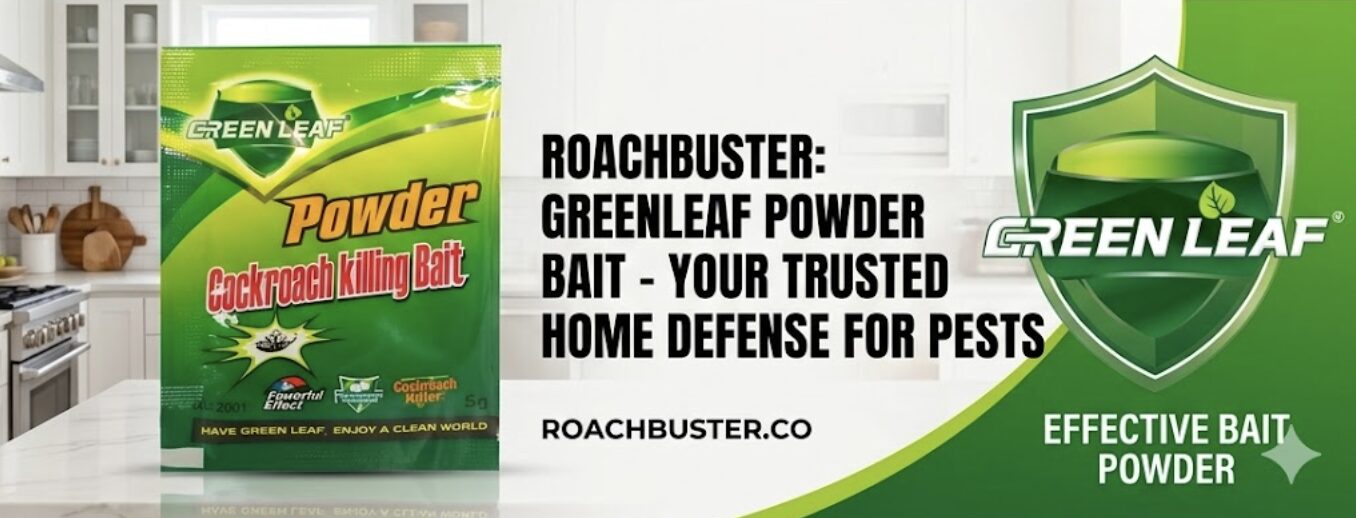
    For those placements, GreenLeaf RoachBuster provides 50 odorless, stainless dry powder sachets per box, which suits humid crawl space adjacent areas because there is nothing to dry out or run, and leaves no marks on original cabinetry or timber. Always use as directed on the product label, and keep placements away from children and pets.

    Next steps: how many sachets a full round actually takes, why roaches come back after treatment, and how to tell whether a treatment is working.

    Treating an active infestation? One box treats one room, once. The 3-Box Kit — $120 (150 sachets, save $59.97) covers a full apartment through the complete 3-4 week treatment cycle; a $47 single box (50 sachets) covers a single-room problem. Ships within 1 business day, typical delivery 6-10 days · Free tracked shipping · 30-day money-back guarantee.
    Choose your kit →

  • Sewer Cockroaches in Drains & Sink Overflows: How to Block Them

    Sewer Cockroaches in Drains & Sink Overflows: How to Block Them

    American cockroaches (Periplaneta americana), commonly referred to as palmetto bugs or sewer roaches, live in underground drainage networks and utility lines. When plumbing traps dry out or crack, these massive pests migrate directly up municipal sewer lines into residential sink drains, tub overflows, and laundry lines. Our companion guide to drain roaches covers why they appear at plugholes and how to block the route for good.

    The Drainage Migration Pathway

    Normally, a plumbing P-trap holds a pool of standing water that seals out sewer gases and climbing insects. However, in guest bathrooms, vacant properties, or during hot summer months, this standing water evaporates. This creates an open highway for sewer cockroaches to crawl straight out of the sink or tub drains at night, spreading germs across your clean surfaces.

    Why Traditional In-Drain Treatments Fail

    Pouring bleach, boiling water, or harsh chemical drain openers down the pipes does not provide residual protection. These substances wash away instantly, leaving the pipes completely unprotected within minutes. Liquid chemicals also corrode metal plumbing joints, leading to costly structural leaks.

    Securing Your Plumbing Lines Symmetrically

    To establish a permanent barrier against sewer-line invaders, follow these three steps:

    1. Keep P-Traps Wet: Run water through all sinks, tubs, and floor drains at least once a week to maintain the water barrier.
    2. Place Surgical Barriers: Insert RoachBuster dry active sachets behind the kickplates of bathroom vanities, under sink cabinet penetrations, and inside wall cavities where plumbing lines pass.
    3. Odorless Long-Term Residual: Our active dry powder sachet creates a localized barrier in the warm spaces immediately adjacent to the pipes. When a migrating roach crawls along the plumbing line, it intercepts the active formula, stopping the infestation before it can breach your kitchen or living areas.

    The overflow route people miss

    Most homeowners who suspect drain entry check the plughole and stop there. The sink overflow, the slot near the top rim of a basin or bath, is a second opening into the same waste pipe, and it is not protected by anything. It joins the pipe below the rim and above the trap in many installations, which means it can bypass the water seal entirely if the trap level has dropped. It is also permanently damp, coated in soap and organic film, and completely dark. If you have ever wondered how an insect appeared in a basin with a plug in it, the overflow is usually the answer.

    The same applies to bath overflows, which sit behind an access panel in a large void, and to washing machine standpipes, which have no trap water at all between cycles if the standpipe is dry.

    The five household openings, in order of how often they are the cause

    1. Rarely used fixture with a dried trap. Guest bathroom, basement shower, utility sink. Run water in it for thirty seconds and the route closes.
    2. Sink or bath overflow slot. Clean it, and treat the surrounding cabinet or panel void rather than the slot itself.
    3. Washing machine standpipe. Fit a proper trap if there is none, and cap the pipe when the machine is disconnected.
    4. Floor drain in a utility room or garage. Fit a screened cover or a self-sealing valve; these are the cheapest permanent fixes available.
    5. Failed toilet flange seal. A toilet that rocks slightly has a gap at floor level.

    Cleaning the overflow properly

    An overflow channel that is thick with biofilm is both an attractant and a food source. To clean it, remove the visible plate if it unscrews, push a narrow bottle brush or a flexible cleaning strip into the channel, work it back and forth, then flush with hot water and a normal cleaner. Do not pour undiluted bleach or caustic drain cleaner in; it will not reach far and repeated use damages seals and pipe. Repeat monthly on any fixture where you have seen activity. In a bath, take the access panel off and check for standing water underneath, because a slow leak at the overflow connection creates exactly the damp void that keeps a population alive.

    Where placements go around drains and overflows

    LocationPlacementPositioning
    Under-basin cabinet2Rear corners at the pipe penetration, dry surface
    Bath access panel void1 to 2Dry side, away from any damp patch
    Behind toilet at the flange1Corner position, out of the cleaning path
    Washing machine standpipe wall1 to 2Behind the machine, off the floor water path
    Utility floor drain surround1 to 2On dry floor at least 300 mm from the grating
    Under kitchen sink2At pipe penetrations

    Never place inside a drain, an overflow slot or a wet channel. Wet material stops working, and it will simply wash away. The point of the placement is to sit on the dry surface the arriving insect crosses.

    How to tell whether it is entry or an established population

    • Entry pattern. One or two large insects, usually at night, usually in a bathroom or utility room, no small stages, no droppings, sightings stop when you close a route.
    • Established pattern. Multiple small light-brown insects, kitchen-centred, pepper-like droppings in cabinet corners, shed skins, sightings continue regardless of drain work.
    • Mixed. Both patterns at once, common in older multi-unit buildings, and it needs both the plumbing fixes and a dense in-cabinet placement round.

    Getting this distinction right saves weeks. Our guide to reading treatment progress explains what each pattern should look like as treatment takes effect, and our first 48 hours plan covers the immediate steps when you find an established population.

    Questions homeowners ask

    Should I pour bleach down the drain every night?

    No. It does not affect the sewer population, it damages seals over time, and it does nothing about the opening. Water in the trap and a physical cover achieve far more.

    Do drain covers actually stop them?

    A screened cover with fine mesh stops entry at that fixture. Combined with maintained trap water it is close to a permanent fix for a single opening.

    Why do sightings peak after heavy rain?

    Storm flow floods sewers and storm drains and pushes the resident population upward and outward. A post-rain spike is one of the strongest signals that your problem is entry rather than an indoor population.

    Can I seal an overflow permanently?

    No, it is a safety feature that prevents a basin or bath overflowing. Clean it and maintain the trap water instead.

    The short version

    The overflow slot and the dry trap are the two openings that let sewer roaches into a clean house. Run water in unused fixtures monthly, clean overflow channels with a brush rather than chemicals, fit screened covers on floor drains, and place dry sachets on the surrounding dry surfaces rather than in the pipe. One box covers every fixture in a typical home, with a 30-day money-back guarantee.

    Always use any bait product as directed on its label, and keep placements out of reach of children and pets.

    Block Sewer Roaches Symmetrically

    Block plumbing migrations. Deploy RoachBuster dry active sachets along utility collars and vanity gaps safely.

    Free shipping, secure Stripe checkout, and a 30-day money-back guarantee.

    Treating an active infestation? One box treats one room, once. The 3-Box Kit — $120 (150 sachets, save $59.97) covers a full apartment through the complete 3-4 week treatment cycle; a $47 single box (50 sachets) covers a single-room problem. Ships within 1 business day, typical delivery 6-10 days · Free tracked shipping · 30-day money-back guarantee.
    Choose your kit →
  • Sewer Line Entry: How Roaches Invade Drains & How to Block Them

    Sewer Line Entry: How Roaches Invade Drains & How to Block Them

    Large American cockroaches (often called waterbugs) thrive in damp, dark, organic environments like sewer lines and utility drains. Unfortunately, when sewer lines become crowded or dry out during warm seasons, these large insects climb up plumbing lines and enter luxury homes through sink and floor drains. If activity centers on sinks or floor drains, start with our guide to roaches coming from drains for what is actually happening down there and the fix.

    Why Drains Become Easy Access Points

    Every sink, tub, and floor drain has a curved pipe underneath called a P-trap. When filled with water, the P-trap blocks sewer odors and pests. However, if a guest bathroom sink or basement drain is rarely used, the water inside the trap evaporates, leaving an open, dry highway straight into your living space.

    How to Seal and Block Drain Entry Points

    Blocking sewer roaches requires a two-step approach: maintaining plumbing seals and deploying active bait barriers. First, regularly run water down rarely-used drains to keep P-traps full. Second, place dry active bait powder sachets behind bathroom vanities, near utility lines, and around baseboard crevices near plumbing stacks.

    Long-Lasting Dry Barriers

    Unlike wet chemical sprays that quickly wash away or dry up in humid bathroom spaces, dry active powder baits remain stable and effective for months. Pests emerging from plumbing wall cavities encounter the dry bait and carry the active ingredient back into the pipe junctions, preventing future invasions.

    How a drain becomes a doorway

    Building drainage is designed to be a sealed system. Every fixture has a trap, the trap holds a plug of water, and that water plug is the only thing standing between your bathroom and the sewer. The system fails in three predictable ways. A trap dries out, usually in a guest bathroom, a floor drain or a laundry standpipe that has not been used for weeks. A vent gets blocked, so pressure changes siphon the trap empty. Or a seal fails at a joint, a clean-out cap, a toilet flange or a redundant capped stub, leaving an opening that bypasses the trap altogether.

    American cockroaches thrive in municipal sewers and storm drains, and they are strong climbers in wet vertical pipe. Once any of those three failures exists, the insect does not need to break into your home. The route is simply open.

    Finding the open route in your own building

    1. Check every rarely used fixture. Guest bath, basement shower, laundry sink, floor drains in utility rooms and garages. If it has not run in a month, assume the trap is dry.
    2. Look for capped stubs. Old washing machine standpipes, disused sink drains and abandoned floor drains often sit behind panels with a cap that has cracked or gone missing.
    3. Inspect clean-out plugs. A clean-out in a basement or crawl space with a loose or corroded plug is a direct sewer opening.
    4. Check the toilet base. A rocking toilet or a failed wax ring leaves a gap at the flange.
    5. Listen for gurgling. Gurgling at a fixture when another drains usually indicates a partly blocked vent, which is what siphons traps dry.
    6. Smell test. Any intermittent sewer odour indicates a broken water seal somewhere. Find it before you treat anything.

    Fixes ranked by value

    FixCost levelEffect
    Run water in unused fixtures monthlyNoneRestores the water plug, closes the route
    Fit trap primers or self-sealing drain valves on floor drainsLowKeeps rarely used drains sealed permanently
    Replace missing or cracked clean-out plugsLowCloses a direct sewer opening
    Fit screened drain coversLowPhysical barrier at the fixture
    Reseat a rocking toilet with a new sealModerateCloses the flange gap
    Clear a blocked vent stackModerateStops traps being siphoned empty
    Repair a broken drain line under slabHighOnly needed if the route is a fracture rather than a seal

    The first four items solve the majority of household cases and cost very little. It is worth doing them before concluding that you have an infestation, because a single insect arriving nightly through a dry floor drain looks exactly like an infestation from inside the house.

    Where bait belongs in a drain-entry problem

    Bait does not go in the drain. It goes on the surfaces around the entry point, where an arriving insect will walk. Practical positions are the cabinet floor under a sink at the pipe penetration, the dry floor surround of a utility floor drain, behind the toilet at the flange, the base of a laundry standpipe wall, and the void behind a bath access panel. Keep placements dry and out of any water path; a sachet sitting in a wet drain surround is doing nothing. Combined with sealing, this intercepts the traffic while the physical fixes remove the route. If sightings resume weeks later, the usual explanation is a second unsealed route rather than bait failure, which is covered in our guide to recurrence.

    What does not work

    • Pouring bleach or drain cleaner down the trap. It kills nothing in the sewer, damages the pipe over time and does not close the opening.
    • Boiling water. Momentary effect at best and a risk to older pipe joints.
    • Foaming aerosols into the drain. The propellant pushes insects into adjacent branches; see our method comparison.
    • Covering the drain with a flat object. It works until someone moves it, and it can trap water in the wrong place.

    Questions homeowners ask

    One large roach a night, always in the bathroom. Infestation or entry?

    That pattern is almost always entry rather than an established indoor population. Established German cockroach populations produce many small insects in kitchens, not one large insect in a bathroom.

    Can they really climb up a vertical pipe?

    Yes. American cockroaches move readily on wet vertical surfaces and inside pipe, which is why upper-floor bathrooms in tall buildings still get visitors.

    Do I need a plumber?

    Only for a blocked vent, a reseated toilet or a suspected line fracture. Dry traps, missing caps and drain covers are homeowner-level fixes.

    How long after sealing should sightings stop?

    If you closed the only route, sightings usually stop within days. Continued nightly sightings mean another route is still open.

    The short version

    Drain entry is a plumbing problem with an insect symptom. Find the dry trap, the missing cap or the blocked vent, close it, fit screened covers on floor drains, then place dry sachets on the surrounds rather than in the pipe. One box provides more than enough placements for every drain and fixture in a typical home, with a 30-day money-back guarantee.

    Always use any bait product as directed on its label, and keep placements out of reach of children and pets. This is general operational guidance, not legal or food-safety regulatory advice; requirements vary by jurisdiction and by inspecting authority.

    Treating an active infestation? One box treats one room, once. The 3-Box Kit — $120 (150 sachets, save $59.97) covers a full apartment through the complete 3-4 week treatment cycle; a $47 single box (50 sachets) covers a single-room problem. Ships within 1 business day, typical delivery 6-10 days · Free tracked shipping · 30-day money-back guarantee.
    Choose your kit →