As pet owners, our primary instinct is to protect our cats and dogs from any potential household hazard. When faced with a cockroach infestation, the stress is doubled: you need to eliminate the health risks that pests carry (like Salmonella and allergens), but you also worry about exposing your pets to toxic chemicals, sticky gels, or loose powders. If there are cats or dogs in the home, our pet-safe roach killer guide walks through which product formats are safe to use around them.
The Truth About Borates and Mammalian Toxicity
Boric acid and organic borates are widely used in professional-grade pest control. Unlike volatile synthetic neurotoxins (such as pyrethroids or organophosphates found in commercial bug sprays), borate compounds possess a highly targeted mechanism of action. They act as a stomach toxicant to insects when ingested during grooming, and physically disrupt their waxy exoskeleton.
For mammals—including cats, dogs, and humans—borate compounds have an exceptionally low toxicity profile. Mammalian organisms have highly evolved, efficient kidney systems that rapidly filter and excrete borate ions from the bloodstream, preventing accumulation. In fact, the oral toxicity of borate compounds in dogs is comparable to that of standard table salt.
Why Loose Powders and Open Gels Pose a Risk
Even though borates are inherently low in toxicity, applying loose boric acid powder or open sticky gels inside your kitchen is still highly discouraged. Loose powder can be easily blown around by cabinet drafts, settling on food surfaces or clinging to pet fur, which they then lick off. Runny chemical gels can stick to paws, leading to direct chemical ingestion and messy cabinet cleanup.
The Security of Self-Contained Sachet Systems
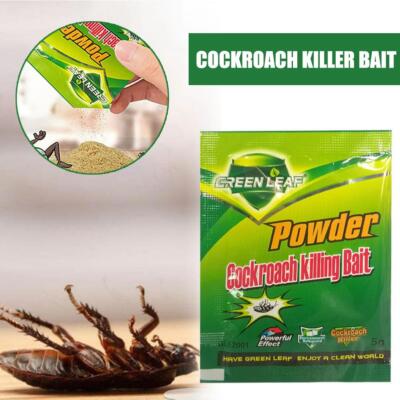
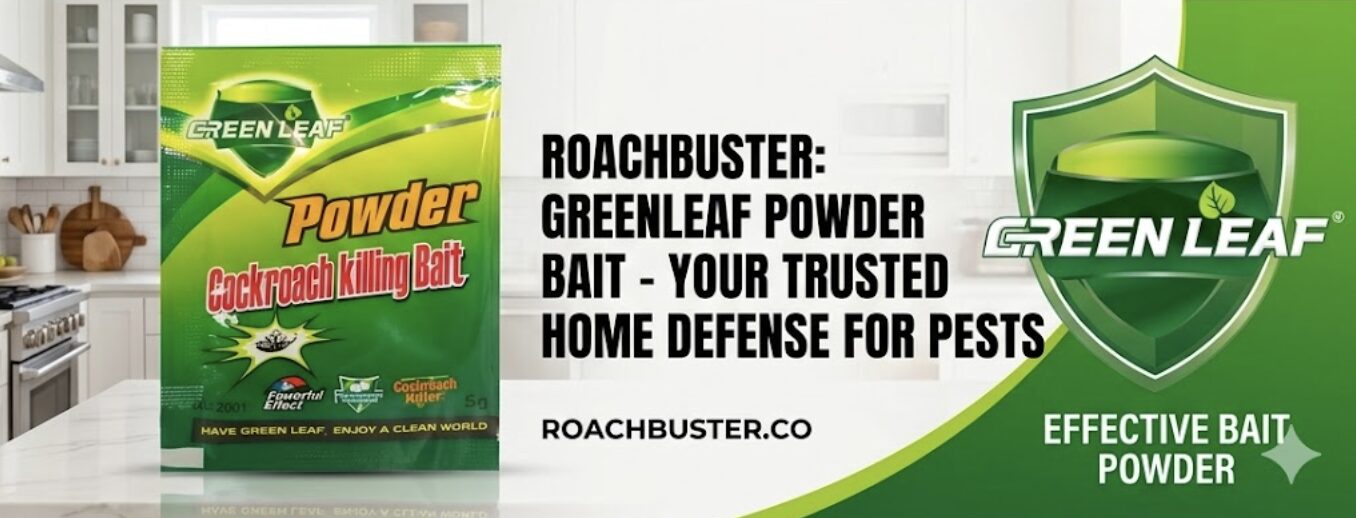
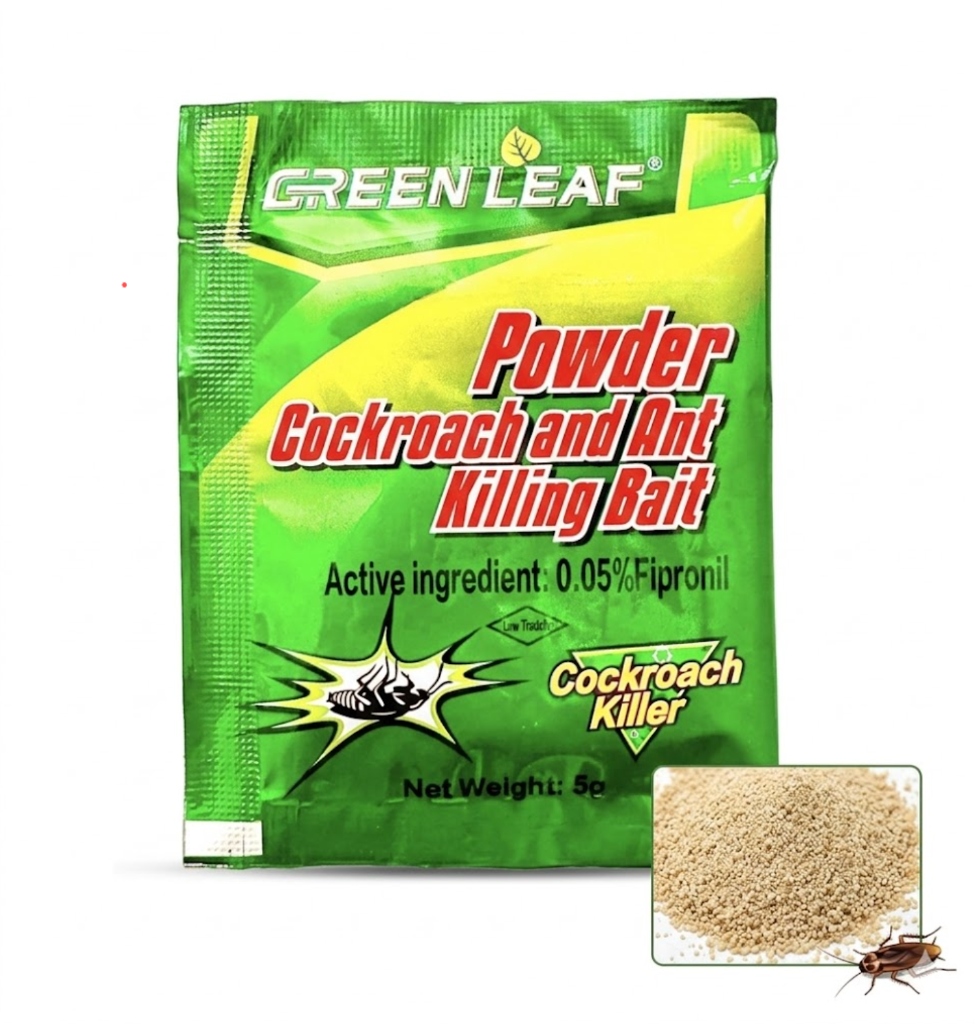
RoachBuster resolves this safety concern through its secure, self-contained paper sachet system. The dry active borate bait remains completely trapped inside durable, thick paper sachets. This design prevents loose dust from contaminating your home air or sticking to your pet’s fur.
By slipping these compact, odorless sachets deep into hard-to-reach cracks—like behind refrigerator coils, under heavy washing machines, and inside closed cabinet corners—you establish a professional-grade pest defense. Cockroaches easily squeeze into these gaps to feed, while your curious cats and dogs remain completely isolated from the treatment zones, ensuring 100% peace of mind.
Next steps: odour-free options when sprays are off the table, how many sachets a full round actually takes, and how to tell whether a treatment is working.
The questions a vet will actually ask
If you call a vet or an animal poison line about a suspected exposure, the conversation follows a predictable path, and having the answers ready changes the quality of advice you get. They will ask which product, which active ingredient and at what concentration, roughly how much was available and how much is missing, the species and approximate body weight of the animal, how long ago it happened, and what signs you are seeing. Everything else follows from those six answers. This is the single strongest argument for keeping the product label and a written placement card in the house rather than relying on memory.
Why dose and body weight dominate the answer
Toxicity is not a property of a substance in isolation; it is a relationship between the amount ingested and the size of the animal. A quantity that is inconsequential for a large dog can matter for a small one, and cats differ from dogs in how they metabolise many compounds as well as being much smaller. This is why no honest article can tell you that a given product is safe or unsafe for your pet: the answer depends on the specific formulation, the amount and the animal. What an article can usefully do is explain how to reduce the amount that is ever available, which is entirely within your control.
Reducing the available dose to almost nothing
| Design choice | Effect on available dose | Practical note |
|---|---|---|
| Enclosed sachet rather than loose powder | A single small unit instead of a broadcast layer | Also prevents tracking on paws |
| Placement behind a child lock | Nothing available at all unless the lock fails | Cheapest safety measure available |
| Placement in an appliance recess under 60 mm | Physically unreachable by most dogs | Measure the gap first |
| Metre of clearance from bowls and beds | Removes the routine traffic route | Simple and free |
| Written placement card | Prevents accidental relocation into the open | Tape it inside a cupboard door |
| Spares stored high and closed | Removes the largest available dose in the house | The box, not the placement, is the bigger risk |
Signs that warrant an immediate call
- Vomiting or repeated retching.
- Excessive drooling or pawing at the mouth.
- Lethargy, weakness or reluctance to move.
- Unsteadiness, tremors or any abnormal gait.
- Loss of appetite or refusal of water.
- Diarrhoea, particularly if repeated.
- Any change in behaviour you cannot otherwise explain following a suspected exposure.
Do not wait for signs before calling if you know or suspect ingestion, and do not induce vomiting unless a professional instructs you to. Early advice is more useful than a wait-and-see approach.
Species differences worth knowing
- Dogs. Most incidents involve deliberate chewing of something found at floor level. Enclosure and gap-blocking address nearly all of it.
- Cats. The realistic route is grooming residue off paws and fur, which is why open surface applications are the wrong choice in a cat household and enclosed formats are the right one.
- Rabbits, guinea pigs and ferrets. Free-roaming small mammals chew and enter cavities, so treat only rooms they cannot access.
- Birds. Extremely sensitive to airborne exposure. Nothing that aerosolises should be used anywhere in the home.
- Fish and reptiles. Waterborne and airborne exposure via tank and pump. Keep placements well away and avoid all aerosols.
The placement-position detail for animal households is in our odourless control guide, and the counts for a full home round are in our coverage arithmetic guide.
Questions pet owners ask
Is a naturally occurring mineral automatically safe for pets?
No. Natural origin tells you nothing about how much is safe to ingest. Treat every pest control product as something to keep out of reach, whatever its origin.
Is there any product I can use without precautions?
No. There is, however, a large difference between a format you can enclose and control and one that coats open surfaces. Choose the former and follow the label.
My dog licked the outside of a sachet. What now?
Call your vet or poison line with the label to hand and describe exactly what happened. Contact with the outside of a sealed unit is a different scenario from ingestion, but the assessment should be made by a professional, not by you or by an article.
Should I stop treating and just live with the roaches?
Untreated infestations carry their own health consequences for both people and animals, including allergen exposure and food contamination. The practical answer is controlled placement rather than no treatment.
The short version
Toxicity depends on the specific product, the amount and the animal, so no article can clear a product for your pet. What you can control is the available dose: use enclosed sachets behind child locks, block gaps under appliances, keep a metre from bowls and beds, store spares high, keep a placement card and the label, and call your vet or poison line immediately if anything happens. One box lets you treat a whole home from enclosed positions, with a 30-day money-back guarantee.
Always use any product as directed on its label, and keep placements out of reach of children and pets. This is general information and not veterinary advice; if you think an animal has ingested any pest control product, contact your vet or an animal poison line immediately with the label to hand.
Treating an active infestation? One box treats one room, once. The 3-Box Kit — $120 (150 sachets, save $59.97) covers a full apartment through the complete 3-4 week treatment cycle; a $47 single box (50 sachets) covers a single-room problem. Ships within 1 business day, typical delivery 6-10 days · Free tracked shipping · 30-day money-back guarantee.
Choose your kit →