
Is Your Roach Treatment Working: Signs of Progress and Stalling
Live sightings are the worst measure of progress. How to read fresh droppings, dead insects and trap catch rates...
A cockroach infestation is often met with immediate disgust and visual discomfort, but the true threat lies far beneath the surface. Beyond the visible anxiety of pests crawling across your floors, indoor cockroach nesting presents severe, invisible biological hazards to your household’s health and safety. Understanding these medical and hygienic risks is the first step toward securing your home. Pair this with our prevention plan that sticks so a cleared home stays cleared.
Cockroaches are notorious mechanical vectors. Having evolved to thrive in sewers, drains, and damp organic waste heaps, they gather millions of pathogenic microbes on their legs, mouthparts, and bodies. As they forage through your home at night, they transfer these bacteria directly onto kitchen countertops, food prep areas, utensils, and open pantries.
Dangerous enteric pathogens like Salmonella, E. coli, Shigella, and Streptococcus are easily deposited, putting your family at high risk of acute food poisoning, gastroenteritis, and dysentery. Because roaches crawl inside electrical outlets and deep wall voids, they can contaminate spaces that are impossible to reach with standard cleaning wipes.
For individuals with respiratory sensitivities, especially young children and elderly family members, cockroaches present a major medical hazard. The saliva, droppings, and shedding cuticles of cockroaches release highly potent allergen proteins, known scientifically as Bla g 1 and Bla g 2.
These microscopic allergen particles quickly become airborne, settling into carpets, bedding, upholstery, and air filtration systems. Inhalation of these allergens triggers chronic asthma flare-ups, persistent eczema, and severe allergic airway inflammation. Medical studies show that prolonged exposure to indoor cockroach allergens is a leading cause of pediatric asthma hospitalizations in urban areas.
In a desperate bid to protect their family’s health, many homeowners saturate their living spaces with broadcast pesticide sprays, bug bombs, and chemical foggers. Unfortunately, this frequently creates a secondary, equally dangerous health hazard.
Broadcast liquid sprays coat large surface areas with toxic chemical residues and release volatile organic compounds (VOCs) into your indoor air. Pets and young children crawl along treated floors, absorbing these chemicals through their skin or ingesting them during normal hand-to-mouth activity. This chemical buildup compromises your indoor air quality, compounding the respiratory distress of already sensitive family members.
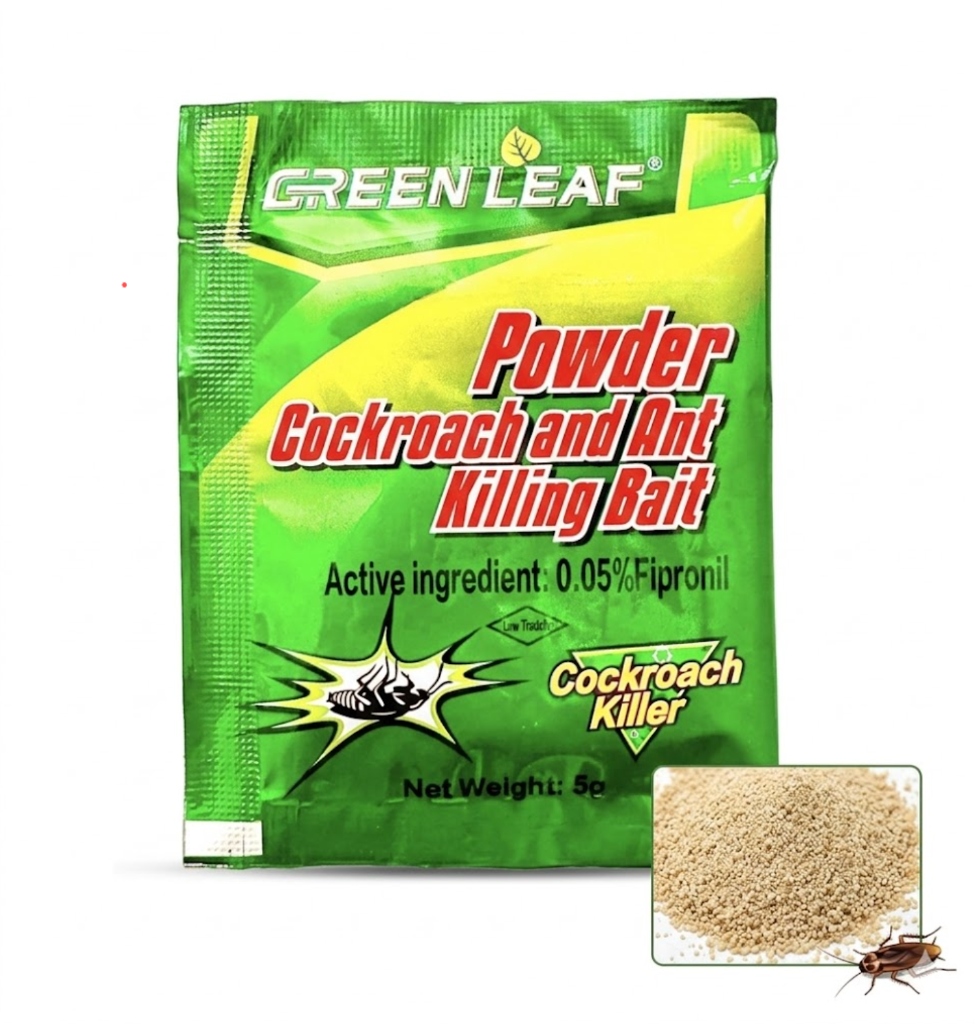
Protecting your family’s health requires a zero-exposure approach to pest control. RoachBuster’s surgical dry powder sachet system eliminates the nesting colony cleanly, without contaminating your living space or air. By housing the active powder bait inside specialized paper sachets and placing them deep inside cabinet joints, drawer backs, and appliance gaps, the bait remains entirely contained.
Pets and children cannot reach the contained powder, and no chemical fumes or toxic residues are released into your indoor air. Pests are drawn in naturally by high-quality food attractants, ingesting the bait and carrying it back to the nesting site, keeping your countertops pristine, your air completely odorless, and your family safe.
Because most allergen exposure comes from droppings and shed skins, how you clean matters. Our guide to safely cleaning cockroach droppings explains why dry sweeping is the worst option.
Next steps: odour-free options when sprays are off the table, how many sachets a full round actually takes, and how to tell whether a treatment is working.
The health effect with the strongest evidence behind it is allergic sensitisation. Cockroach allergens come from droppings, shed skins, saliva and body fragments, they become airborne as fine dust, and they settle in soft furnishings and carpets. Cockroach allergen exposure is a recognised trigger for asthma symptoms, and it is a particular concern for children in dense housing. That matters because it changes how you think about cleaning: the goal is physical removal of the deposit, not deodorising it, and vacuuming with a good filter plus laundering soft items is part of the treatment rather than an afterthought.
| Route | Mechanism | Practical mitigation |
|---|---|---|
| Airborne allergen | Fine particles from droppings and skins | Vacuum with a good filter, launder textiles, remove the deposit |
| Food contamination | Mechanical transfer of bacteria onto surfaces and food | Sealed containers, dry surfaces, treat the harbourage |
| Surface contamination | Smear marks and droppings on worktops and utensils | Detergent washing; treat before cleaning |
| Sleep and stress effects | Anxiety, disturbed sleep, hypervigilance | Resolve the infestation; the psychological load is real |
| Secondary effects | Skin irritation from scratching, avoidance of rooms | Address the source rather than the symptom |
Treating the harbourage is what ends the contamination cycle; the placement counts are in our coverage arithmetic guide.
Cockroach allergen exposure is recognised as an asthma trigger and is associated with symptom severity in sensitised children. Whether it causes asthma is a medical question for a doctor, but reducing exposure is sensible regardless.
They can mechanically transfer bacteria from waste to food surfaces. Practical risk is reduced by removing the population and by washing food-contact surfaces.
The odour itself is not the hazard; the allergen-bearing dust in the same deposit is the concern, which is why physical removal beats masking.
It persists until the deposit is physically removed. Vacuuming and laundering are what shorten that period.
The strongest evidence concerns allergens, which come from droppings and shed skins and become airborne, so treatment plus physical removal of the deposit is the health intervention. Avoid aerosols in homes with asthma, use plain detergent, seal food, keep surfaces dry, and see a doctor about symptoms. One box covers a whole-home round, with a 30-day money-back guarantee.
Always use any bait product as directed on its label, and keep placements out of reach of children and pets. This is general health information, not medical advice; speak to a doctor about symptoms or exposure concerns.
Treating an active infestation? One box treats one room, once. The 3-Box Kit — $120 (150 sachets, save $59.97) covers a full apartment through the complete 3-4 week treatment cycle; a $47 single box (50 sachets) covers a single-room problem. Ships within 1 business day, typical delivery 6-10 days · Free tracked shipping · 30-day money-back guarantee.
Choose your kit →
Live sightings are the worst measure of progress. How to read fresh droppings, dead insects and trap catch rates...
A resurgence at three weeks and a resurgence at three months are different problems. The six causes of reinfesta...

Powder sachets, aerosols and total-release foggers work on completely different principles. Which one reaches th...
Your anonymous feedback helps us improve our educational home defense resources.