
Roach Control for Multi-Unit Buildings: A Landlord Treatment Plan
Treating one flat in a connected block fails predictably. How to survey across unit boundaries, quantify a build...

Living in one of London’s high-density housing estates or beautiful brick terrace houses offers great urban connectivity, but it also brings a severe challenge: a highly vulnerable environment for pest control. Due to aging heating networks, shared service ducts, and hollow brick cavities, London estates can become active breeding grounds where cockroach infestations spread effortlessly between neighboring flats. If the property is rented, our guide to whether roaches are the landlord or the tenant responsibility covers who owes what — and what residents can do while they wait.
The UK’s increasingly mild, wet winter seasons prevent outdoor cockroach populations from going dormant. At the same time, aging estate block infrastructure—such as shared vertical plumbing pipes and old boiler ducts—provides warm, dark highways. When one flat becomes infested, the insects naturally migrate through structural gaps, invading adjacent kitchens and bathrooms.
For tenants of council (social) housing or private lets, relying on local borough council pest control services is frequently a lesson in frustration. Borough pest control teams are plagued by massive treatment backlog queues, sometimes taking weeks to schedule a single visit. Furthermore, their standard treatments are often superficial and fail to address the root nesting sites, leaving tenants to live in high-stress, unsanitary conditions.
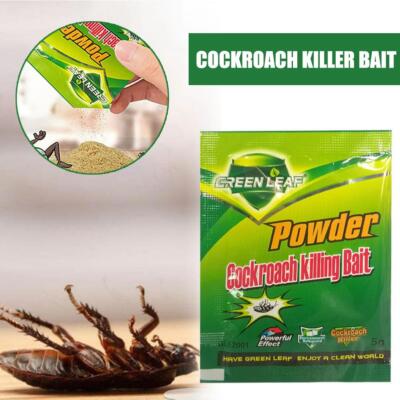
Reclaiming a clean, sanitary flat doesn’t require waiting in council queues or tolerating messy chemical sprays. RoachBuster’s targeted dry powder sachet system provides a professional-grade, self-directed home defense shield. By placing dry active sachets inside dark cabinet corners, drawer backs, and utility wall penetrations, you block all entry points.
The bait remains safely contained inside specialized paper sachets, keeping your counters perfectly clean and your air completely odorless. Insects ingest the high-attractant bait and carry it back to their shared nest voids, eliminating the colony cleanly and permanently.
Next steps: the building-wide plan for multi-unit properties, why roaches come back after treatment, and how many sachets a full round actually takes.
A post-war London estate block is built with continuous services running through the structure: a communal soil stack serving stacked kitchens and bathrooms, ducted riser cupboards, communal refuse chutes and bin rooms, and often communal heating pipework. Individual flats are compartments within a single system rather than separate buildings. A population living in the stack or the bin room is not in anybody flat, which is precisely why single-flat treatment is the least effective thing anyone can do and yet the most commonly attempted.
For a resident, the practical consequence is that your own flat can be treated to a very high standard and still see activity, and that fact is not evidence that you did it wrong. It is evidence about where the population lives.
| Action | Effect | Cost |
|---|---|---|
| Draught excluder or brush strip on the flat entrance door | Blocks the main horizontal route from the communal corridor | Low |
| Wire wool and sealant at sink and bath pipe penetrations | Blocks the main vertical route from the stack | Low |
| Placements at every penetration and along the shared-wall skirting | Intercepts traffic at the boundary | Low |
| Placements in cabinet, plinth and appliance cavities | Reduces any population inside the flat | Low |
| Bath panel removed, void cleaned and treated | Addresses the largest void in most flats | Low |
| Overnight water removal, sinks dried, bowls lifted | Removes the limiting resource | Free |
| Cardboard removed from the flat | Removes harbourage and transport | Free |
| Written reports with photographs | Creates the record that drives landlord action | Free |
When several residents report the same pattern in writing at the same time, communal treatment tends to follow quickly, because the landlord exposure changes. Coordinating with neighbours is more effective than any individual action. The building-scale version of the plan is in our multi-unit treatment plan.
Twelve to eighteen placements for a two-bedroom flat: two to three under the kitchen sink at the stack penetration, two behind and under the fridge, one to two at the dishwasher or washing machine, two in the bathroom vanity, one to two in the bath void, two to four along shared-wall skirting corners, and one to two at the entrance door threshold. Keep them dry, do not move them, inspect monthly and replace anything consumed. Counts by room are in our coverage arithmetic guide, and the reason not to add a spray on top is set out in our method comparison.
That depends on your tenancy agreement and on whether the source is communal or attributable to the flat. Documentation is what determines the argument in either direction, so keep records regardless.
Yes, with bait rather than spray. Bait placed in advance does not interfere with a professional treatment, whereas a repellent spray can undermine it.
Report what you observe and let the landlord manage access. A written record of the pattern is what triggers block-level action.
Two weeks for visible reduction in a treated flat, and four to six weeks for a stack, provided communal areas were included. If activity returns, the communal reservoir was probably missed; see our recurrence guide.
An estate block is one system, so a single flat cannot be the whole solution. Fit a door brush, seal and bait the pipe penetrations, treat the bath void and the shared-wall skirting, then push in writing for communal areas and the whole stack to be treated, coordinating with neighbours. One box covers a flat for a year, with a 30-day money-back guarantee.
Always use any bait product as directed on its label, and keep placements out of reach of children and pets. This is general operational guidance and not legal advice; housing law, repair obligations and tenancy procedures vary by jurisdiction and change over time. Take advice from a local housing adviser or solicitor about your own situation.
Treating an active infestation? One box treats one room, once. The 3-Box Kit — $120 (150 sachets, save $59.97) covers a full apartment through the complete 3-4 week treatment cycle; a $47 single box (50 sachets) covers a single-room problem. Ships within 1 business day, typical delivery 6-10 days · Free tracked shipping · 30-day money-back guarantee.
Choose your kit →
Treating one flat in a connected block fails predictably. How to survey across unit boundaries, quantify a build...
A resurgence at three weeks and a resurgence at three months are different problems. The six causes of reinfesta...

Found roaches tonight? The first 48 hours decide whether your treatment works. Hour one containment, the after-d...
Your anonymous feedback helps us improve our educational home defense resources.