
Roach Control for Multi-Unit Buildings: A Landlord Treatment Plan
Treating one flat in a connected block fails predictably. How to survey across unit boundaries, quantify a build...

Under the Ontario Residential Tenancies Act, landlords are legally responsible for maintaining rental units in a good state of repair, which strictly includes keeping the property completely free of pest infestations. However, when an active cockroach infestation strikes, many Ontario tenants discover that navigating the official legal channels to force an extermination is a slow, frustrating process. For rented and multi-unit settings, see whether roaches are the landlord or tenant responsibility alongside this plan.
If an Ontario landlord ignores written reports of cockroaches, the tenant’s primary legal recourse is to file a Form T6 (Tenant Application About Maintenance) with the Landlord and Tenant Board (LTB). Unfortunately, due to massive, well-documented administrative backlogs, waiting for an LTB maintenance hearing can take several months. Living in an active cockroach nesting environment for months causes extreme stress, sleep deprivation, and serious household hygiene hazards.
Rather than living in anxiety while waiting for hearings or standard chemical exterminators who spray toxic baseboard barriers, Ontario tenants can take control immediately. Self-directed, professional-grade treatments are the fastest way to resolve the crisis. However, traditional pest control methods like messy gel baits or runny liquids present significant stains and chemical exposure risks in tight apartment units.
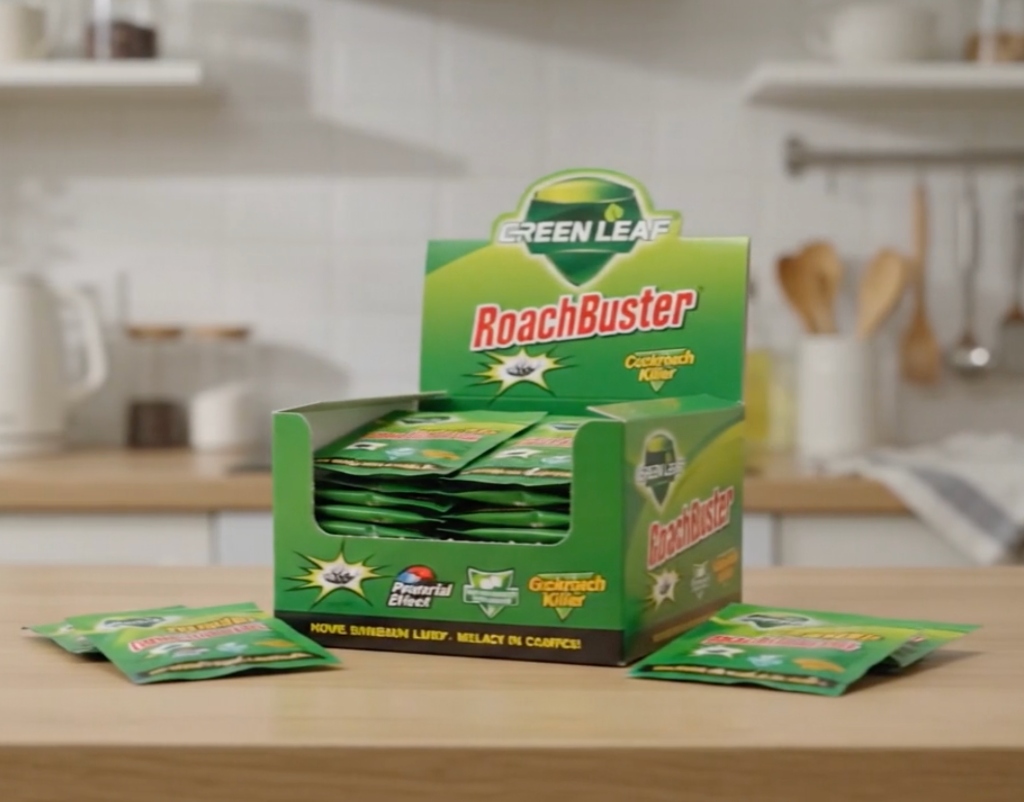
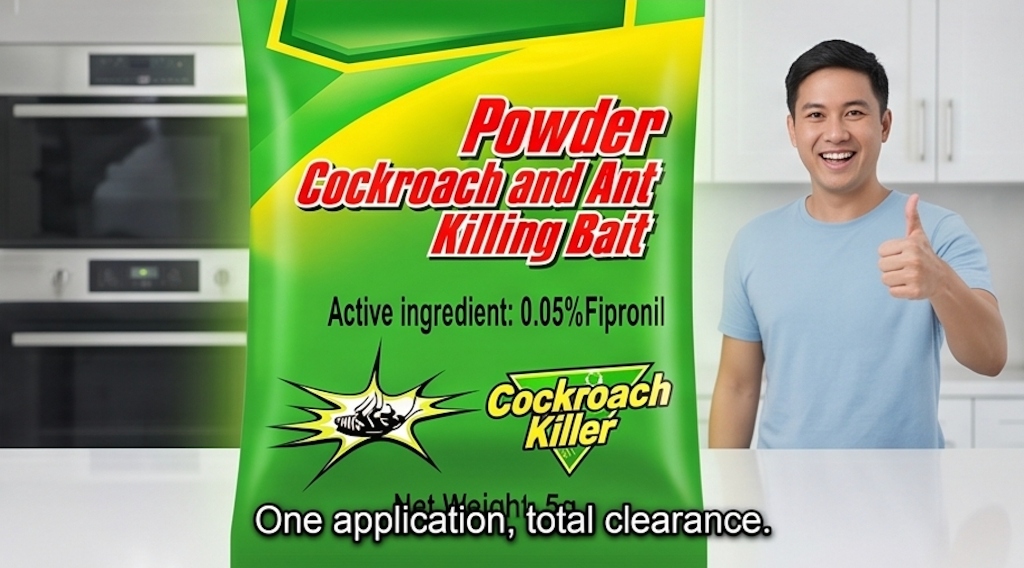
RoachBuster’s surgical dry powder sachet system provides a highly secure, non-toxic alternative. The active bait powder remains completely contained inside specialized paper sachets. Tenants can tuck these small sachets deep within narrow appliance crevices, drawer backs, and pantry shelf corners—spots that are easily reached by pests but completely inaccessible to young children and curious pets.
The dry formula releases no chemical fumes or odors into your indoor air, keeps your cabinetry completely stainless, and works continuously to eradicate the nesting colony at the source, allowing you to reclaim your peace of mind and clean home immediately.
Next steps: the building-wide plan for multi-unit properties, why roaches come back after treatment, and how many sachets a full round actually takes.
When a tenancy tribunal or board has a long queue, the practical reality is that adjudication is not a fast remedy. That does not reduce a landlord obligation to maintain a unit, and it does not change what a tenant is entitled to, but it does change the sensible order of operations. If a hearing is months away, the value of the interim record you build rises sharply, and so does the value of anything that reduces harm in the meantime. Tenants who treat the delay as a reason to stop documenting almost always end up worse off than tenants who keep a disciplined log.
| Step | Why it matters | Effort |
|---|---|---|
| Door sweep on the entry door | Blocks the corridor route into the unit | Fifteen minutes |
| Seal sink and bath pipe penetrations | Blocks the riser route | Thirty minutes |
| Placements at penetrations and shared-wall skirting | Intercepts boundary traffic | Twenty minutes |
| Placements in cabinet and appliance cavities | Reduces population already inside | Thirty minutes |
| Food into sealed containers, cardboard removed | Removes competing food and harbourage | An afternoon |
| Overnight water removal | Removes the limiting resource | Nightly habit |
| Monthly inspection and replacement | Keeps the interception line live | Ten minutes |
Twelve to eighteen placements covers a typical apartment; the counts are in our coverage arithmetic guide. Use bait rather than aerosols, because a repellent product pushes the population into the shared wall and undermines any professional treatment that eventually happens, as explained in our method comparison.
Depending on where you live, several routes may move faster than a tribunal queue: a municipal property standards or environmental health inspection, a local by-law enforcement complaint, a tenant advocacy or legal clinic, a landlord internal complaints procedure, or a housing ombudsman scheme. These are jurisdiction-specific and the details change, so ask a local housing adviser which of them applies to you and in what order. An inspection report from a public authority is often the most useful single document a tenant can obtain, because it is independent.
No. Treating protects your health and your possessions now, and your own treatment record strengthens rather than weakens your position. Keep the receipts.
Not if the record is continuous. A well-kept chronology covering the whole delay is stronger evidence than a short burst of complaints.
Possibly, depending on jurisdiction and evidence. Photograph and keep receipts for anything discarded, and take local advice.
Record the dates and the outcome. Repeated single-unit treatment in a multi-unit building is a recognised failure pattern and is explained in our recurrence guide and our multi-unit plan.
A long queue changes tactics, not entitlements. Build one continuous chronology, photograph everything, keep every email, treat the unit yourself with bait rather than spray, seal the penetrations, fit a door sweep, and ask a local housing adviser which faster route applies where you live. One box covers a full apartment for a year, with a 30-day money-back guarantee.
Always use any bait product as directed on its label, and keep placements out of reach of children and pets. This is general operational guidance and not legal advice; housing law, repair obligations and tenancy procedures vary by jurisdiction and change over time. Take advice from a local housing adviser or solicitor about your own situation.
Treating an active infestation? One box treats one room, once. The 3-Box Kit — $120 (150 sachets, save $59.97) covers a full apartment through the complete 3-4 week treatment cycle; a $47 single box (50 sachets) covers a single-room problem. Ships within 1 business day, typical delivery 6-10 days · Free tracked shipping · 30-day money-back guarantee.
Choose your kit →
Treating one flat in a connected block fails predictably. How to survey across unit boundaries, quantify a build...
Student housing concentrates every risk factor for roaches. What to check on move-in, how to report properly, ho...
How infestations travel on moving day, how to inspect a new home before you sign, packing rules for cardboard an...
Your anonymous feedback helps us improve our educational home defense resources.