🛡 30-Day Money-Back Guarantee  |  🚚 FREE Tracked Shipping — ships within 1 business day  |  ⭐ 4.5/5 Stars  |  🌿 100% Eco-Friendly
ORDER NOW — Free Tracked Shipping →

Tag: bait stains

  • Dry Powder vs. Staining Gels: Symmetrical Product Comparison

    Dry Powder vs. Staining Gels: Symmetrical Product Comparison

    If you have researched home cockroach treatments, you have likely compared various chemical options. While traditional pest sprays have largely fallen out of favor due to toxic fumes and chemical scattering, many users still compare running gel baits with modern dry active sachet systems. Understanding the scientific differences is essential for choosing the best solution. Roaches walking past your placements? See the five real reasons in roach bait not working, then compare formats in our best roach killer powder guide.

    The Running Gel Bait Failure (Aesthetic Messes)

    Cockroach gel baits contain active chemical compounds suspended in a syrup-based liquid matrix. While effective at attracting insects when fresh, gel formulas suffer from severe environmental limits:

    • Melting and Dripping: Under ambient house heat—especially around refrigerators, ovens, and heated cabinetry—gel baits melt, run, and drip down wood surfaces.
    • Unsightly Yellow Stains: Gel bait contains organic sugars that dry into hard, crusty discolored spots, leaving permanent yellow stains on melamine cabinetry.
    • Drying Out: Within a few weeks, exposed gel baits dry out completely, turning into hard crusts that cockroaches cannot consume, requiring messy scraping and re-application.

    Why Dry Active Powder Sachets Are Symmetrically Superior

    To resolve these limits while ensuring long-term, high-performance pest elimination, the RoachBuster dry sachet system provides an elite alternative:

    FeatureTraditional Gel BaitsRoachBuster Dry Sachets
    Mess & ResidueMelts, runs, leaves yellow stains100% dry, clean, zero residues
    Odor LevelsCan emit faint sweet chemical smell100% odorless and fume-free
    Active LifespanDries out in 2-4 weeks; inactiveStays fresh and potent for months
    Placement SafetyExposed dots easily touched by petsLocked inside hidden paper sachets

    Our premium dry active sachet completely eliminates the mess of gel baits. The active powder remains entirely enclosed within durable paper sachets, quietly attracting and eradicating cockroach populations behind walls and cabinets without ever touching your expensive surfaces.

    What actually causes staining

    Staining from pest control products comes from three separate mechanisms, and knowing which one you are dealing with tells you whether a mark will come out.

    • Oil and carrier residue. Many liquid and gel formulations use oils, glycols or sugars as carriers. These attract dust, yellow with age and leave a visible halo on painted and porous surfaces.
    • Pigment and dye. Some products are deliberately coloured so that applications are visible. On light surfaces the colour transfers.
    • Sugar and protein residue. Gel baits are food, and food dries into a hard varnish-like film that bonds to melamine, paint and grout and can require abrasion to remove.

    A dry powder held inside a sachet contributes none of the three, because there is no carrier, no dye and no exposed food matrix on the surface. That is the whole basis of the non-staining claim, and it is a claim about format at least as much as about chemistry.

    Surface by surface

    SurfaceGel bait riskDry sachet riskNotes
    Painted timber and MDFSugar film and halo, often permanentNone if kept dryRepainting is the usual remedy for gel marks
    Melamine cabinet interiorsHard film, needs scrapingNoneMelamine scratches easily during removal
    Grout and unglazed tileAbsorbed residue, discoloursNoneGrout is the hardest surface to recover
    Stainless steelStreaking and etching from acidic residuesNoneWipe promptly whatever you use
    WallpaperFrequently permanentNoneNever apply anything wet to wallpaper
    Worktops, laminateFilm, usually removableNonePrompt removal matters
    Carpet and fabricStaining likelyNoneAvoid placements on textiles regardless of format

    The practical trade-offs, honestly stated

    Gels have genuine advantages. They can be applied into a very small crack with a syringe, dosing is highly controllable by the applicator, and uptake is fast where a population is actively feeding. Their disadvantages are that they dry out and lose palatability, they must be reapplied on a short cycle, they are visible and reachable in the open, and they leave residue. Dry sachets trade the surgical crack application for durability, tidiness and lower handling risk: they sit intact for months, they do not dry out in the same way, they can be picked up and moved without residue, and they leave nothing behind when removed. For most households treating cabinets, appliances and voids, the sachet trade-off is the better one. For a professional treating a specific crack in a commercial kitchen, a gel may be the better tool. Both are non-repellent bait strategies, which is the property that actually matters most; our method comparison explains why.

    If you already have gel marks

    1. Test any method on a hidden area first, especially on melamine and paint.
    2. Soften the residue with a warm damp cloth held in place for several minutes rather than scrubbing dry.
    3. Use a plastic scraper or an old credit card, never a metal blade.
    4. Follow with plain detergent, then dry thoroughly.
    5. On grout, use a soft brush along the joint with detergent; expect partial improvement rather than perfection.
    6. On paint, accept that a spot repaint may be the tidiest outcome.
    7. Do not use solvents on melamine or painted surfaces; they can lift the finish and make the mark permanent.

    Questions people ask

    Does a dry sachet work as fast as a gel?

    Uptake depends on placement quality more than format. Well-placed sachets in harbourage typically show falling counts within two weeks, which is comparable to typical gel timelines in the same conditions.

    Can I use both?

    Yes, both are non-repellent bait approaches and they do not conflict. Do not add a repellent spray to either.

    Do sachets stain if they get wet?

    A wet sachet loses effectiveness, which is the real problem, and it can leave a mark on porous surfaces. Keep placements dry and relocate any that sit in a damp position.

    Which is safer around children and pets?

    An enclosed sachet in a closed cabinet controls reach better than an open gel dot, which is visible and palatable. Position and enclosure are what determine safety in practice.

    The short version

    Staining comes from carriers, dyes and dried sugar films, and a sachet contributes none of them. Gels are better for surgical crack application and worse for residue, drying out and reachability. For household cabinets and appliances, dry enclosed placements are the better trade. One box covers a whole home with no surface residue, backed by a 30-day money-back guarantee.

    Always use any product as directed on its label, and keep placements out of reach of children and pets. Product formulations and labels differ between markets and change over time, so read the label of the specific product you buy rather than relying on general category descriptions.

    Choose Clean, Stainless Defense Symmetrically

    Avoid messy, runny gel stains. Experience clean, odorless extermination with the RoachBuster 50-Sachet Box today.

    Free shipping, secure Stripe checkout, and a 30-day money-back guarantee.

    Next steps: how many sachets a full round actually takes, how to tell whether a treatment is working, and how powder, sprays and foggers differ.

    Treating an active infestation? One box treats one room, once. The 3-Box Kit — $120 (150 sachets, save $59.97) covers a full apartment through the complete 3-4 week treatment cycle; a $47 single box (50 sachets) covers a single-room problem. Ships within 1 business day, typical delivery 6-10 days · Free tracked shipping · 30-day money-back guarantee.
    Choose your kit →

  • The Truth About Cockroach Gel Baits: Stains, Runny Formulas, & Messes

    The Truth About Cockroach Gel Baits: Stains, Runny Formulas, & Messes

    Gel bait is the default recommendation in most roach control advice, and for good reason: the mechanism is sound and a fresh gel is genuinely attractive to a foraging cockroach. What the advice usually leaves out is everything that happens after application. Gels are a wet product applied into warm, enclosed cavities, and the practical consequences of that determine whether the treatment survives long enough to work. If a product you already placed is being ignored, our guide to why roach bait stops working covers the five usual causes and the fix.

    This is an honest assessment of where gel baits fall short, where they still make sense, and how dry powder formats compare on the things that actually decide the outcome.

    The short comparison

    FactorGel baitDry powder sachet
    Initial attractivenessHigh while freshHigh and stable
    Working life in a warm cavityDays to a few weeks before crustingWeeks, unaffected by drying
    Behaviour in heatCan soften and runNo change
    Staining riskReal on wood, stone, grout and paintMinimal
    CleanupDried gel must be scraped offSachet is lifted out
    Placement precisionVery precise, into tiny crevicesGood, limited by sachet size
    Vertical surfacesAdheres wellNeeds a ledge or flat position
    Humid roomsPoor to moderateGood
    Accidental contactSticky residue transfers to hands and pawsContained in a sachet

    Neither format is universally better. The point is that they fail in different ways, and the failure modes of gel are the ones most likely to end a treatment early.

    Where gel baits actually go wrong

    They dry out, and dried gel does not get eaten

    This is the most important limitation and the least discussed. A gel bait relies on moisture in the matrix to stay palatable. Applied into a cabinet next to a dishwasher or behind a refrigerator, that moisture evaporates faster than the label timeline suggests, and within a couple of weeks you are left with a hard dark crust that foraging insects walk past. The bait is still visibly there, which is exactly the problem: the placement looks active while doing nothing.

    The consequence is a timing mismatch. Egg capsules laid before you treated hatch around weeks three and four, and that nymph wave is the moment your bait most needs to be live. A gel applied on day one is often crusted over by then, which is one of the most common reasons a treatment appears to work and then rebounds. The mechanism is covered in our guide to egg cases and the timing in the week-by-week timeline.

    They run in warm cavities

    Gels are formulated to hold their shape at room temperature. The places you most want to treat are not at room temperature. A bead applied on the underside of a worktop above a dishwasher, or inside a warm appliance housing, can soften and migrate, which both moves the bait away from the crevice you targeted and puts it somewhere you did not intend.

    The staining is real

    Dripping or smeared gel leaves greasy rings and dark discolouration, and the surfaces most at risk are the expensive ones: unsealed timber, marble and other porous stone, grout, and painted plasterboard. In a rented property this is a deposit issue as much as an aesthetic one. Removing dried gel afterwards can strip paint and scratch finishes, which turns a pest problem into a repair.

    Cleanup interferes with the treatment

    Because dried gel has to be physically scraped away, people tend to clean placements out and reapply. Every cleanup disturbs the harbourage, and disturbance pushes a colony to relocate. A format you can simply lift out and replace avoids that entirely.

    Sticky residue and contact risk

    A gel is an exposed sticky material. It transfers to fingers, cloths, and pet paws, and in households with animals or small children that raises the practical difficulty of keeping the product where it belongs. A sachet keeps the material contained, which is why it is easier to place responsibly. Our pet-safe control guide covers placement discipline in more detail, and either format should be used strictly per its label.

    Bait aversion

    Some German cockroach populations have become averse to the sweet carbohydrate matrix used in many popular gels, and will walk past a fresh application. This is a formulation issue rather than a gel problem as such, but it disproportionately affects the widely used sweet gels. If consumption stalls with the bait clearly fresh, rotating to a different matrix is the fix; see gel versus dry powder and bait aversion.

    Where gel baits are still the right choice

    It would be dishonest to write gels off. There are situations where nothing else does the job as well.

    • Very tight crevices. A fine bead can be injected into a hairline joint, a cam-lock hole, or a hinge recess that no sachet will fit into.
    • Vertical and overhead surfaces. Gel adheres where a sachet would simply fall.
    • Inside appliance and electronics housings where you need a very small amount in a specific spot.
    • Short, intensive knockdown in a cool, dry location where you will be back within a fortnight to reapply.
    • Alongside a dry format, using gel for the crevices and sachets for the open cavities. Combining the two is usually better than choosing a side.

    Where dry powder formats do better

    • Duration. Nothing evaporates, so the placement is still working through the week three and four hatching window without you touching it.
    • Warm and humid rooms. Kitchens near a dishwasher, bathrooms, and utility rooms are exactly where gels struggle. See roaches in the laundry room.
    • Finishes. No wet material means no rings on stone, timber or paint, which matters in a rental or a recently fitted kitchen.
    • Removal. Lift the sachet out. No scraping, no residue, no damage.
    • Vehicles and confined spaces, where heat and staining make gels a poor fit; see roaches in your car.
    • Odour. An odorless placement does not add a scent to a small enclosed space, and there is nothing to drive the colony elsewhere.

    What actually determines success, whichever you choose

    It is worth being clear that format is not the main variable. Placement is. A gel applied precisely inside the harbourage will outperform a sachet left in the middle of a cabinet shelf every time, and the reverse is equally true.

    • Find the harbourage before you treat. Three nights of glue boards beats guessing; see mapping a nest with sticky traps.
    • Use many small placements rather than a few large ones. Cockroaches consume tiny amounts, so coverage wins.
    • Never apply anything repellent near a bait placement. That single mistake ruins both formats.
    • Remove competing food and fix moisture first, as covered in what attracts roaches to a clean home.
    • Leave placements undisturbed for several weeks, including through a deep clean.
    • Keep bait live through the nymph wave rather than stopping when sightings reach zero.
    • Follow the product label for whichever format you use, and keep placements out of reach of children and pets.

    Frequently asked questions

    How long does gel bait stay effective?

    Manufacturer timelines assume moderate conditions. In a warm cabinet or behind an appliance, palatability commonly declines within a couple of weeks as the matrix dries. The practical test is appearance and texture: if it has gone hard and dark, it is no longer doing anything.

    Can I just reapply gel more often?

    You can, and if you are disciplined about a fortnightly cycle it works. The problem is that most people are not, and each reapplication involves cleaning out the old crust, which disturbs the harbourage you are trying to keep stable.

    Does dried gel still attract roaches?

    It loses its attractiveness as it dries, and insects will generally walk past it. Worse, it can occupy the exact spot where a live placement should be, so a crusted bead is not neutral; it is a wasted position.

    Can I use gel and dry bait together?

    Yes, and it is often the best approach: gel injected into hairline crevices and cam-lock holes, dry sachets in the larger enclosed cavities. Keep them as separate placements rather than mixing products in one spot, and follow both labels.

    Will gel bait stain my worktop?

    It can, particularly on porous stone, unsealed timber, grout and painted surfaces. Apply into enclosed crevices rather than onto visible finishes, and if you are in a rented property, weigh the deposit risk against the convenience.

    Choose for the location, not the marketing

    Gel baits are a legitimate tool with two significant practical weaknesses: they dry out on a shorter timeline than the treatment needs, and they carry a real staining and cleanup cost. Use them where their precision is genuinely required, and use a dry format where duration, heat, humidity, or finishes matter more.

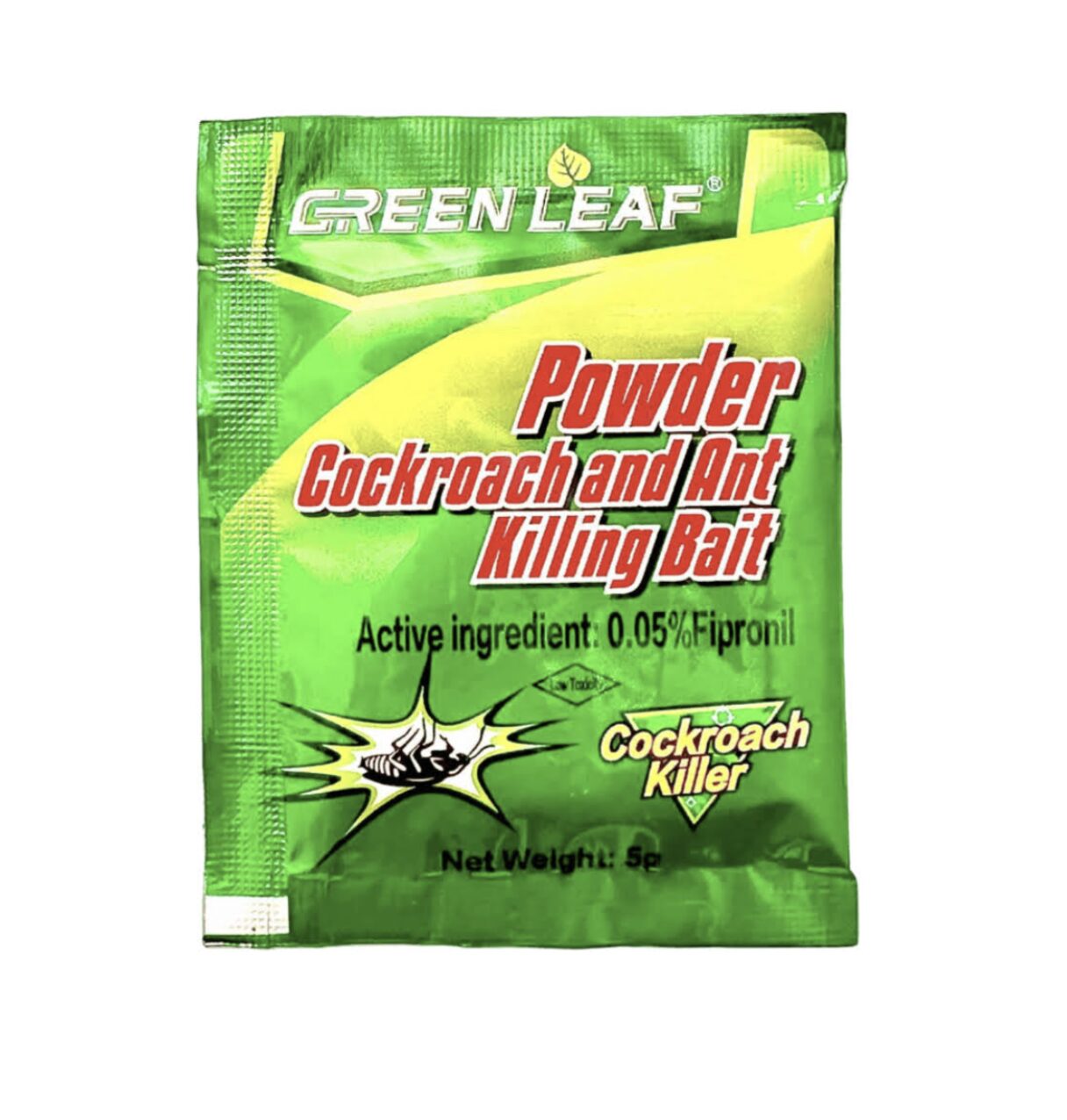
    GreenLeaf RoachBuster is a dry powder sachet format for exactly that reason: 50 odorless, stainless sachets per box that can sit in cabinet corners, under sinks, and behind appliances for the full treatment window without drying out, running, or leaving anything to scrape off. Always use as directed on the product label, and keep placements away from children and pets.

    Next steps: how many sachets a full round actually takes, how to tell whether a treatment is working, and how powder, sprays and foggers differ.

    Treating an active infestation? One box treats one room, once. The 3-Box Kit — $120 (150 sachets, save $59.97) covers a full apartment through the complete 3-4 week treatment cycle; a $47 single box (50 sachets) covers a single-room problem. Ships within 1 business day, typical delivery 6-10 days · Free tracked shipping · 30-day money-back guarantee.
    Choose your kit →