
Is Your Roach Treatment Working: Signs of Progress and Stalling
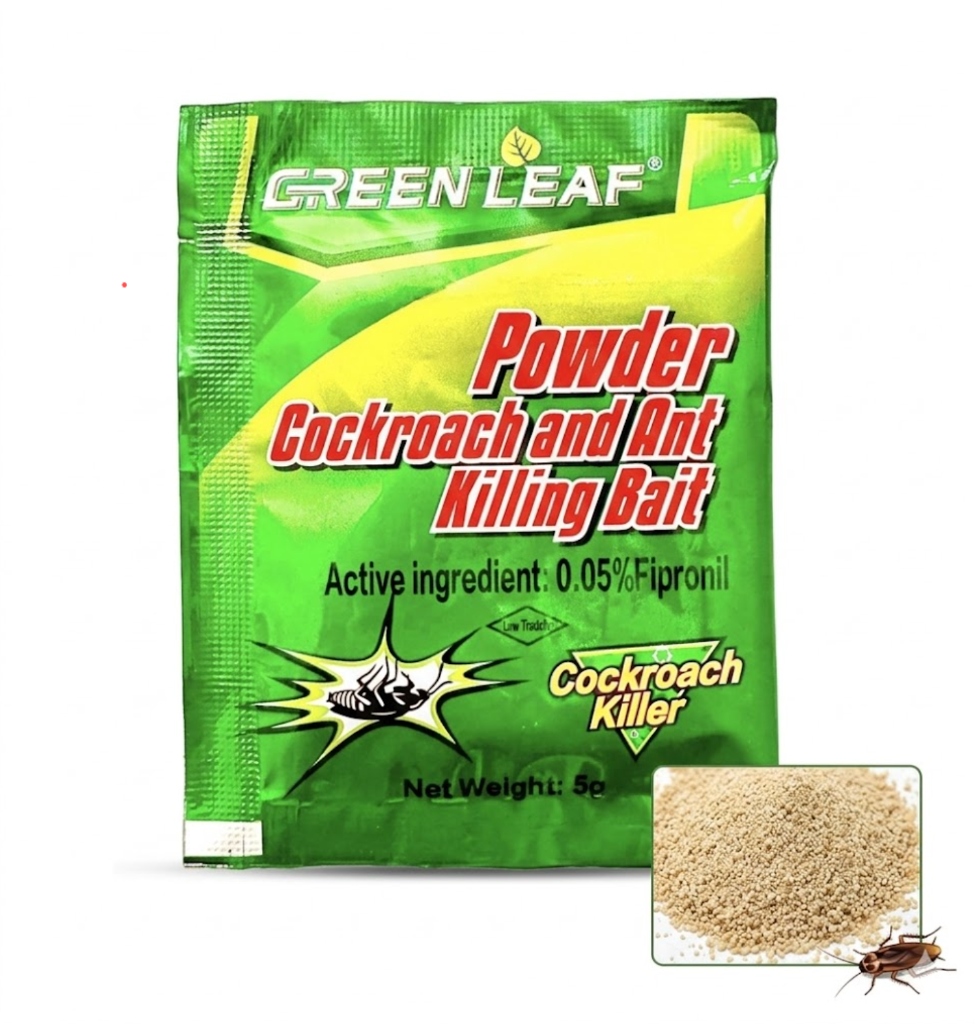
Live sightings are the worst measure of progress. How to read fresh droppings, dead insects and trap catch rates...

If you have researched home cockroach treatments, you have likely compared various chemical options. While traditional pest sprays have largely fallen out of favor due to toxic fumes and chemical scattering, many users still compare running gel baits with modern dry active sachet systems. Understanding the scientific differences is essential for choosing the best solution. Roaches walking past your placements? See the five real reasons in roach bait not working, then compare formats in our best roach killer powder guide.
Cockroach gel baits contain active chemical compounds suspended in a syrup-based liquid matrix. While effective at attracting insects when fresh, gel formulas suffer from severe environmental limits:
To resolve these limits while ensuring long-term, high-performance pest elimination, the RoachBuster dry sachet system provides an elite alternative:
| Feature | Traditional Gel Baits | RoachBuster Dry Sachets |
|---|---|---|
| Mess & Residue | Melts, runs, leaves yellow stains | 100% dry, clean, zero residues |
| Odor Levels | Can emit faint sweet chemical smell | 100% odorless and fume-free |
| Active Lifespan | Dries out in 2-4 weeks; inactive | Stays fresh and potent for months |
| Placement Safety | Exposed dots easily touched by pets | Locked inside hidden paper sachets |
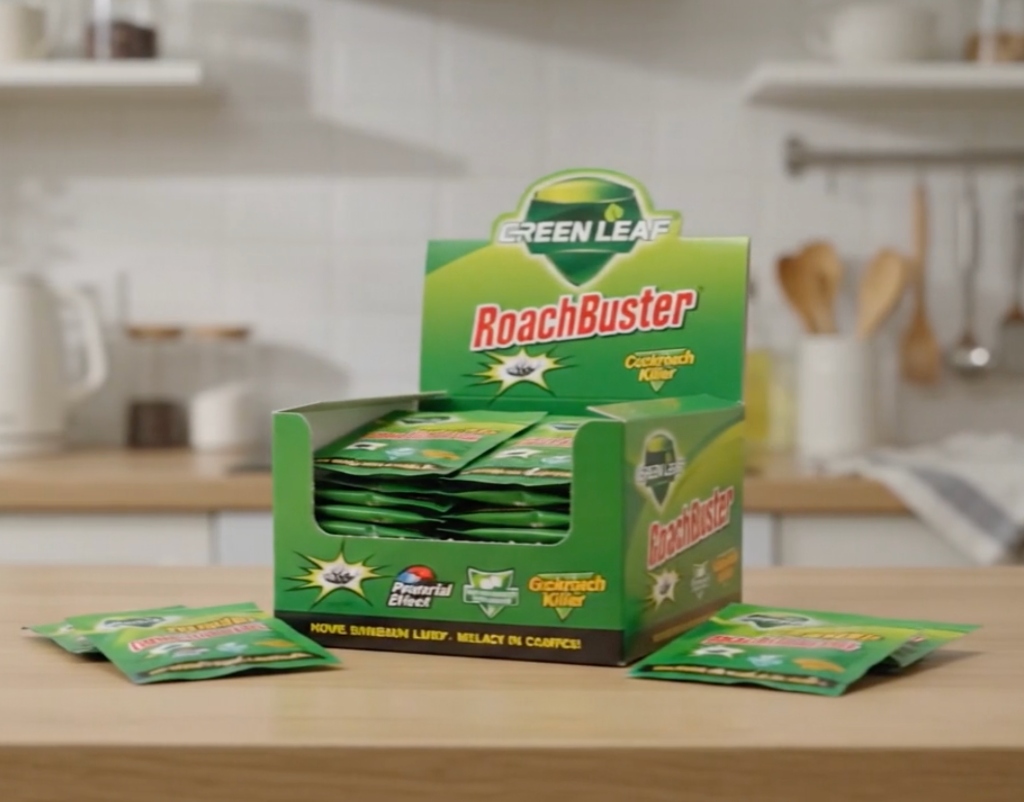
Our premium dry active sachet completely eliminates the mess of gel baits. The active powder remains entirely enclosed within durable paper sachets, quietly attracting and eradicating cockroach populations behind walls and cabinets without ever touching your expensive surfaces.
Staining from pest control products comes from three separate mechanisms, and knowing which one you are dealing with tells you whether a mark will come out.
A dry powder held inside a sachet contributes none of the three, because there is no carrier, no dye and no exposed food matrix on the surface. That is the whole basis of the non-staining claim, and it is a claim about format at least as much as about chemistry.
| Surface | Gel bait risk | Dry sachet risk | Notes |
|---|---|---|---|
| Painted timber and MDF | Sugar film and halo, often permanent | None if kept dry | Repainting is the usual remedy for gel marks |
| Melamine cabinet interiors | Hard film, needs scraping | None | Melamine scratches easily during removal |
| Grout and unglazed tile | Absorbed residue, discolours | None | Grout is the hardest surface to recover |
| Stainless steel | Streaking and etching from acidic residues | None | Wipe promptly whatever you use |
| Wallpaper | Frequently permanent | None | Never apply anything wet to wallpaper |
| Worktops, laminate | Film, usually removable | None | Prompt removal matters |
| Carpet and fabric | Staining likely | None | Avoid placements on textiles regardless of format |
Gels have genuine advantages. They can be applied into a very small crack with a syringe, dosing is highly controllable by the applicator, and uptake is fast where a population is actively feeding. Their disadvantages are that they dry out and lose palatability, they must be reapplied on a short cycle, they are visible and reachable in the open, and they leave residue. Dry sachets trade the surgical crack application for durability, tidiness and lower handling risk: they sit intact for months, they do not dry out in the same way, they can be picked up and moved without residue, and they leave nothing behind when removed. For most households treating cabinets, appliances and voids, the sachet trade-off is the better one. For a professional treating a specific crack in a commercial kitchen, a gel may be the better tool. Both are non-repellent bait strategies, which is the property that actually matters most; our method comparison explains why.
Uptake depends on placement quality more than format. Well-placed sachets in harbourage typically show falling counts within two weeks, which is comparable to typical gel timelines in the same conditions.
Yes, both are non-repellent bait approaches and they do not conflict. Do not add a repellent spray to either.
A wet sachet loses effectiveness, which is the real problem, and it can leave a mark on porous surfaces. Keep placements dry and relocate any that sit in a damp position.
An enclosed sachet in a closed cabinet controls reach better than an open gel dot, which is visible and palatable. Position and enclosure are what determine safety in practice.
Staining comes from carriers, dyes and dried sugar films, and a sachet contributes none of them. Gels are better for surgical crack application and worse for residue, drying out and reachability. For household cabinets and appliances, dry enclosed placements are the better trade. One box covers a whole home with no surface residue, backed by a 30-day money-back guarantee.
Always use any product as directed on its label, and keep placements out of reach of children and pets. Product formulations and labels differ between markets and change over time, so read the label of the specific product you buy rather than relying on general category descriptions.
Avoid messy, runny gel stains. Experience clean, odorless extermination with the RoachBuster 50-Sachet Box today.
Free shipping, secure Stripe checkout, and a 30-day money-back guarantee.
Next steps: how many sachets a full round actually takes, how to tell whether a treatment is working, and how powder, sprays and foggers differ.
Treating an active infestation? One box treats one room, once. The 3-Box Kit — $120 (150 sachets, save $59.97) covers a full apartment through the complete 3-4 week treatment cycle; a $47 single box (50 sachets) covers a single-room problem. Ships within 1 business day, typical delivery 6-10 days · Free tracked shipping · 30-day money-back guarantee.
Choose your kit →
Live sightings are the worst measure of progress. How to read fresh droppings, dead insects and trap catch rates...

Found roaches tonight? The first 48 hours decide whether your treatment works. Hour one containment, the after-d...
Coverage is about cavities, not square footage. Room-by-room sachet counts, realistic totals for studios through...
Your anonymous feedback helps us improve our educational home defense resources.