
Roach Control for Multi-Unit Buildings: A Landlord Treatment Plan
Treating one flat in a connected block fails predictably. How to survey across unit boundaries, quantify a build...

Finding a cockroach run across your dashboard is unsettling in a way a kitchen sighting is not, because a car is a sealed box you sit inside for an hour a day. It is also one of the few pest problems where the standard advice, setting off a fogger, is actively the wrong move: it coats every surface you touch and breathe against, and it does not reach the harbourage anyway. Pair this with our prevention plan that sticks so a cleared home stays cleared.
This guide covers how roaches get into a vehicle, the eight places they actually hide, and a step-by-step process for clearing them using cleaning and targeted dry bait placement rather than aerosols inside a confined cabin.
Cars are not naturally attractive to cockroaches. They are dry, they get extremely hot, and they move. Almost every infested vehicle was seeded by something carried into it.
The route matters, because if the source is your home, clearing the car alone will fail on repeat. Start with the kitchen, using something like our kitchen cabinet treatment guide, and treat the vehicle in parallel.
Roaches need warmth, darkness, tight contact on multiple sides, and a moisture source. A car offers all four in specific places.
Remove everything: floor mats, boot liner, child seats, spare wheel, and every piece of paper and cardboard. Cardboard and paper bags should go straight into a sealed bin bag and out of the vehicle, not back into the house. This one step removes a large share of the harbourage and most of the egg cases.
Use a crevice tool along every seat rail, seat seam, and trim edge, then lift the carpet edges where you can. Vacuum the door pockets, the console recesses, and under the parcel shelf. When you are finished, the vacuum bag or canister contents go into a sealed plastic bag and into an outside bin immediately. An egg case left in a vacuum in the garage will simply hatch there. Egg case identification is covered in our ootheca guide.
An infestation that keeps coming back in a car almost always has a water problem. Check for a damp carpet under the driver mat, a blocked air-conditioning drain, a leaking windscreen or door seal, and standing water in the spare wheel well. Dry the interior thoroughly, with the windows down in the sun or with a dehumidifier bag in the cabin overnight. Without water, a population cannot persist even if food is available.
Wipe hard surfaces with a simple detergent solution and shampoo fabric only if it can dry fully within a day. Do not use a total release fogger or an aerosol bomb in a vehicle. The cabin is a small, enclosed space with air vents, upholstery, and surfaces you touch continuously, and residue is difficult to remove from HVAC ducting. Foggers also fail on their own terms: they push survivors deeper into the door cavities and dashboard, exactly where you cannot reach them.
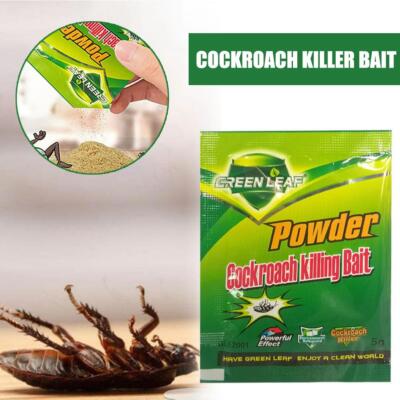
Bait is the right tool here because it works through the harbourage rather than on contact, and dry powder sachets do not run, drip, or stain in heat the way gels do. Placement rules for a vehicle are stricter than for a home.
Follow the product label, keep placements out of reach of children and pets, and remove them entirely before any journey where a child or animal will be unrestrained in that part of the vehicle. Pet safety in confined spaces is worth reading up on separately in our pet-safe control guide.
Put two small glue boards in the vehicle, one under a front seat and one in the boot, and check them weekly. Counts should fall by week two, with a possible small nymph wave in week three as any remaining egg cases hatch. Two consecutive clear weeks means you are done. The method is covered fully in our guide to monitoring with sticky traps.
Parking in full sun does raise cabin temperatures considerably, and it makes the cabin less habitable, but insects shelter in the cooler cavities, in the engine bay, and low in the door cards. The same applies in reverse to leaving a car out in freezing weather: sustained sub-zero temperatures throughout every cavity would be needed, and a typical overnight frost does not achieve it. Treat temperature as a mild pressure that supports your treatment, never as the treatment itself.
It is a poor choice. Foggers do not penetrate door cavities or dashboard housings where the insects shelter, and they leave residue across surfaces and air vents inside a small space you occupy daily. Removal of harbourage plus targeted bait is both safer and more effective.
They can foul upholstery and air vents with droppings, leave a persistent musty odour, and in rare cases chew wiring insulation and adhesive. The practical damage is usually odour and staining, which is why an odourless, non-staining approach matters here.
A vehicle seeded recently from a bag of groceries often clears within a week of a thorough strip-out and vacuum. A car connected to an infested home will keep reinfesting until the home is treated, regardless of what you do to the car.
The odour comes from droppings and secretions left in fabric and ducting, and it lingers after the insects are gone. Deep clean the affected fabric, replace the cabin air filter, and dry the interior fully. Our article on eliminating the musty roach smell goes into more detail.
Cars respond well to this approach because the harbourage is limited and easy to strip. Remove the food and cardboard, fix the moisture, vacuum properly, place dry bait where nobody can reach it, and monitor for three weeks.
GreenLeaf RoachBuster suits vehicle work specifically because the sachets are odorless and stainless, so they do not add a chemical smell to a sealed cabin or leave marks on carpet and trim. A single 50-sachet box covers a vehicle and the home kitchen that is usually the real source. Always use as directed on the product label, and keep placements away from children and pets.
Wider reading: the complete Roach Control Guide maps every article on the site by the question you are trying to answer — first 48 hours, identification, method, room by room, comparisons, safety, rentals and local conditions.
Claim the 50-sachet GreenLeaf RoachBuster box today. Free shipping, secure Stripe checkout, a 30-day money-back guarantee, and targeted odorless dry powder sachets built for kitchens, cabinets, gaps and appliances.
Use only as directed on the product label. Keep away from children and pets.
Treating an active infestation? One box treats one room, once. The 3-Box Kit — $120 (150 sachets, save $59.97) covers a full apartment through the complete 3-4 week treatment cycle; a $47 single box (50 sachets) covers a single-room problem. Ships within 1 business day, typical delivery 6-10 days · Free tracked shipping · 30-day money-back guarantee.
Choose your kit →

Treating one flat in a connected block fails predictably. How to survey across unit boundaries, quantify a build...
A resurgence at three weeks and a resurgence at three months are different problems. The six causes of reinfesta...

Found roaches tonight? The first 48 hours decide whether your treatment works. Hour one containment, the after-d...
Your anonymous feedback helps us improve our educational home defense resources.