
Is Your Roach Treatment Working: Signs of Progress and Stalling
Live sightings are the worst measure of progress. How to read fresh droppings, dead insects and trap catch rates...
For commercial bakeries, cafes, and restaurant kitchens, passing rigorous local health department audits is a prerequisite for operational survival. A single crawling pest sighted in food-prep areas can trigger immediate closure, thousands in fines, and catastrophic brand damage. If sightings keep pointing back to one area, use our guide to locating the nest together with the 21-day German roach treatment plan.
Health inspectors check warm micro-cavities around ovens, dishwasher panels, steam prep tables, and dry food storage racks. Sighting live cockroaches or droppings results in immediate critical violations on your audit score.
Spraying active commercial kitchens with repellent chemical liquids is highly dangerous. Toxin aerosols risk contaminating food prep lines, plates, and dry goods. Additionally, the strong chemical odors force cockroaches to scatter deeper inside structural walls, spreading the nest and violating safety rules.
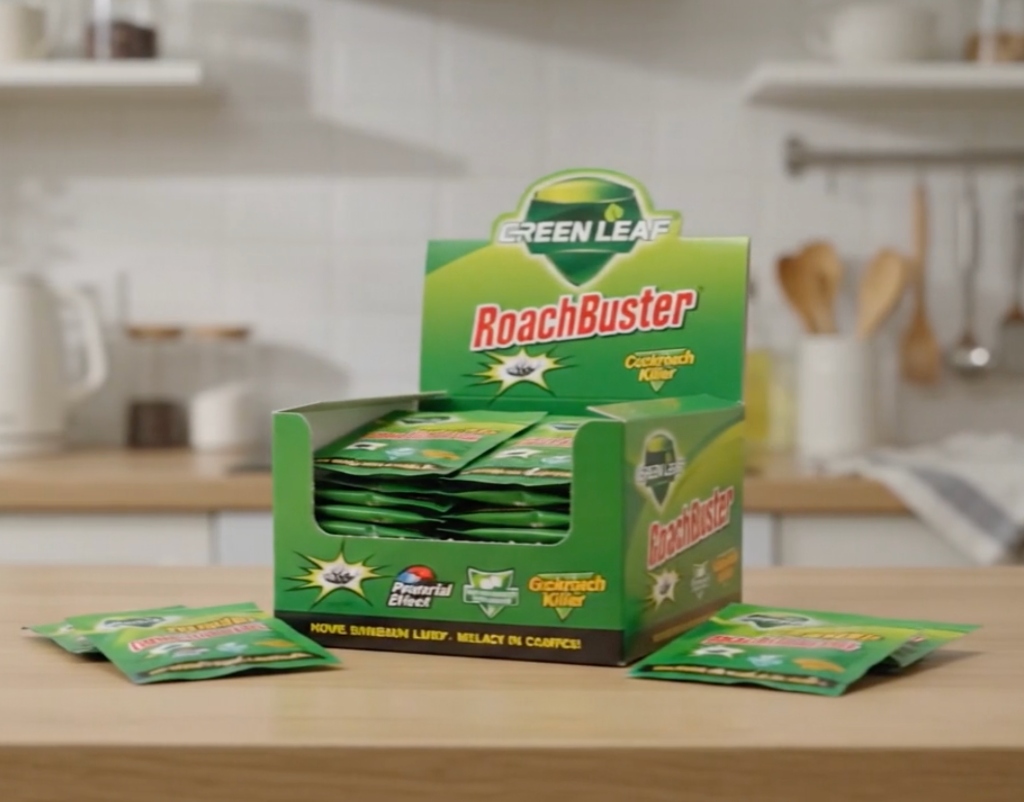
Maintain a perfect health department score without chemical spraying or operational shutdowns with the **RoachBuster sachet system**:
Operators tend to prepare for a food safety audit by cleaning. Auditors, however, are not scoring cleanliness in isolation. On the pest control section they are scoring whether a documented, monitored, effective programme exists, and whether the site can demonstrate that it finds and fixes problems without being told. That is a paperwork and process test as much as a physical one, which is why a spotless kitchen with no records can score worse than a busy kitchen with a well-kept file.
Three findings account for most pest-related non-conformances: evidence of activity in an area that was not being monitored, a monitoring log with gaps, and corrective actions with no closure date. All three are avoidable at no real cost.
Walk it yourself in that order the week before. Anything you find, fix and record becomes evidence of a working system rather than a finding against you.
| Document | What it must show | Common failure |
|---|---|---|
| Site plan | Every monitoring and placement position, numbered | Plan not updated after a kitchen refit |
| Monitoring log | Date, position, result, initials | Gaps during holiday periods |
| Product records | Label and safety data sheet for everything on site | Missing sheet for a product bought locally |
| Corrective action log | Issue, action, owner, closure date | Actions recorded but never closed |
| Contractor reports | Visit dates and recommendations | Recommendations never actioned |
| Training records | Who is authorised to place product | No record at all |
| Exclusion works | Sweeps, seals, screens and drain covers fitted | Verbal claim with no evidence |
Auditors look at whether the treatment is appropriate to a food environment. Residual sprays and aerosols in food-contact areas invite questions about residue, ventilation and product suitability, and they are difficult to evidence after the fact. Discreet, dry, odourless sachets placed in enclosed non-food-contact cavities are simple to plan, simple to number on a drawing and simple to log, which is exactly what the documentation section rewards. Our comparison of methods covers the practical differences, and the odourless guide covers the constraints in occupied and food-handling spaces.
Many schemes and jurisdictions expect a professional programme for food businesses; some permit in-house preventive measures alongside it. Check your scheme requirements and local licensing, because the licence condition overrides general guidance.
Not usually. Finding activity that your own monitoring had already identified and actioned is very different from an auditor finding activity you did not know about.
Typically twenty to thirty-five for a mid-size kitchen, numbered on the plan. Our coverage arithmetic explains how to derive the number for your layout.
Document it, notify the landlord in writing and record the response. Shared-void reinfestation is a recognised scenario and is described in our recurrence guide; auditors accept it far more readily when it is evidenced.
Audits are won on documentation and lost on unmonitored areas. Walk goods-in, waste, equipment bases, drains, voids and ceilings yourself the week before, fix and record everything, keep a numbered plan with a gap-free log, and use discreet dry placements that are easy to evidence. A five-box case equips a mid-size kitchen for a year of monthly rounds, with a 30-day money-back guarantee.
Always use any bait product as directed on its label, and keep placements out of reach of children and pets. This is general operational guidance, not legal, veterinary or regulatory advice.
Avoid critical violations. Secure bakeries, cafe lines, and prep engines with the RoachBuster 3-Box commercial Bundle.
Free shipping, secure Stripe checkout, and a 30-day money-back guarantee.
Next steps: the building-wide plan for multi-unit properties, how many sachets a full round actually takes, and how to tell whether a treatment is working.
Treating an active infestation? One box treats one room, once. The 3-Box Kit — $120 (150 sachets, save $59.97) covers a full apartment through the complete 3-4 week treatment cycle; a $47 single box (50 sachets) covers a single-room problem. Ships within 1 business day, typical delivery 6-10 days · Free tracked shipping · 30-day money-back guarantee.
Choose your kit →
Live sightings are the worst measure of progress. How to read fresh droppings, dead insects and trap catch rates...

Found roaches tonight? The first 48 hours decide whether your treatment works. Hour one containment, the after-d...
Coverage is about cavities, not square footage. Room-by-room sachet counts, realistic totals for studios through...
Your anonymous feedback helps us improve our educational home defense resources.