
Roach Control for Multi-Unit Buildings: A Landlord Treatment Plan
Treating one flat in a connected block fails predictably. How to survey across unit boundaries, quantify a build...

Chicago apartment buildings have a structural feature that shapes their entire pest profile: steam and hydronic heating. In the pre-war and mid-century stock across the Loop, Lakeview, Logan Square and much of the North Side, heat is delivered through radiators fed by risers that run vertically through every floor. Each radiator connection is a hole cut through the floor or wall, and each riser chase is a continuous, permanently warm vertical shaft linking a dozen apartments. If you are treating an active problem rather than preventing one, start with the 21-day treatment plan, then use our after-treatment prevention plan to keep the home clear.
For German cockroaches this is close to purpose-built infrastructure. This guide covers how the heating system moves a population through a building, what you can seal, and how to treat a single unit when you cannot control the rest.
German cockroaches need warmth, moisture and tight enclosed harbourage, and they prefer to travel through protected routes rather than across open floor. A steam riser chase provides all four things at once.
The consequence is the pattern residents recognise: an infestation that appears to be solved in one apartment and returns weeks later, or that moves between neighbours in sequence. It is one population using the building’s heating system as a corridor. The general version of this problem is covered in preventing migration through shared walls.
The two most valuable seals are almost always the radiator penetrations and the riser access panel, because those are the direct connections to the shared vertical route.
This inverts the usual seasonal expectation. In much of the country cockroach pressure peaks in warm months. In a steam-heated Chicago building the heating season is when the risers and chases are warmest and the population grows fastest, and it is also when residents keep windows closed and spend more time indoors, which increases both the food supply and the number of sightings.
There is a second winter mechanism. Cold-driven migration pushes populations from unheated peripheral spaces, basements, and vacant units toward the warmest parts of the building, which are the chases and the apartments adjacent to them. Our article on cold-driven winter migrations covers the same dynamic in other northern cities.
You cannot control the chase, and you probably cannot control your neighbours. What you can do is make your unit a poor destination and a dead end.
Avoid aerosols and foggers entirely in this building type. In a structure where every unit shares a warm vertical chase, a repellent does not remove a population, it redistributes it, and the most likely destination is your neighbour’s apartment and then back again. The mechanism is described in why sprays make roaches scatter.
A single-unit treatment in a riser-connected building is containment rather than elimination, so raising it properly with management matters more here than in a detached house.
In a detached house, elimination is a reasonable goal. In a riser-connected apartment building with occupied neighbouring units, the realistic objective is sustained low-level control: your unit stays clear because entry routes are sealed and maintenance placements intercept whatever arrives. That is not a lesser outcome, it is the correct one for the building type, and it is much cheaper than repeated intensive treatment.
Expect the usual pattern during the initial treatment: a brief rise in visible activity, a clear decline through week two, and a wave of small nymphs around week three as pre-existing egg capsules hatch. The stages are in our week-by-week timeline, and the apartment-specific strategy in the best roach killer for apartments.
Yes, using materials rated for the temperature and leaving room for the pipe to expand and move. Do not pack a pipe rigidly and do not use standard expanding foam in direct contact with a steam line. If you are unsure, ask building maintenance to do it, since it is a small job for them and it benefits the whole stack.
Almost always because the treatment addressed individual units rather than the connected stack, or because a repellent product was used and dispersed the population into the chase. A population using the riser as a corridor will re-enter any unit that still has an open penetration.
It usually helps. In a riser-connected building, simultaneous treatment of the stack is far more effective than sequential treatment, and neighbours who know what is happening are less likely to spray and scatter the population back toward you.
In steam-heated buildings, generally yes. The chases are warmest during the heating season, which accelerates breeding, and cold weather drives populations from peripheral unheated spaces toward the warm core of the building.
The Chicago pattern is specific and manageable once you see it clearly. The heating risers are the corridor, the radiator penetrations and access panels are the doors, and winter is the high season. Seal those doors, keep cardboard and moisture out, use non-repellent bait inside the harbourage, and push for the whole stack to be treated at once rather than your unit alone.
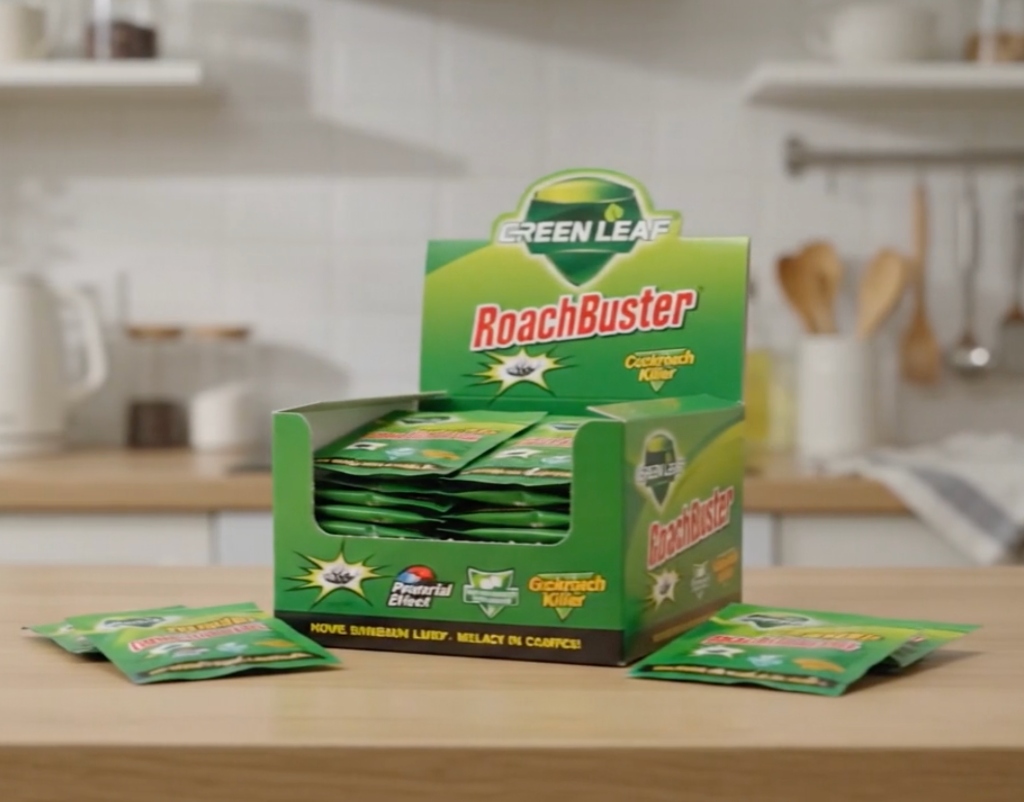
For maintenance placement in an occupied apartment, GreenLeaf RoachBuster works well because the sachets are odorless and non-staining, so there is nothing to smell in a small pre-war unit and nothing to mark original cabinetry or floors, and 50 sachets per box is enough to cover the penetrations, cabinets and appliance cavities and keep interception running through the heating season. Always use as directed on the product label, and keep placements away from children and pets.
Next steps: the building-wide plan for multi-unit properties, why roaches come back after treatment, and how many sachets a full round actually takes.
Treating an active infestation? One box treats one room, once. The 3-Box Kit — $120 (150 sachets, save $59.97) covers a full apartment through the complete 3-4 week treatment cycle; a $47 single box (50 sachets) covers a single-room problem. Ships within 1 business day, typical delivery 6-10 days · Free tracked shipping · 30-day money-back guarantee.
Choose your kit →
Treating one flat in a connected block fails predictably. How to survey across unit boundaries, quantify a build...
Student housing concentrates every risk factor for roaches. What to check on move-in, how to report properly, ho...
How infestations travel on moving day, how to inspect a new home before you sign, packing rules for cardboard an...
Your anonymous feedback helps us improve our educational home defense resources.