A cockroach egg case, or ootheca, is a hardened protein capsule holding roughly 15 to 50 eggs, and it is the single biggest reason an infestation comes back weeks after a treatment that appeared to work. Nothing you spray, dust, or bait penetrates that shell. If you want a treatment to hold, you have to plan around the egg cases rather than pretend they are not there. For the full clearance sequence after identification, follow the 21-day German roach infestation treatment plan.
This guide covers what an ootheca looks like, where to search for them, how to dispose of them without scattering hatchlings through your home, and how to time your treatment so the hatching generation walks straight into bait.
What an ootheca actually is
An ootheca is not a soft egg sac. It is a rigid, ridged capsule made of a hardened secretion, shaped roughly like a kidney bean or a small purse, with a fine seam running along one edge. That seam is where the nymphs push out when they hatch. The capsule is designed to keep moisture in and everything else out, which is exactly why it defeats chemical control.
The practical consequence is straightforward: any surviving egg case represents a delayed reinfestation on a fixed schedule. Removing capsules by hand is one of the few genuinely high-value manual tasks in roach control.
What an egg case looks like, by species
| Species | Capsule appearance | Eggs per case | Behaviour |
|---|---|---|---|
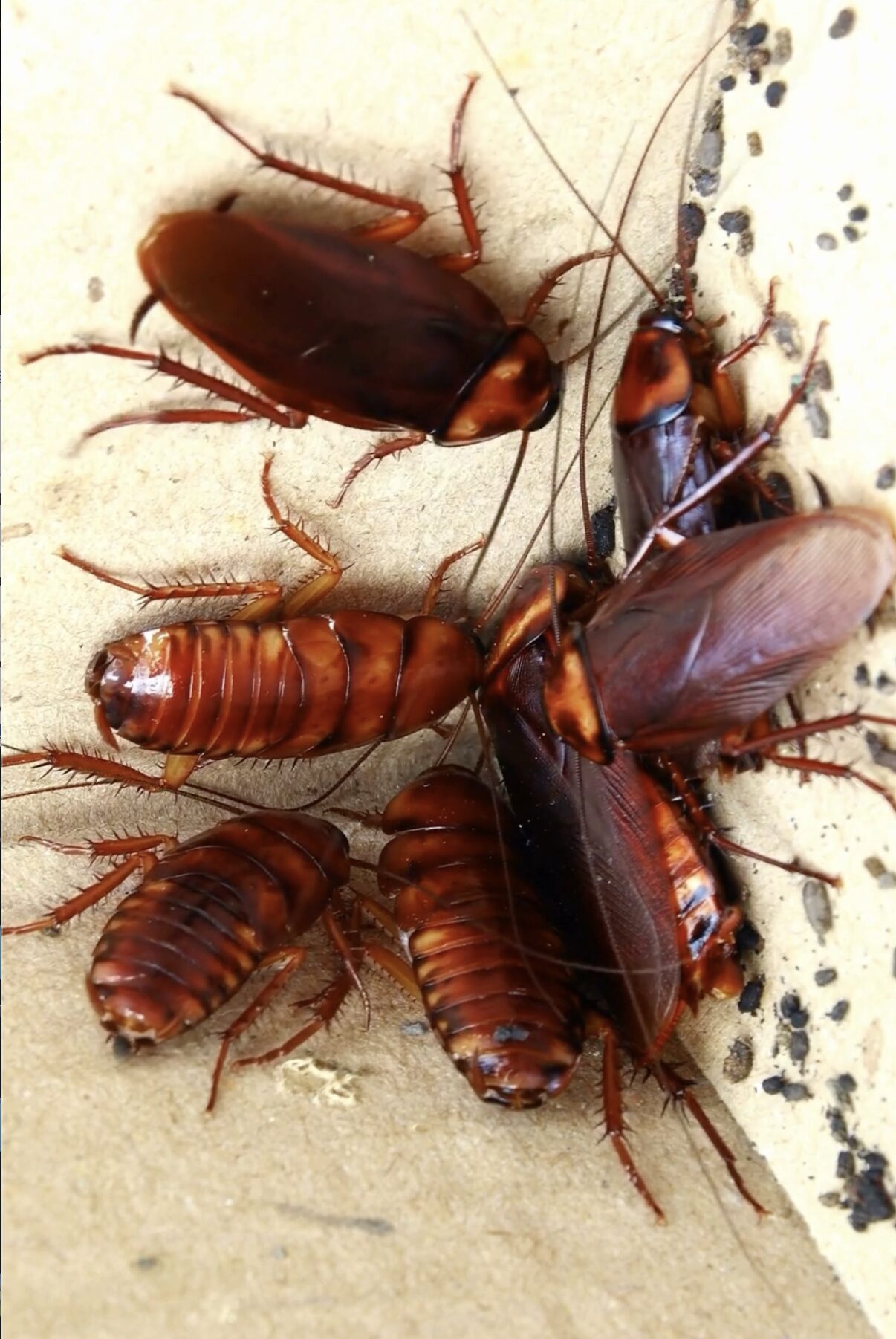
| German cockroach | Light to dark brown, about 8 mm, distinctly ridged, purse-shaped | 30 to 40 | Carried by the female until roughly 24 hours before hatching |
| American cockroach | Dark brown to black, about 8 mm, blocky and hard | 14 to 16 | Dropped or glued into a crevice soon after forming |
| Oriental cockroach | Dark reddish-brown, slightly longer and flatter | 16 to 18 | Dropped in damp, sheltered areas such as drains and basements |
| Brown-banded cockroach | Light tan, small, under 5 mm | 10 to 18 | Glued high up: ceiling corners, behind picture frames, inside electronics |
If you are not sure which species you are dealing with, the treatment plan changes, and our comparison of German and American cockroaches covers the differences that matter.
Where to search for egg cases
Females look for locations that are dark, warm, textured enough to grip glue, and undisturbed. Work through this list with a flashlight and a thin tool, and check the underside of every surface rather than the top.
- Cabinet hinge recesses and the seams where melamine panels meet.
- The underside of drawer bottoms and the back of drawer slides.
- Behind and beneath the refrigerator, especially the compressor housing and drip pan.
- Inside the control panel cavity of microwaves, coffee makers, and toasters.
- The rim under the kitchen sink, around the plumbing collar and inside the cabinet corner joints.
- Behind loose baseboard sections and inside gaps around pipe penetrations.
- The corrugated flutes of cardboard boxes, which are close to ideal harbourage.
- Under and behind wall-mounted electronics, routers, and TV brackets.
- Inside the folds of paper bags, shopping bags, and stacked takeaway containers.
- For brown-banded cockroaches, high locations: ceiling corners, curtain rod ends, and picture frame backs.
Egg cases are almost always found next to droppings and shed skins. If you find one capsule, expect a harbourage site within a metre or two, and treat that whole zone rather than the single spot. Our guide to reading German cockroach nesting signs explains how to interpret what you find.
The German cockroach difference
German cockroaches are the hardest species to manage precisely because the female carries her capsule attached to her abdomen until it is nearly ready to hatch. The eggs travel with her into the safest part of the harbourage, and they are protected right up to the last day. This is why you rarely find loose German cockroach capsules lying in the open, and why the population appears to explode in waves rather than steadily.
It also means eliminating adult females is disproportionately valuable. Each one you remove before her capsule matures removes an entire cohort. This is the logic behind pairing bait with an insect growth regulator, explained in our article on insect growth regulators and the breeding cycle.
How to destroy egg cases without making things worse
- Do not spray them. Aerosols will not penetrate the capsule, and the surrounding chemical will simply push nearby adults into a new area. You gain nothing and lose your bait placement.
- Crush firmly, then bag. Press a capsule flat with a hard tool against a hard surface. A capsule that is only cracked can still produce viable nymphs.
- Vacuum with a sealed bag or HEPA canister. Vacuuming is efficient for clusters, but the bag or canister must go straight into a sealed plastic bag and out of the building. A capsule left in a vacuum in the utility cupboard will hatch there.
- Wipe the site afterwards. The glue residue and pheromone-laden droppings around the site attract other individuals back to the same spot.
- Bait the zone immediately. Whatever you missed will hatch there, and hatchlings forage within a very small radius. Bait placed at the harbourage is what kills the generation you could not find.
Timing: why the third week matters
Under typical indoor conditions a German cockroach capsule takes somewhere around three to four weeks to hatch. If you treat today, the capsules already in production will hatch during weeks three and four regardless of how effective your bait is. Seeing a burst of tiny nymphs in that window is not a treatment failure; it is the expected second wave, and if your bait is still live and correctly placed, that wave dies before it can breed.
The failure mode is removing bait at day fourteen because sightings hit zero. Two weeks later the capsules hatch into a home with no active bait, and you start over. Our week-by-week treatment timeline maps this out in detail.
A simple four-week egg case routine
- Week 1: Full hunt with a flashlight. Crush and bag every capsule you find. Bait every zone where you found one.
- Week 2: Re-check the same sites. New capsules mean live breeding females are still present, so extend placements deeper into that zone.
- Week 3: Expect nymphs. Do not clean the baited areas. Add placements at any new activity point.
- Week 4: Final sweep of all original sites. Zero new capsules plus zero nymphs is the signal that the breeding cycle is broken.
Common mistakes
- Flushing capsules down a drain, where damp conditions are ideal for hatching.
- Throwing capsules into an indoor bin instead of taking them outside in a sealed bag.
- Searching only at floor level, which misses the brown-banded and appliance-cavity sites entirely.
- Treating the sighting spot rather than the harbourage. Capsules are laid in shelter, not on open floor.
- Assuming a cracked or discoloured capsule is dead. Empty capsules have a clearly split seam and a hollow, papery feel.
Frequently asked questions
Can I kill cockroach eggs with spray or boric acid?
Not directly. The capsule shell is impermeable to the products available for home use. Control works by killing the female before the capsule matures, and by having bait live and in place when the nymphs emerge.
How do I know if an egg case is empty?
An empty capsule is lighter in colour, feels hollow, and shows a clean split along the seam edge. A viable capsule is firm, uniformly coloured, and does not collapse under light pressure.
Does one egg case mean a full infestation?
One capsule means at least one reproductive female was in that spot. On its own it is not proof of a large population, but it does mean you should treat, monitor for four weeks, and check for droppings nearby.
Do cockroaches lay eggs in clothes or beds?
It is uncommon but possible in heavily infested homes, usually in stored, undisturbed fabric rather than bedding in daily use. Kitchens, bathrooms, and appliance cavities remain the priority search areas.
Break the cycle, not just the sighting
Removing egg cases by hand and keeping bait live through the hatching window is the difference between a treatment that lasts and one that resets every month. It is unglamorous work, but it is the part most people skip, and it is usually the reason their roaches came back.
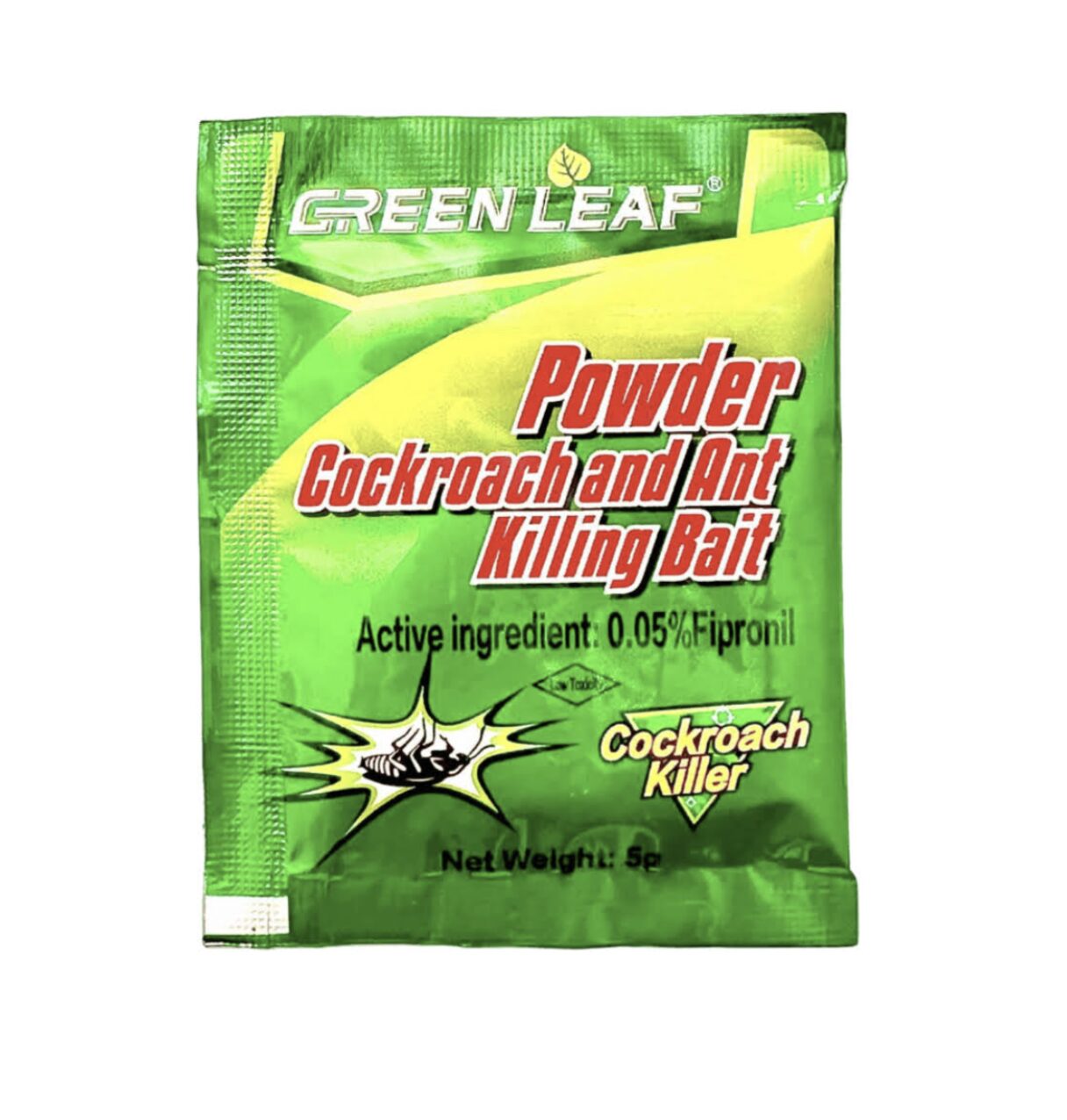
GreenLeaf RoachBuster is designed for the sustained placement this requires: 50 odorless, stainless dry powder sachets per box that can sit undisturbed in cabinet corners, appliance cavities, and gaps through the full hatching window. Always follow the product label, and keep placements away from children and pets.
Capsules are almost always found alongside droppings, and the droppings are usually easier to spot first. See how to identify cockroach droppings.
Wider reading: the complete Roach Control Guide maps every article on the site by the question you are trying to answer — first 48 hours, identification, method, room by room, comparisons, safety, rentals and local conditions.
Ready to clear your home without odors or stains?
Claim the 50-sachet GreenLeaf RoachBuster box today. Free shipping, secure Stripe checkout, a 30-day money-back guarantee, and targeted odorless dry powder sachets built for kitchens, cabinets, gaps and appliances.
Use only as directed on the product label. Keep away from children and pets.
Treating an active infestation? One box treats one room, once. The 3-Box Kit — $120 (150 sachets, save $59.97) covers a full apartment through the complete 3-4 week treatment cycle; a $47 single box (50 sachets) covers a single-room problem. Ships within 1 business day, typical delivery 6-10 days · Free tracked shipping · 30-day money-back guarantee.
Choose your kit →