
Roach Control for Multi-Unit Buildings: A Landlord Treatment Plan
Treating one flat in a connected block fails predictably. How to survey across unit boundaries, quantify a build...

German cockroaches are the most prolific breeders among indoor pests, producing up to 40 eggs per capsule (ootheca) every month. Because of their fast reproduction cycles, a minor sighting can turn into a massive nesting population within a matter of weeks. If a product you already placed is being ignored, our guide to why roach bait stops working covers the five usual causes and the fix.
Unlike outdoor pests, German cockroaches prefer warm, dark, and tight cracks near water sources. They cluster together inside quiet hollows such as dishwasher doors, refrigerator motor housings, microwave hinges, and the underside of cabinet drawers. Identifying these nesting areas early is critical for successful control.
Spraying chemical repellents along baseboards does not reach the nesting pockets inside electrical appliances and deep cabinet joints. In fact, aggressive chemical sprays can scatter the colony, pushing insects deeper into wall cavities and causing them to migrate to adjacent rooms. Non-repellent baits are a far superior option.
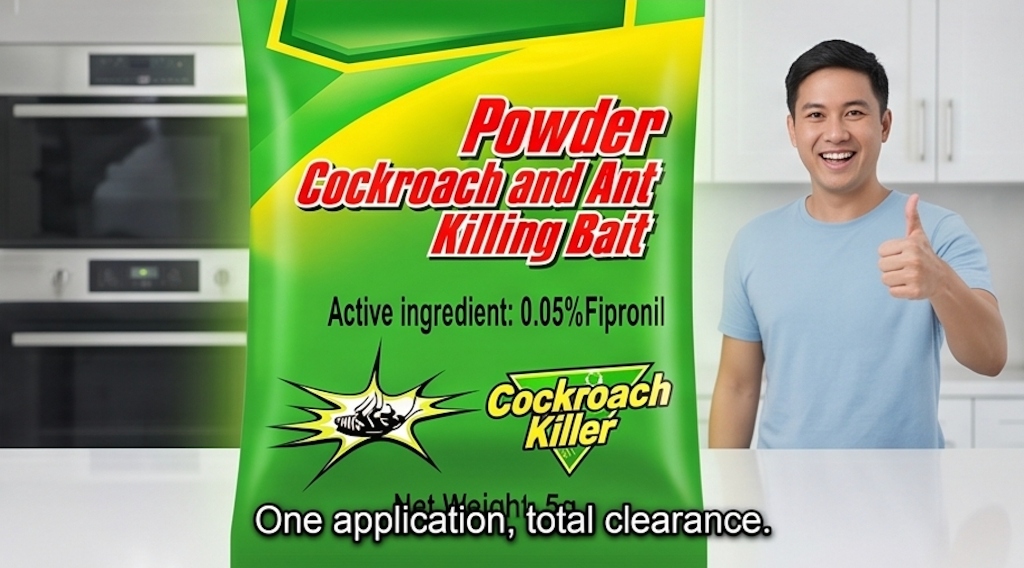
A non-repellent active powder is highly attractive to foraging insects. When they walk through the dry powder, they carry the particles back to their nesting zones. Through grooming behavior and natural bait sharing, the active ingredient is spread throughout the entire nesting population, eliminating the colony at its source.
To turn those signs into a numbered, ranked map of your home, see how to map a nest with sticky traps before you bait.
For a closer look at the most reliable single piece of evidence, see how to identify cockroach droppings and what their location tells you about the nest.
Next steps: how to tell whether a treatment is working, what to do in the first 48 hours, and why roaches come back after treatment.
A harbourage tells you more than a live insect does. A live insect tells you that one insect was there. A harbourage tells you roughly how long the population has been established, roughly how large it is, and whether it is currently active. Four categories of evidence do the work, and you can read all of them with a torch and a few minutes.
| Location | What to look for | Placement |
|---|---|---|
| Under-sink cabinet, rear corners | Droppings, smears at the pipe penetration | 2, at the penetration |
| Fridge compressor recess | Droppings on the coil dust, shed skins | 1 to 2, dry surface |
| Dishwasher side void and door channel | Smear marks, moisture | 1 to 2 |
| Oven base cavity and drawer runners | Droppings, egg cases in corners | 1 to 2, when cool |
| Underside of drawer boxes and shelf lips | Egg cases glued into corners | 1 per affected unit |
| Cabinet hinge recesses and cam fittings | Egg cases, shed skins | Included in cabinet count |
| Microwave and toaster base | Crumb layer plus droppings | 1 |
| Bathroom vanity at pipe entry | Droppings, smears | 2 |
| Behind wall-mounted units and wall boxes | Smears at the cavity edge | 1 per accessible point |
The placement counts for each case are in our coverage arithmetic guide, and if you have just found evidence for the first time, our first 48 hours plan gives the immediate sequence.
Once you know where the harbourage is, the temptation is to attack it directly with a spray. This is counterproductive for a specific reason. A repellent product applied at a harbourage does not seal the population in; it scatters it. Insects leave through the wall cavity and establish two or three new harbourages, often in rooms that were previously clean, and you lose the single biggest advantage you had, which was knowing exactly where they were. A non-repellent bait placed at the same harbourage does the opposite: normal foraging continues, material is carried inward, and the population declines in place. The mechanism is set out in our method comparison and the recurrence pattern in our reinfestation guide.
Not in the sense of a constructed structure. They aggregate in crevices in response to pheromone deposits, so a harbourage is a favoured hiding place rather than a built nest.
Yes, physically remove and dispose of them outside. Each intact case can represent thirty or more insects.
Three to six in an average infested kitchen. Finding one and stopping is the usual reason a treatment stalls.
Vacuuming reduces numbers and removes the pheromone deposit, which helps, but it does not reach the population inside the void. Vacuum, then bait the same location.
Droppings tell you size, smears tell you routes, shed skins prove breeding, and egg cases tell you a second wave is coming. Read all four, place densely at the harbourage and along the smear lines, never spray a harbourage you have located, and keep placements in position through weeks four to six. One box of fifty sachets covers every harbourage in a typical home, with a 30-day money-back guarantee.
Always use any bait product as directed on its label, and keep placements out of reach of children and pets.
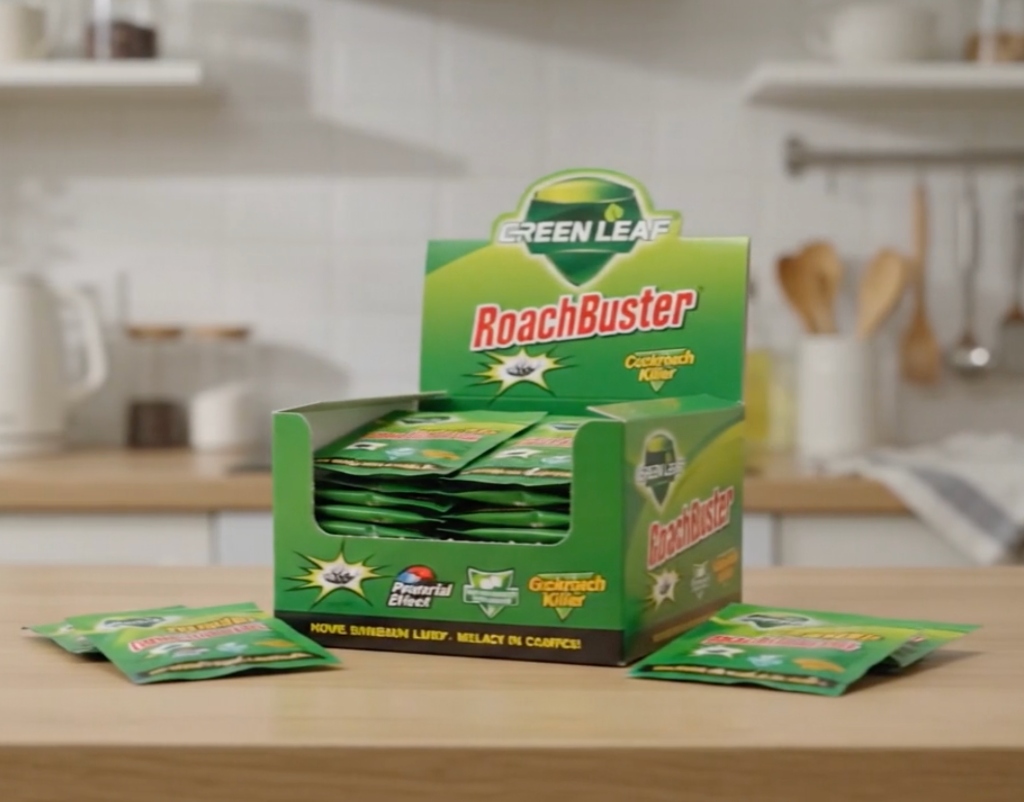
Treating an active infestation? One box treats one room, once. The 3-Box Kit — $120 (150 sachets, save $59.97) covers a full apartment through the complete 3-4 week treatment cycle; a $47 single box (50 sachets) covers a single-room problem. Ships within 1 business day, typical delivery 6-10 days · Free tracked shipping · 30-day money-back guarantee.
Choose your kit →

Treating one flat in a connected block fails predictably. How to survey across unit boundaries, quantify a build...
Student housing concentrates every risk factor for roaches. What to check on move-in, how to report properly, ho...
How infestations travel on moving day, how to inspect a new home before you sign, packing rules for cardboard an...
Your anonymous feedback helps us improve our educational home defense resources.