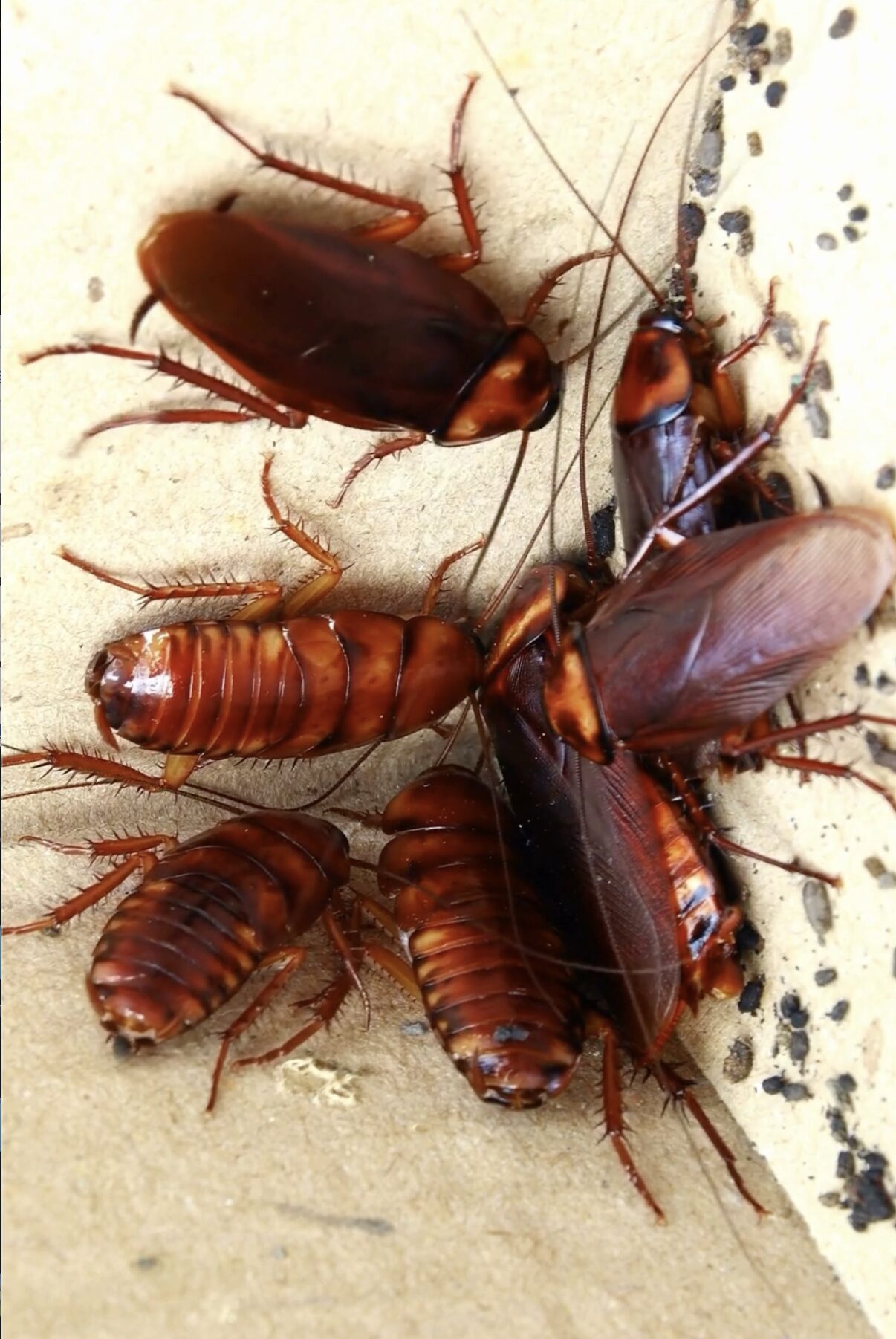
Discovering a fast-spreading cockroach infestation in your home can trigger immediate panic. Cockroaches reproduce at an exponential rate—a single female German roach and her offspring can produce thousands of descendants in a single season. To stop a sudden outbreak before it becomes chronic, you must act within a 48-hour window using a highly-converting, direct containment protocol. For honest expectations before you start, see how long roach treatment actually takes, method by method, and our prevention plan for after you are clear.
Hour 1 to 12: Thermal Isolation & Moisture Control
Cockroaches cannot survive without water and require warm shelter. Immediately cut off their resources:
- Dry All Sinks and Pipes: Wipe down kitchen and bathroom sinks, dry out shower basins, and dry out refrigerator condensation pans.
- Contain Open Foods: Seal all dry goods, pet kibble, and bread inside airtight plastic bins.
Hour 12 to 24: Avoid Repellent Chemical Sprays
Do not spray active pest areas with traditional chemical liquids. Repellent sprays will only cause the cockroaches to scatter deeper inside your walls, creating multiple secondary nests that are far harder to eliminate.
Hour 24 to 48: Deploying the RoachBuster Sachet Matrix
To wipe out the nesting population at the source before the colony can multiply, deploy the **RoachBuster sachet containment protocol**:
- Target Nesting Hotspots: Slide dry active sachets behind appliances, inside cabinet hinges, under sinks, and adjacent to plumbing shafts.
- Create Symmetrical Barriers: Place sachets along baseboards and shared-wall boundaries to intercept migrating roaches.
- Complete Nest Elimination: The dry paper sachets quietly attract and eliminate the nesting population at the source, stopping the infestation within 48 hours without introducing messy stains or chemical smells.
Why forty-eight hours is the meaningful unit
A German cockroach population does not grow smoothly. It grows in steps, because each female carries an egg case containing roughly thirty to forty eggs and produces several over her life. The population you can see is a fraction of the population that exists, and the difference between acting on day one and acting on day thirty is often the difference between one treatment round and four. Containment inside the first forty-eight hours matters because in that window you are dealing with a localised population that has not yet spread along the plumbing and electrical routes into adjoining rooms or adjoining units.
Containment is a separate objective from elimination. Elimination takes weeks. Containment takes two days, and it decides how much work elimination will be.
Hour zero to hour four: stop the spread
- Identify the epicentre. Population density is highest within about three metres of your first sighting of small insects.
- Remove the water. Dry the sink, fix the drip, empty the drip tray, dry the shower floor, remove pet water bowls overnight. Water is the limiting resource and removing it slows growth immediately.
- Remove open food. Everything loose into sealed containers. This is not about hygiene as a virtue; it is about making your bait the most attractive food available.
- Do not spray anything. Repellent aerosols are the single action most likely to convert a contained problem into a whole-house problem.
- Close the internal routes you can close quickly: cabinet pipe penetration gaps stuffed with wire wool, a rolled towel at the door of the affected room overnight, and a bath panel refitted.
- Get bait down in the epicentre. Dense placement in and around every harbourage within that three-metre radius, not a light spread across the house.
Hour four to hour twenty-four: define the boundary
Now find out how far it has already gone. Place sticky monitors or simple index cards dusted with flour at the boundary of the affected room, at the door threshold, under the sink of the next room along, behind the fridge if the fridge is outside the epicentre, and in any adjoining bathroom. Check them at first light. Activity outside the epicentre means the population has already crossed the boundary, and your placement round has to expand to cover those rooms too. No activity at the boundary after twenty-four hours is the single most reassuring signal you can get, and it means you can concentrate resources.
Hour twenty-four to forty-eight: lock it in
| Action | Why it matters at this point |
|---|---|
| Complete a full placement round in every room showing boundary activity | Prevents a second epicentre forming |
| Seal every pipe penetration and wall box you can access | Removes the routes the population uses to expand |
| Remove cardboard from the whole property | Cardboard is both harbourage and transport |
| Set a fourteen-day and a thirty-day inspection date in your calendar | Most failures are scheduling failures, not product failures |
| Notify the landlord or building manager in writing if you share walls | Starts the clock on neighbouring units, which is where recurrence comes from |
| Photograph placements and evidence with dates | Protects you in any later dispute and helps you compare progress |
The counts to use for the placement round are in our coverage arithmetic guide, the day-by-day version of this sequence is in our first 48 hours plan, and what to expect afterwards is in our guide to reading progress.
Containment mistakes
- Spraying the epicentre. It scatters the population outward through the exact routes you are trying to close.
- Deep cleaning before baiting. Cleaning is useful but it is not urgent. Baiting is urgent.
- Treating the whole house lightly. Density at the epicentre beats coverage everywhere, every time.
- Removing bait when sightings rise in week one. Rising visibility is the expected response to a non-repellent product.
- Waiting to involve neighbours. In shared buildings the neighbouring unit is the reservoir, as our recurrence guide explains.
Questions people ask
How do I know if I am dealing with a fast-spreading population?
Multiple small light-brown insects, daytime sightings, activity in more than one room within a week, and droppings in cabinet corners. Any two of those together means move fast.
Should I throw out infested appliances or furniture?
Rarely. Most items can be treated in place. Moving infested items through a building is how populations spread to new rooms.
Can I contain a problem in a shared building at all?
You can contain your unit substantially with door sweeps, sealed penetrations and dense placement. You cannot clear the building alone, so report it in writing on day one.
How long before I know containment worked?
Boundary monitors at twenty-four and forty-eight hours tell you about spread. Falling counts by day fourteen tell you about the population itself.
The short version
In the first four hours remove water, remove open food, seal what you can, and bait densely within three metres of the sighting. In the first twenty-four hours put monitors on the boundary. In the first forty-eight hours expand the round to any room the monitors flagged, seal penetrations, notify the building in writing, and diary your fourteen and thirty-day checks. One box of fifty sachets is enough to contain and treat a typical home, with a 30-day money-back guarantee.
Always use any bait product as directed on its label, and keep placements out of reach of children and pets. This is general operational guidance, not regulatory advice.
Contain Sudden Outbreaks Symmetrically
Take immediate action. Block and eliminate fast-spreading nests with RoachBuster’s 50-Sachet Box today.
Free shipping, secure Stripe checkout, and a 30-day money-back guarantee.
One of the clearest early warning signs is activity in daylight. Our guide to seeing roaches during the day includes a five-minute severity assessment.
Treating an active infestation? One box treats one room, once. The 3-Box Kit — $120 (150 sachets, save $59.97) covers a full apartment through the complete 3-4 week treatment cycle; a $47 single box (50 sachets) covers a single-room problem. Ships within 1 business day, typical delivery 6-10 days · Free tracked shipping · 30-day money-back guarantee.
Choose your kit →