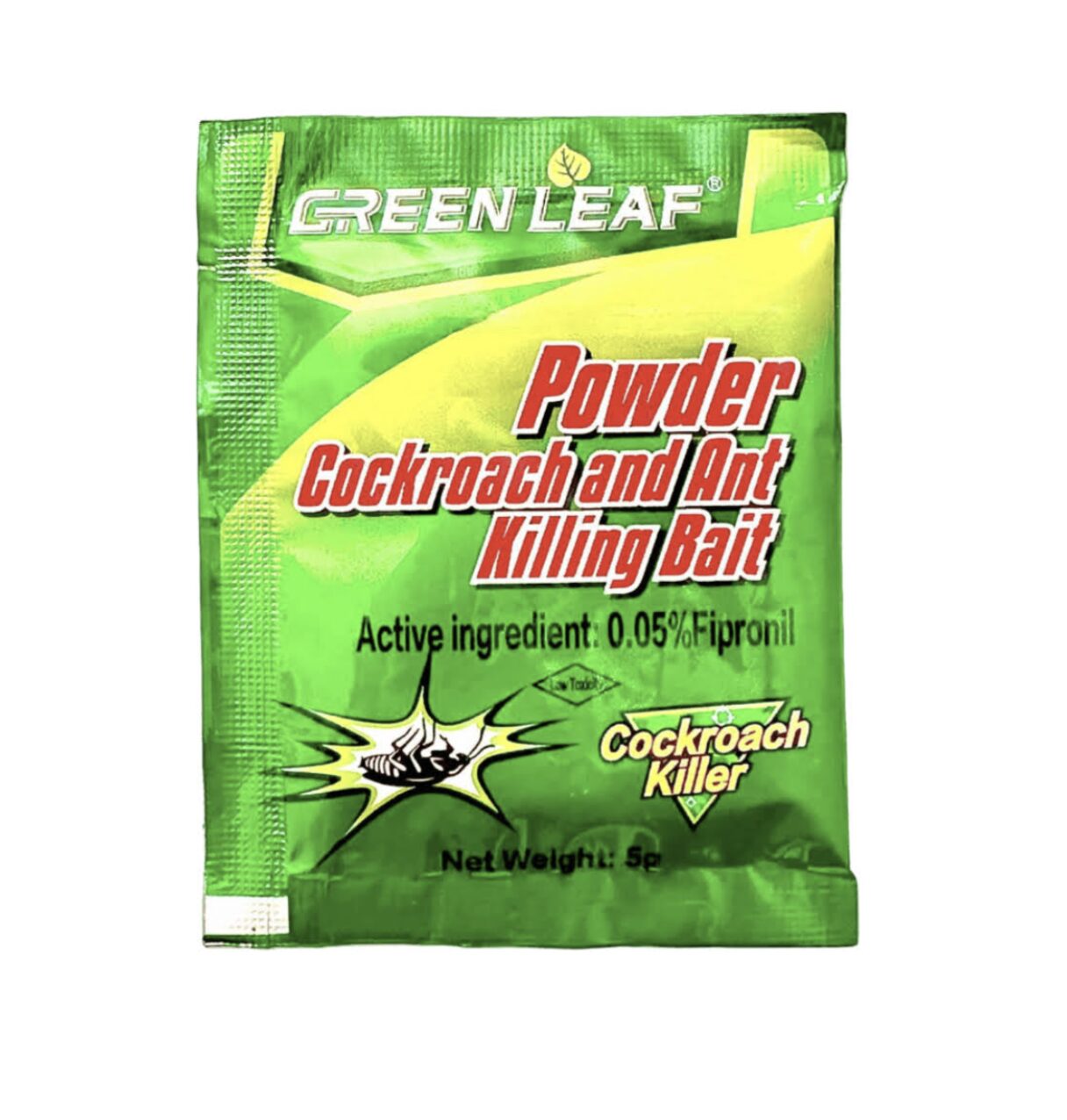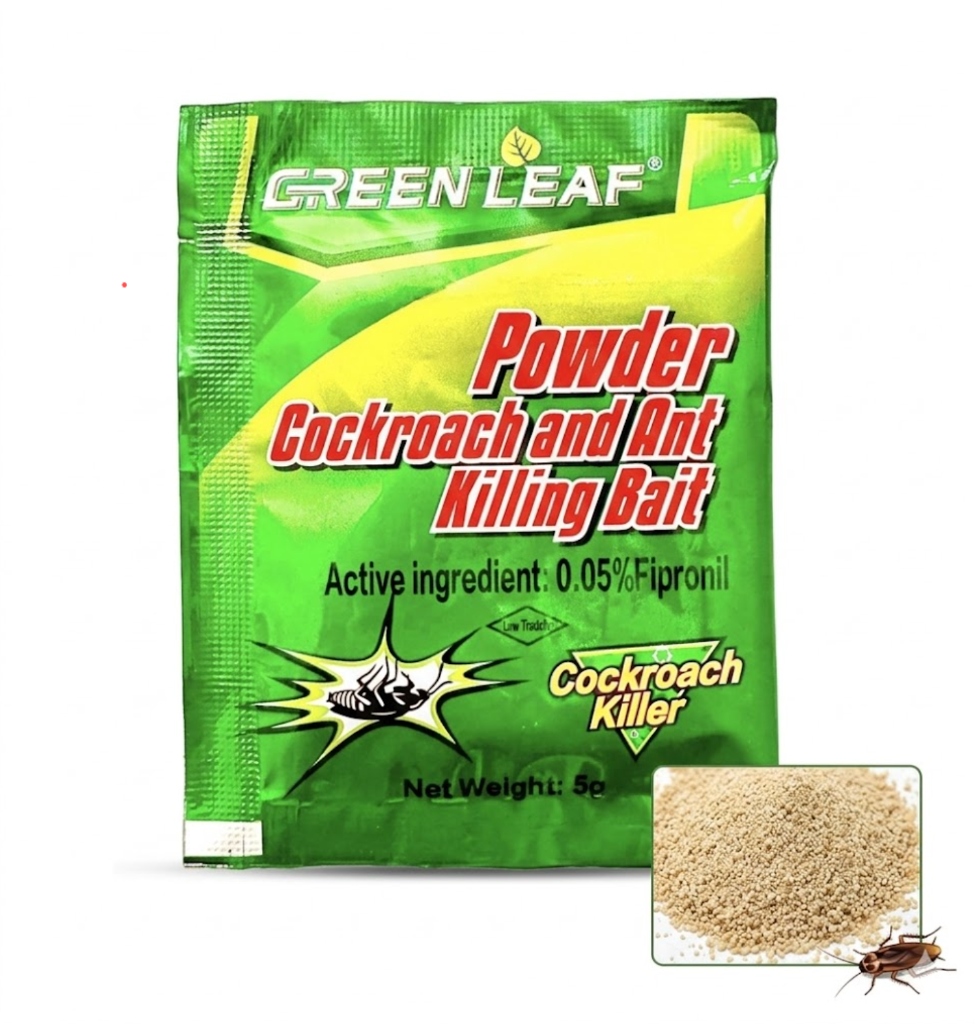
Search for a home remedy and you will be told that bay leaves repel cockroaches, that peppermint oil kills them, that cucumber peel drives them out, and that a saucer of beer will drown them. These remedies persist because they cost nothing and because roaches are nocturnal, so any night you do not see one feels like proof. Almost none of them survive contact with an actual German cockroach population. Our 2026 roundup of the best roach killer powders covers what actually works and what to skip.
This is a straight assessment of the popular natural remedies, what each one genuinely does, and why the ones that seem to work are often making the infestation harder to treat.
The short verdict
| Remedy | What it actually does | Verdict |
|---|---|---|
| Bay leaves | Mild, short-lived aromatic deterrent at very close range | No effect on population size |
| Peppermint or tea tree oil | Repellent at high concentration; can kill on direct saturation | Scatters the colony, does not reduce it |
| Cucumber or citrus peel | No meaningful repellent effect; becomes a food source as it rots | Actively counterproductive |
| Beer trap | Catches a small number of individuals | Negligible; adds a moisture source |
| Baking soda and sugar | Not a reliable insecticide for roaches | Ineffective |
| Coffee grounds | No repellent or lethal action | Ineffective |
| Cayenne or black pepper | Very brief irritant at best | Ineffective |
| Bleach down drains | Kills what it directly contacts in the trap only | Does not reach harbourage |
| Cold or heat exposure | Requires sustained extremes throughout every void | Not achievable in a home |
| Ultrasonic repellers | No demonstrated effect on cockroach behaviour | Ineffective |
Why repelling is the wrong goal
Every remedy on that list is trying to make roaches go somewhere else. That is the opposite of what control requires. A cockroach colony lives in enclosed harbourage inside cabinet carcasses, appliance cavities, and wall voids, and the only reliable way to reach it is to have foraging individuals carry something back into it. Anything that makes them avoid an area also makes them avoid the one thing that would actually kill the nest.
Worse, repelling redistributes the problem. Push a population out of the cabinet under your sink and it does not leave the building; it moves behind the dishwasher, into a wall void, or through a shared wall into your neighbour’s kitchen, from which it will return. That mechanism is the same one that makes aerosols counterproductive, described in why chemical sprays make German roaches scatter.
Remedy by remedy
Bay leaves
Bay leaves contain aromatic compounds that insects find mildly unpleasant at close range. In a sealed container the effect on stored-product pests is real. In an open kitchen drawer the concentration is a tiny fraction of what would be needed, and it fades within days as the leaf dries out. A colony living two feet away in the cabinet carcass is completely unaffected. Bay leaves are harmless, and that is the strongest thing that can be said for them.
Peppermint, tea tree and eucalyptus oil
This is the remedy with the most real chemistry behind it, which is exactly why it causes the most damage. At high concentration, essential oils do repel cockroaches, and direct saturation can kill an individual insect. Neither fact helps you. A diluted spray on a baseboard creates a treated strip the colony learns to route around, and the population continues breeding untouched behind the panel. People who spray oils for a month often report that sightings moved to a different room, which is the infestation spreading rather than shrinking.
Cucumber and citrus peel
There is no mechanism here at all, and there is a genuine downside. Cucumber peel is moist organic matter, and citrus rind is sugar and water. Left in a cabinet overnight it is a food and water source placed directly into the area you are trying to make inhospitable. If you have tried this and noticed more activity, that is not a coincidence.
Beer traps and jar traps
A jar with beer or bread and water in it will catch some individuals, and it feels productive because you can count them. The problem is scale. Visible foraging insects represent a small fraction of a colony, and the ones you catch are replaced by the next generation. A trap is a monitoring device, not a treatment, and if you want to use it that way there are much better tools, covered in how to map a nest with sticky traps. Beer traps also add standing liquid to a room, which is the one resource an infestation cannot do without.
Baking soda and sugar
The claim is that the insect eats the mixture and is killed internally by gas production. It is not a reliable insecticide for cockroaches, and separating the sugar from the powder is trivial for a foraging insect. Our article on why boric acid and baking soda mixtures fail explains where the idea came from and why the results do not hold up.
Diatomaceous earth
This one deserves more credit than the rest of the list, because the mechanism is real: it abrades the insect cuticle and causes dehydration. The problems are practical. It only works bone dry, it stops working the moment it clumps or absorbs kitchen humidity, and applied as a visible layer it becomes a repellent barrier that insects walk around. It has a legitimate role as a thin dust in dry, enclosed voids, which we cover in boric acid versus diatomaceous earth in wall voids. Sprinkled visibly along a skirting board it accomplishes very little.
Ultrasonic repellers
Devices marketed as emitting frequencies that drive insects away have not been shown to affect cockroach behaviour in any durable way. Insects habituate quickly to constant stimuli, and the sound does not travel into the enclosed voids where the colony lives. Treat these as decorative.
Bleach and boiling water down drains
Pouring bleach or boiling water into a drain kills whatever is in the trap at that moment. It does not reach the vertical stack or the shared riser that insects are actually travelling through, and repeated boiling water can damage some plastic waste pipes and seals. If your problem is coming up through plumbing, the fix is physical exclusion at the entry point, which is covered in how roaches enter through sewer lines and drains.
The natural methods that genuinely help
Not everything low-tech is useless. The non-chemical steps that measurably change outcomes are the ones that remove resources rather than the ones that smell strong.
- Eliminate standing water. A dripping trap, a damp bath mat, or a pet bowl left out overnight matters more than any spray. Cockroaches survive far longer without food than without water.
- Remove cardboard and paper. Corrugated cardboard is close to ideal harbourage. Getting it out of the property is free and removes both shelter and a surface for egg cases.
- Seal the gaps. A sealed pipe collar never needs treating again. See our perimeter sealing checklist.
- Store food in rigid sealed containers. Not bags, not the original cardboard packaging.
- Vacuum harbourage rather than spraying it. Vacuuming physically removes insects, droppings, and egg cases, and it does not leave a repellent residue. Empty the canister into a sealed bag outside.
- Reduce clutter in the harbourage zones. Fewer enclosed edges means fewer places a colony can establish.
These steps have something in common: none of them try to persuade a cockroach to leave. They remove the reasons it can stay, and they make whatever bait you use dramatically more effective, because your bait becomes the most attractive food source in the room rather than competing with crumbs.
Where the myths come from
Three things keep this list alive. Roaches are nocturnal and hide, so a quiet week reads as success even when the population is growing. Populations fluctuate naturally with temperature and moisture, so a decline that would have happened anyway gets credited to the remedy. And the remedies that partly work, the essential oils in particular, produce a visible change in behaviour: insects appear somewhere new. That looks like progress and is actually dispersal.
Frequently asked questions
Do any natural repellents work at all?
Some, including peppermint oil, do repel at high concentration. Repelling is not the same as controlling, and in a shared building it usually makes the problem larger by pushing the population into new areas. Resource removal is the natural approach that produces real results.
Is there a safe option if I have pets or children?
Yes, but safety comes from formulation and placement rather than from being a kitchen ingredient. Odourless, non-staining dry bait placed inside enclosed cabinet voids and appliance cavities keeps the material out of reach while putting it exactly where the insects are. See our pet-safe roach control guide and always follow the product label.
I tried bay leaves and the roaches disappeared. What happened?
Most likely the population moved rather than died, or your sightings dropped for an unrelated reason such as a change in temperature or a cleaning session that removed a food source. Put a few glue boards down for three nights and you will get an objective answer rather than an impression.
Can I use natural methods alongside bait?
Resource removal, sealing, and vacuuming combine very well with baiting. Repellents do not. Never apply oils, sprays, or scented cleaners near a bait placement, because you will make the insects avoid the one thing you want them to find.
Spend the effort where it changes the outcome
The uncomfortable summary is that most natural roach remedies are either inert or actively unhelpful, and the two hours you spend arranging bay leaves would be better spent fixing a dripping trap, removing cardboard, and putting bait where the nest actually is. The cleaning and sealing side of the job is genuinely valuable. The aromatic side is not.
For the part that has to reach the harbourage, GreenLeaf RoachBuster gives you 50 odorless, stainless dry powder sachets per box, designed to sit in cabinet corners, under sinks, and behind appliances without adding a scent that drives the colony somewhere else. Always use as directed on the product label, and keep placements away from children and pets.
Wider reading: the complete Roach Control Guide maps every article on the site by the question you are trying to answer — first 48 hours, identification, method, room by room, comparisons, safety, rentals and local conditions.
Ready to clear your home without odors or stains?
Claim the 50-sachet GreenLeaf RoachBuster box today. Free shipping, secure Stripe checkout, a 30-day money-back guarantee, and targeted odorless dry powder sachets built for kitchens, cabinets, gaps and appliances.
Use only as directed on the product label. Keep away from children and pets.
Treating an active infestation? One box treats one room, once. The 3-Box Kit — $120 (150 sachets, save $59.97) covers a full apartment through the complete 3-4 week treatment cycle; a $47 single box (50 sachets) covers a single-room problem. Ships within 1 business day, typical delivery 6-10 days · Free tracked shipping · 30-day money-back guarantee.
Choose your kit →