Living in an apartment means sharing more than just common areas; you also share wall voids, pipe chases, and electrical conduits. When cockroaches infest one unit, they quickly use these shared pathways to migrate between apartments. For this reason, typical DIY methods that work in isolated single-family homes often fail spectacularly in multi-family buildings. If a product you already placed is being ignored, our guide to why roach bait stops working covers the five usual causes and the fix.
The Mistake of Using Repellent Sprays in Apartments
The most common reaction to seeing a cockroach is reaching for a pressurized aerosol spray like Raid. While these sprays can kill individual bugs on contact, they act as strong chemical repellents. When you spray baseboards and entryways, you do not eradicate the colony. Instead, you create a chemical barrier that triggers a scatter response. Roaches flee from the treated zones, retreating deep into the wall voids and migrating through outlets into your neighbor’s apartment. Once the spray breaks down in a week or two, they migrate back, causing an endless cycle of infestation.
Why Baits and Non-Repellents Are Essential for Shared Walls
To achieve total eradication in an apartment, you must use a non-repellent strategy. Non-repellent active ingredients are completely undetectable to pests. Cockroaches walk through or consume the treatment without alarm, returning to their nests inside the walls and sharing the active ingredient with the rest of the colony. Using a combination of targeted gel baits, dry powder sachets, and non-repellent sprays creates a transfer effect that destroys the nest rather than scattering it.
Establishing a Clean Shield with RoachBuster
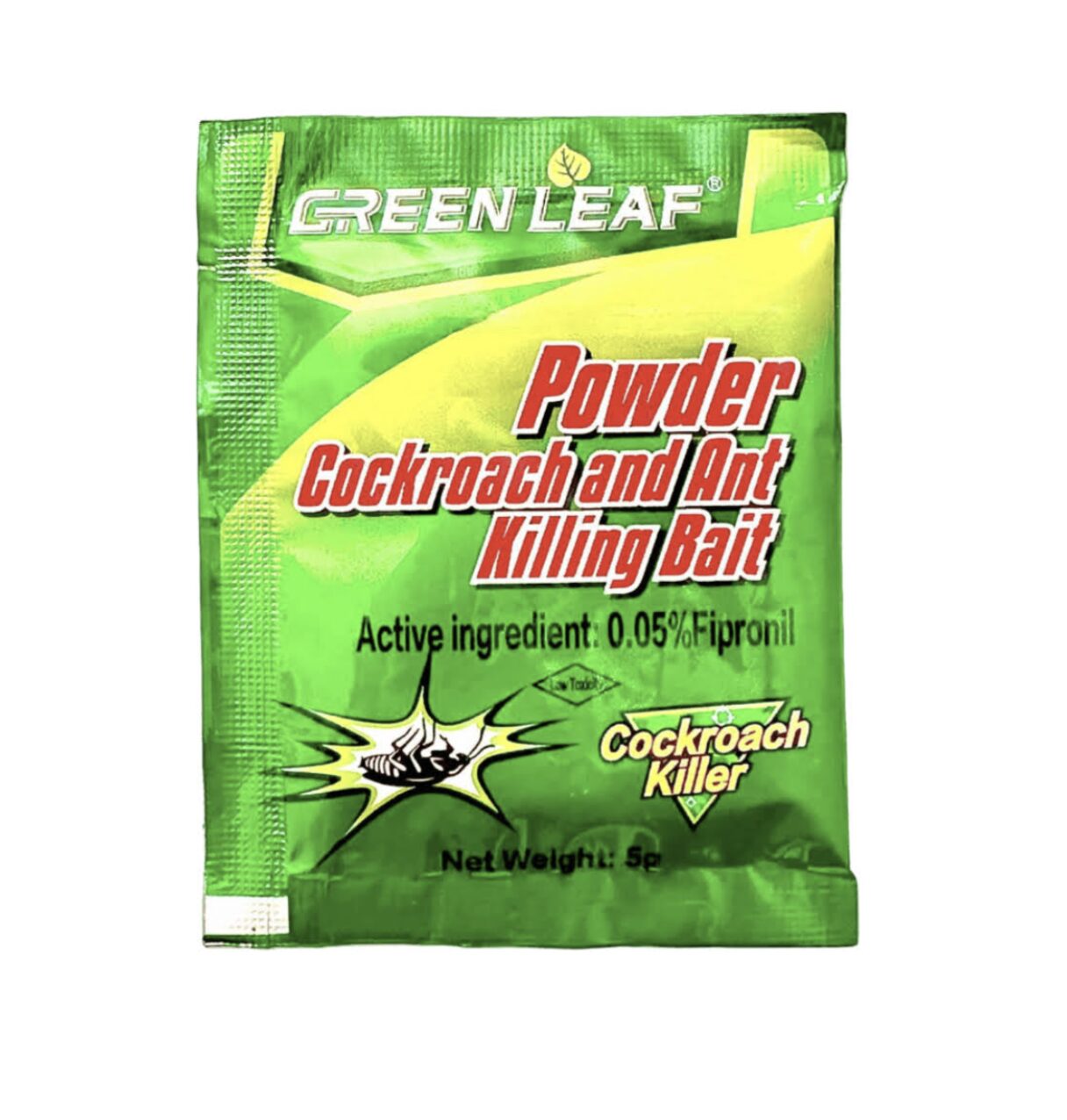
GreenLeaf RoachBuster sachets provide the perfect non-repellent, apartment-friendly defense. By placing dry, odorless sachets near plumbing entry points under sinks, behind appliances, and inside cabinets, you intercept migrating pests silently. The roaches feed on the attractive dry powder and carry it back into the shared wall voids, eliminating the nesting centers at the source and preventing neighbors’ infestations from invading your living space.
Two related reads: how long treatment realistically takes in a shared-wall building, and what DIY and professional treatment actually cost over six months.
Next steps: the building-wide plan for multi-unit properties, why roaches come back after treatment, and how many sachets a full round actually takes.
In an apartment, one property decides everything
Choosing a product for an apartment with shared walls is a narrower decision than choosing for a detached house, because one property overrides the rest: whether the product is repellent or non-repellent. In a house, a repellent product wastes your money. In an apartment it does something worse. It pushes the population sideways through the shared wall into the neighbouring unit, or receives the same treatment from a neighbour and pushes their population into yours. Shared-wall living turns repellency from an inefficiency into an active harm, and it is the reason experienced technicians treat whole stacks with non-repellent products rather than treating single units with sprays.
Selection criteria for shared-wall living
| Criterion | Why it matters in an apartment | What to look for |
|---|---|---|
| Non-repellent | Prevents dispersal into or from neighbouring units | Stated on the label or in the product description |
| Odourless | Shared ventilation and corridors carry smell to neighbours | No solvent or fragrance carrier |
| No ventilation period | You cannot vacate a flat for a day at short notice | Dry formats, no re-entry interval |
| Enclosed format | Small flats mean placements are closer to living space | Sachet or station rather than open gel or dust |
| Long placement life | You need coverage across the whole hatch window | Months, not days |
| Enough units per pack | Twelve to eighteen positions per flat minimum | Count the positions before buying |
| No surface residue | Rented property and deposits | Nothing that films paint, melamine or grout |
The twelve to eighteen positions in a typical flat
- Under the kitchen sink at the pipe penetration, two to three.
- Behind and under the fridge, two.
- Dishwasher or washing machine side gap, one to two.
- Kitchen plinth void, two.
- Bathroom vanity rear corners, two.
- Bath panel void, one to two.
- Shared-wall skirting corners in the living room and bedrooms, two to four.
- Entry door threshold corners, one to two.
- Socket or cable penetration surrounds on the shared wall, one to two.
That is the full round for a one or two-bedroom flat. The arithmetic for larger layouts is in our coverage arithmetic guide, and the reasons single-unit treatment fails are in our recurrence guide.
What to do about the neighbours
- Report in writing to the building or landlord on day one. Name the room and the specific penetration. Written reports create the pattern that triggers stack-wide treatment.
- Ask directly whether adjoining units are being treated. This is the question that determines whether your treatment holds.
- Talk to the neighbour if you can. A coordinated round on both sides of a wall is dramatically more effective than either side alone.
- Never spray into the shared wall. It is the fastest way to make the situation worse for everyone, as our method comparison explains.
- Keep a log. Dates, positions, sightings, reports and replies. It protects you and it speeds up escalation.
The building-scale version of this sequence is set out in our multi-unit treatment plan.
Questions apartment residents ask
Can I really fix this if my neighbour does nothing?
You can substantially protect your own unit with a door sweep, sealed penetrations and a maintained bait line, and your bait will also reduce the neighbouring population over time because insects carry material back. You cannot clear the building alone.
What is the single best first purchase?
A door sweep, then a non-repellent bait with enough units to cover twelve to eighteen positions. In that order, and the sweep costs very little.
Will management pay for treatment?
Many landlords and associations treat shared spaces and risers at no cost to residents when a documented pattern is reported. In-unit treatment is more often the resident responsibility, depending on your agreement.
How long before it goes quiet?
Two weeks for visible reduction, four to six weeks for a quiet flat if the source is inside your unit, and longer if it is next door and untreated.
The short version
In shared-wall living, non-repellency is the property that matters most, because repellent products move populations between units. Choose an odourless, enclosed, long-lasting non-repellent bait, cover twelve to eighteen positions, fit a door sweep, seal the penetrations, report in writing on day one and coordinate with neighbours. One box of fifty sachets covers a flat for a full year, with a 30-day money-back guarantee.
Always use any product as directed on its label, and keep placements out of reach of children and pets.
Treating an active infestation? One box treats one room, once. The 3-Box Kit — $120 (150 sachets, save $59.97) covers a full apartment through the complete 3-4 week treatment cycle; a $47 single box (50 sachets) covers a single-room problem. Ships within 1 business day, typical delivery 6-10 days · Free tracked shipping · 30-day money-back guarantee.
Choose your kit →