
Roach Control for Multi-Unit Buildings: A Landlord Treatment Plan
Treating one flat in a connected block fails predictably. How to survey across unit boundaries, quantify a build...

When temperatures drop in Toronto, cockroaches seek thermal refuge inside warm multi-family buildings. In dense apartment areas like Parkdale and St. James Town, older steam radiator pipe penetrations serve as highways for migrating German roaches. If you are treating an active problem rather than preventing one, start with the 21-day treatment plan, then use our after-treatment prevention plan to keep the home clear.
Radiator pipes expand and contract during steam cycles, widening the floor gaps where pipes enter the unit. Cockroaches utilize these warm, dark radiator collars to migrate from infested basement utility lines or adjacent apartments directly into your living spaces.
To eliminate winter infestations safely without enqueuing messy, runny gel baits or smelly chemical sprays in your heated home, follow this guide:
Most people assume roaches follow crumbs. In a Toronto high-rise between November and March, they follow warmth and moisture first, and food second. A radiator riser is a vertical column of heated pipe that passes through every floor of the building, and the sleeve where it penetrates each concrete slab is rarely sealed tight. That gap is a heated corridor with a stable temperature in the low twenties Celsius and condensation forming wherever warm pipe meets cool concrete. It is, from an insect point of view, close to ideal habitat in the middle of a Canadian winter.
This is why a unit can be spotlessly clean and still see activity in January. The insects are not living in your kitchen because of your kitchen. They are living in the riser shaft and the baseboard cavity, and they visit your kitchen at night. Treatment that only addresses visible surfaces will always underperform, because the population sits inside the wall.
Work outward from the heat source. In a typical one-bedroom pre-1980 Toronto apartment, the following nine positions cover the realistic movement paths. Placements should sit flat, dry and out of foot traffic.
That is nine placements for one small unit, which surprises people who expected to put two sachets under the sink and be finished. For a two-bedroom or a unit with two risers, expect twelve to sixteen. The arithmetic behind those numbers is set out in our guide to how many sachets a home actually needs.
| Period | What is happening | What to do |
|---|---|---|
| October | Heating comes on, risers warm up, insects begin moving inward from cooler shafts | Place a first full round before pressure builds |
| November to January | Peak indoor pressure, breeding continues year-round in heated voids | Inspect placements monthly, top up anything consumed or damp |
| February to March | Population is still active but bait uptake slows as numbers drop | Hold the line, do not remove placements early |
| April to June | Heat comes off, insects redistribute toward plumbing and garbage rooms | Shift emphasis from radiators to kitchen and bath plumbing |
| July to September | Lowest indoor pressure, best window for sealing work | Seal slab penetrations and baseboard gaps while access is easy |
Ontario tenants who report pests in writing put themselves in a much stronger position than tenants who phone the superintendent. Send a dated email, name the room and the specific location, attach a photo if you have one, and state plainly that you believe the source is the shared riser rather than the unit. Keep every reply. If activity continues after two reported treatments, that written trail is what makes a maintenance escalation or a Landlord and Tenant Board application viable. Photograph your own placements with a timestamp too, so nobody can claim the unit was untreated.
Winter activity clustered at radiators and risers almost always indicates a shared-void population rather than a unit-level one. A unit-level problem tends to stay around a single introduction point such as a cardboard delivery or a second-hand appliance.
Yes. You do not need to see the void. Place the sachet as close to the penetration as you can reach, flat and dry, and let foraging insects carry the active material back inward. That is the entire logic of a non-repellent dry bait.
Because a non-repellent bait does not chase anything away. Insects keep moving normally and some die in the open. Rising counts in week one followed by falling counts in weeks two and three is the expected curve, described in detail in our guide to reading treatment progress.
No. Wipe up standing water and open food, then place. Deep-cleaning every cabinet before treatment delays the part that actually reduces the population.
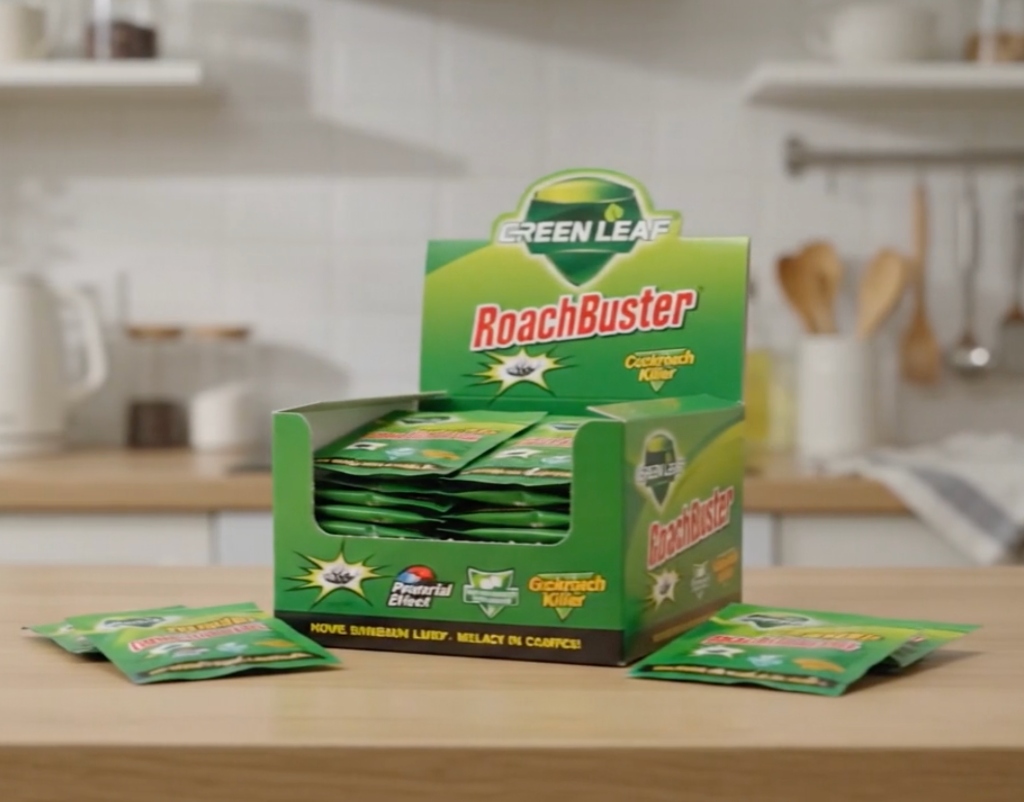
In a Toronto high-rise the heat is the habitat. Treat the riser penetrations and plumbing walls rather than the countertops, budget nine to sixteen placements for a small unit, start in October rather than January, never spray a shaft gap, and get the stack above and below you treated at the same time. A single RoachBuster box covers a small unit for a full heating season with sachets left over for top-ups, and it is backed by a 30-day money-back guarantee.
Always use any bait product as directed on its label, and keep placements out of reach of children and pets. Nothing here is legal advice; building rules and tenancy law vary by city and province or state.
Block pipe-collar pathways. Protect your Toronto high-rise with high-heat stable RoachBuster dry active sachets.
Free shipping, secure Stripe checkout, and a 30-day money-back guarantee.
Next steps: the building-wide plan for multi-unit properties, why roaches come back after treatment, and how many sachets a full round actually takes.
Treating an active infestation? One box treats one room, once. The 3-Box Kit — $120 (150 sachets, save $59.97) covers a full apartment through the complete 3-4 week treatment cycle; a $47 single box (50 sachets) covers a single-room problem. Ships within 1 business day, typical delivery 6-10 days · Free tracked shipping · 30-day money-back guarantee.
Choose your kit →
Treating one flat in a connected block fails predictably. How to survey across unit boundaries, quantify a build...
Student housing concentrates every risk factor for roaches. What to check on move-in, how to report properly, ho...

How infestations travel on moving day, how to inspect a new home before you sign, packing rules for cardboard an...
Your anonymous feedback helps us improve our educational home defense resources.