🛡 30-Day Money-Back Guarantee  |  🚚 FREE Tracked Shipping — ships within 1 business day  |  ⭐ 4.5/5 Stars  |  🌿 100% Eco-Friendly
ORDER NOW — Free Tracked Shipping →

Tag: refrigerator nests

  • Fridge Pest Maintenance Schedule: Stop Roaches Returning to the Compressor Bay

    Fridge Pest Maintenance Schedule: Stop Roaches Returning to the Compressor Bay

    If you have a cockroach problem in your kitchen, there is a very high probability that the primary nesting center is located directly beneath or behind your refrigerator. Refrigerator compressor voids are the number-one pest hotspot in residential kitchens, offering constant warmth from the motor, nearby water from the condensation defrost pan, and dark, undisturbed concealment. For the full clearance sequence after identification, follow the 21-day German roach infestation treatment plan.

    The Fridge Heat Trap: Why Wet Gels Run and Dry Out

    Applying sticky gel baits to clear refrigerator nests is notoriously ineffective. Refrigerator motors run hot, generating a constant flow of warm air around the compressor coils. This heat rapidly dries out standard wet gel baits within 48 hours, turning them into hard, unappeetizing plastic beads that pests ignore. Furthermore, the heat can cause low-viscosity gels to melt and run, potentially dripping into electronic relay switches or creating sticky, hard-to-clean smears on your kitchen floor.

    How to Surgically Treat Refrigerator Motor Voids

    Clearing a refrigerator nest requires a dry, heat-resistant bait format. Follow these three steps to secure the area:

    1. Pull and Vacuum: Pull the refrigerator away from the wall. Unplug it and vacuum the accumulated dust, pet hair, and pest debris around the bottom compressor panel.
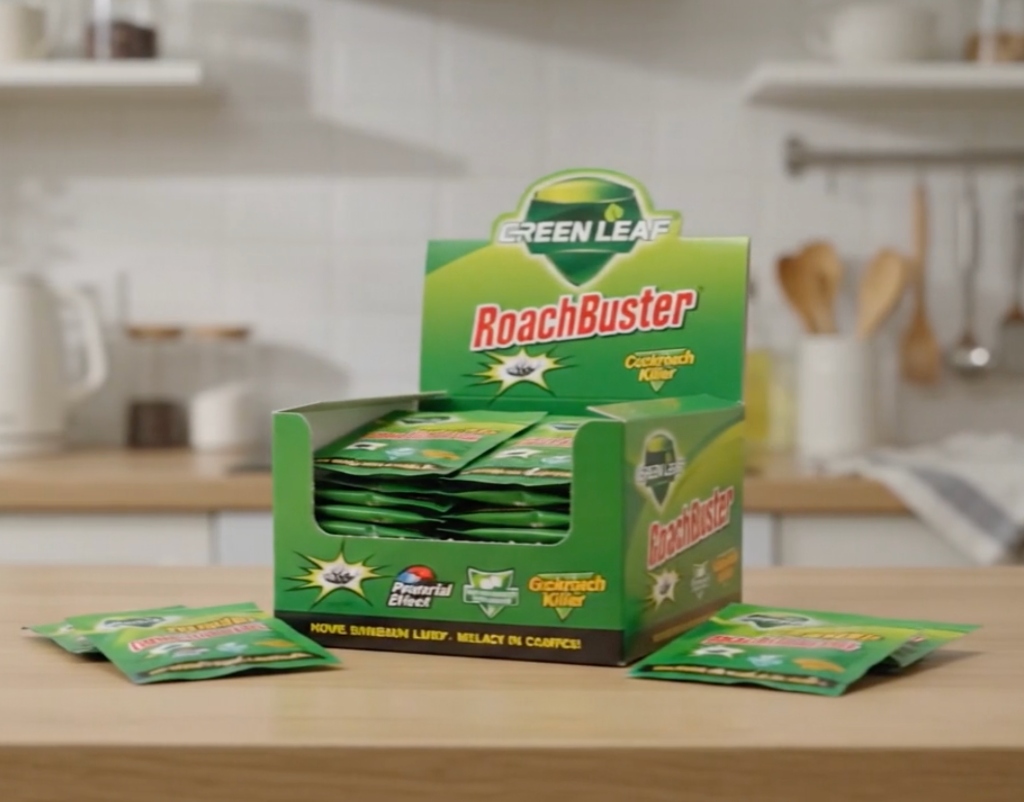
    2. Position Dry Sachets: Place self-contained dry powder bait sachets directly beside the compressor coils on the floor. Because RoachBuster utilizes dry powder bait sealed in protective paper sachets, there is zero risk of running, dripping, or drying out under high compressor heat.
    3. Keep Bait Active: Slide the refrigerator back into position. The dry powder remains fully active and appetizing to foraging pests for months under the appliance, providing a continuous shield that wipes out the nesting center.

    Next steps: how many sachets a full round actually takes, how to tell whether a treatment is working, and why roaches come back after treatment.

    Is the fridge the source or a symptom?

    Before you plan anything, work out which situation you are in, because the response is different. If the compressor bay holds droppings, shed skins and egg cases while the rest of the kitchen is largely clean, the fridge is the source and a targeted round plus a clean-out will resolve it. If you find droppings in the fridge bay and also in the under-sink cabinet, the plinth void and the dishwasher gap, the fridge is one harbourage among several and treating it alone will not move the needle. A five-minute torch check of three other locations before you start saves a wasted week.

    Fridge types and their specific weak points

    TypeExtra weak pointWhat to do differently
    Freestanding with rear coilExposed coil dust blanketVacuum coil twice a year, place at bay edge
    Freestanding with base coil and fanFan-cooled bay pulls in debris continuouslyVacuum from the front kickplate as well as the rear
    Integrated or built-inNo access without removing the housing panelPlace at the plinth and cabinet floor; book a technician if activity persists
    American style with ice and waterPlumbed water line and a second drain pathCheck for a slow leak at the connection; a permanent damp patch is the real problem
    Under-counter fridgeCompressor recess boxed in by cabinetryTreat as part of the cabinet plinth void
    Chest freezer in garage or utilityRarely moved, often on a damp floorRaise on blocks, keep the floor dry, place adjacent
    Apartment alcove fridgeEnclosed alcove restricts airflow and traps heatImprove air gap; alcove corners need placements too

    A maintenance calendar that also cuts your electricity bill

    • Monthly. Wipe the door gasket channel, check the floor beneath for droppings, and confirm placements are present and dry.
    • Quarterly. Pull the appliance out, vacuum the visible bay and floor, check for any water at the connection or under the unit.
    • Twice a year. Full coil vacuum, condensate tray wash, gasket clean, wall and floor clean, placements replaced.
    • Annually. Check the door seal by closing it on a sheet of paper; if the paper pulls out easily the seal is failing, which raises running cost and creates condensation.
    • After any service visit. Replace the placements, because technicians will move or discard them.

    A clean condenser coil measurably reduces energy consumption, so this schedule pays for itself independently of the pest benefit. It is one of the few maintenance tasks with two unrelated payoffs.

    When to stop and call a technician

    1. Activity continues after two full clean-outs and rounds, which suggests population inside a sealed section you cannot reach.
    2. The appliance is integrated and cannot be moved without removing cabinetry.
    3. There is standing water you cannot trace, which usually means a blocked drain channel inside the cabinet.
    4. The unit has developed an electrical or control fault after an infestation, since droppings can foul boards and contacts.
    5. You would need to open a sealed compartment or disturb refrigerant lines to reach the harbourage. Do not attempt this.

    Preventing the fridge from being chosen again

    Three changes make the location far less attractive without any product at all. Leave a proper air gap behind and above the appliance so the bay runs cooler and drier. Keep the condensate tray clean so there is no standing water. And stop storing anything on top of or immediately beside the fridge, particularly bread, cereal, pet treats and fruit, because the warm zone above a fridge accelerates spoilage and creates a food source right next to the harbourage. Combine that with a maintained placement at the bay edge and the fridge stops being the reliable refuge it was. If activity keeps returning across the whole kitchen rather than just the fridge, the cause is usually elsewhere and our recurrence guide covers the likely explanations.

    Questions people ask

    Can I use a coil brush instead of a vacuum?

    Brush and vacuum together. Brushing alone redistributes the dust and the debris into the room, including egg cases.

    Is a warm fridge exterior normal?

    Some warmth at the sides and rear is normal. Excessive heat usually means a dirty coil or restricted airflow, both of which also make the location more attractive to insects.

    How many placements does a fridge need?

    Two: one at the outer edge of the compressor bay and one on the dry floor beneath or behind. Whole-kitchen counts are in our coverage arithmetic guide.

    Should I bait inside the fridge itself?

    Never. Nothing goes inside a food storage compartment.

    The short version

    First decide whether the fridge is the source or one harbourage among several. Match the approach to the fridge type, run a monthly, quarterly and twice-yearly maintenance rhythm that also lowers running cost, leave a real air gap, keep the tray clean, stop storing food on top, and call a technician when the harbourage is behind a sealed section. One box covers the fridge and the rest of the kitchen, with a 30-day money-back guarantee.

    Always use any bait product as directed on its label, and keep placements out of reach of children and pets. Isolate power before working near any appliance, never introduce liquid into an enclosure, and use a qualified technician for anything sealed.

    Treating an active infestation? One box treats one room, once. The 3-Box Kit — $120 (150 sachets, save $59.97) covers a full apartment through the complete 3-4 week treatment cycle; a $47 single box (50 sachets) covers a single-room problem. Ships within 1 business day, typical delivery 6-10 days · Free tracked shipping · 30-day money-back guarantee.
    Choose your kit →

  • How to Clear Refrigerator Cockroach Nests: Dusting Behind Compressor Coils

    How to Clear Refrigerator Cockroach Nests: Dusting Behind Compressor Coils

    If you have a cockroach problem in your kitchen, there is a very high probability that the primary nesting center is located directly beneath or behind your refrigerator. Refrigerator compressor voids are the number-one pest hotspot in residential kitchens, offering constant warmth from the motor, nearby water from the condensation defrost pan, and dark, undisturbed concealment. Once you know what you are dealing with, the 21-day German roach treatment plan lays out the full clearance sequence, and our guide to finding the nest in 48 hours shows where to start.

    The Fridge Heat Trap: Why Wet Gels Run and Dry Out

    Applying sticky gel baits to clear refrigerator nests is notoriously ineffective. Refrigerator motors run hot, generating a constant flow of warm air around the compressor coils. This heat rapidly dries out standard wet gel baits within 48 hours, turning them into hard, unappeetizing plastic beads that pests ignore. Furthermore, the heat can cause low-viscosity gels to melt and run, potentially dripping into electronic relay switches or creating sticky, hard-to-clean smears on your kitchen floor.

    How to Surgically Treat Refrigerator Motor Voids

    Clearing a refrigerator nest requires a dry, heat-resistant bait format. Follow these three steps to secure the area:

    1. Pull and Vacuum: Pull the refrigerator away from the wall. Unplug it and vacuum the accumulated dust, pet hair, and pest debris around the bottom compressor panel.
    2. Position Dry Sachets: Place self-contained dry powder bait sachets directly beside the compressor coils on the floor. Because RoachBuster utilizes dry powder bait sealed in protective paper sachets, there is zero risk of running, dripping, or drying out under high compressor heat.
    3. Keep Bait Active: Slide the refrigerator back into position. The dry powder remains fully active and appetizing to foraging pests for months under the appliance, providing a continuous shield that wipes out the nesting center.

    Next steps: how many sachets a full round actually takes, how to tell whether a treatment is working, and why roaches come back after treatment.

    Why the fridge is the most reliable harbourage in a house

    A refrigerator runs continuously, which makes its compressor bay the most thermally stable warm space in the building. The condenser coil behind or beneath it collects a thick blanket of dust that functions as both insulation and food. The condensate evaporation tray sits directly above or beside the compressor and holds water permanently. The door gasket channel accumulates organic residue. And the whole assembly is enclosed by a rear panel that most households never remove in the life of the appliance. There is no other single location in a normal home that offers heat, water, food and total seclusion in one place.

    That is why a kitchen treatment that skips the fridge frequently stalls, and why fridge placements are among the first to be consumed when you run a proper round.

    The full clean-out, step by step

    1. Empty perishables into a cool box and unplug the appliance. Allow it to stand for twenty to thirty minutes so the compressor cools.
    2. Roll it clear of the wall. Take care with the water line if it is a plumbed model, and follow the manufacturer instructions for moving it.
    3. Inspect before you clean. Torch the compressor bay, the coil, the tray and the floor. Note where the droppings, skins and egg cases are; that tells you how established the population is.
    4. Remove the rear access panel if it is a simple screwed cover. Do not dismantle anything sealed, and do not touch refrigerant lines.
    5. Vacuum the coil and the bay. Use a crevice tool and a soft brush. Work in one direction across the coil fins rather than scrubbing across them.
    6. Empty and wash the condensate tray. Detergent and hot water, dried thoroughly. This removes the water supply.
    7. Clean the door gasket channel. A brush and detergent along the fold; this is a frequently missed food source.
    8. Clean the floor and the wall behind. Then dry both properly.
    9. Place two dry sachets. One at the rear corner of the compressor bay clear of moving parts and the tray, one on the dry floor beneath or behind the appliance.
    10. Reinstate, plug in and note the placement on your card so it is replaced after any service visit.

    What you find and what it means

    FindingWhat it indicatesAction
    Dust blanket onlyNo current activityVacuum and place preventively
    Scattered droppings on the coilActive use as a travel routeVacuum, place, re-check at 14 days
    Droppings plus shed skinsEstablished breeding populationFull kitchen round, dense placement
    Egg cases glued in the baySecond wave due in 4 to 6 weeksRemove cases, keep placements through week 6
    Standing water in the tray plus activityPrimary water source foundClean tray, fix any drain blockage
    Dead insects in the trayPopulation has been present for some timeFull clean plus whole-kitchen assessment

    If you find shed skins or egg cases, treat it as a kitchen-wide problem rather than a fridge problem, using the counts in our coverage arithmetic guide and, if it is a new discovery, the sequence in our first 48 hours plan.

    Mistakes when treating a fridge

    • Spraying the compressor bay. Aerosol on electrical connections and a hot compressor is both a damage risk and a repellent action that scatters the population.
    • Placing bait in the condensate tray. It will be wet within a day and stop working.
    • Blocking the coil or airflow. Anything obstructing airflow makes the appliance work harder and can shorten its life.
    • Cleaning without treating. The population moves back within days because the microclimate is unchanged.
    • Doing it once. Twice a year keeps the coil clean, cuts running cost and removes the food layer permanently.

    Questions people ask

    Is it safe to place bait near the compressor?

    Place on a dry, flat surface at the outer edge of the bay, clear of moving parts, the fan path, electrical connections and the tray, and follow the product label. Never inside a sealed compartment.

    How often should the coil be cleaned?

    Twice a year for pest prevention and appliance efficiency. Households with pets should do it more often because hair accelerates the dust blanket.

    Should I move the fridge to another wall?

    Not usually necessary. Leaving a proper air gap behind it and keeping the coil clean achieves more than relocation.

    Do chest freezers and wine coolers have the same problem?

    Yes, and they are often worse because they are moved even less. Treat them identically.

    The short version

    The fridge combines heat, water, food and seclusion in one place. Unplug, roll it out, inspect before cleaning, vacuum the coil and bay, wash the condensate tray, clean the gasket channel, then place two dry sachets at the bay edge and on the floor beneath. Repeat twice a year. One box covers the fridge and the whole kitchen, with a 30-day money-back guarantee.

    Always use any bait product as directed on its label, and keep placements out of reach of children and pets. Isolate power before working near electronics, never introduce liquid or aerosol into an enclosure, and use a qualified technician for anything sealed or under warranty.

    Treating an active infestation? One box treats one room, once. The 3-Box Kit — $120 (150 sachets, save $59.97) covers a full apartment through the complete 3-4 week treatment cycle; a $47 single box (50 sachets) covers a single-room problem. Ships within 1 business day, typical delivery 6-10 days · Free tracked shipping · 30-day money-back guarantee.
    Choose your kit →