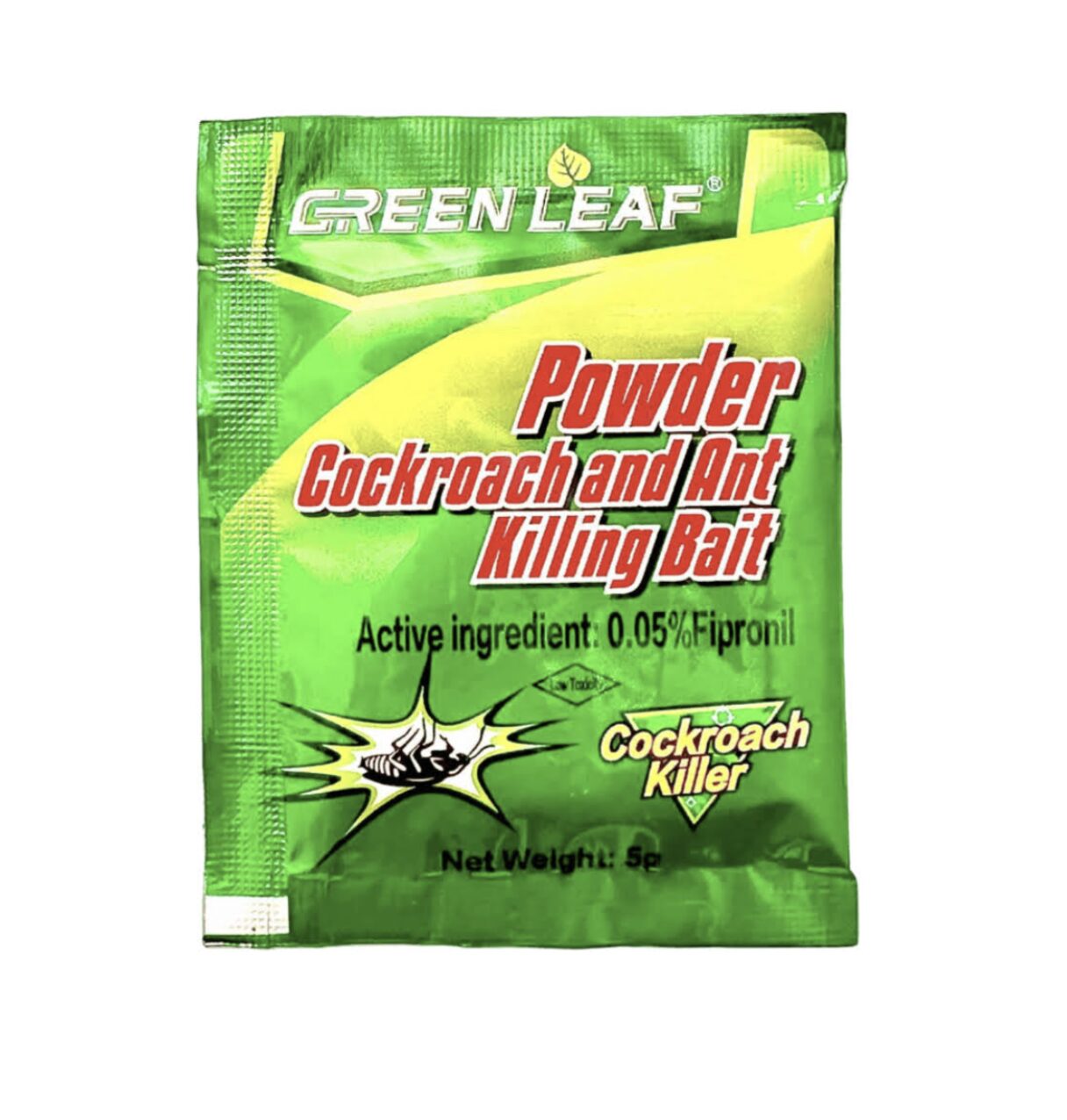
The cost question is usually the one that decides whether people treat a roach problem properly or keep buying another can of spray every fortnight. The honest comparison is not simply DIY versus a professional. It is a comparison between three approaches that fail or succeed for different reasons, and the cheapest option on paper is frequently the most expensive over six months. For the 2026 field, our updated guide to the best roach killer powders compares the main options on results, mess, and safety.
Figures below are indicative ranges commonly quoted in the residential market rather than fixed prices. Local labour rates, property size, severity, and whether a building requires multi-unit treatment all move the number substantially, so treat these as a framework for asking better questions rather than as a quote.
The three real options
| Approach | Typical outlay | Time to control | Main failure mode |
|---|---|---|---|
| Repellent sprays and foggers | Often 15 to 40 per purchase, repeated indefinitely | Rarely achieves control | Scatters the colony and spreads it to new areas |
| Targeted DIY baiting | Roughly 40 to 90 for a full treatment cycle | 2 to 8 weeks | Wrong placement, or stopping before egg cases hatch |
| Professional service | Commonly 150 to 350 for an initial visit, with follow-ups | 2 to 6 weeks | Monthly perimeter spraying without interior baiting |
| Building-wide or heavy infestation service | Frequently 400 to 1,000 plus over a treatment plan | 4 to 12 weeks | Untreated neighbouring units re-seeding the property |
Why the cheapest option is usually the most expensive
Aerosols and foggers look like the low-cost route because each individual purchase is small. The problem is that they are repellents. They kill the insects that happen to be exposed, and they drive the rest deeper into wall voids and, in shared buildings, into adjacent units. Two months later the population is larger and less accessible than when you started, and the running total of cans exceeds what a targeted bait treatment would have cost outright. We explain the mechanism in why chemical sprays make German roaches scatter.
The same applies to some professional arrangements. A monthly exterior perimeter spray is a maintenance service, and for an interior German cockroach population living inside a cabinet carcass it will keep producing invoices without ever reaching the nest, which is the situation described in why your exterminator’s monthly spray is not working.
What a professional service actually buys you
There are real advantages worth paying for, and it helps to be specific about what they are so you can judge whether a given quote includes them.
- Access to restricted products. Certain non-repellent formulations and dusts are available only to licensed applicators.
- Wall void and crevice injection. Dusting equipment that reaches voids behind switch plates, under cabinets, and inside pipe chases is not practical to buy for a single job.
- Correct identification. Species identification changes the whole strategy, and a technician gets it right in minutes.
- Structural diagnosis. A good technician finds the plumbing penetration or roof void route that you would not have thought to check.
- A warranty or re-treatment guarantee. This has genuine value in a severe infestation, provided you read what triggers it.
- Documentation. For a landlord dispute, a food safety audit, a childcare licence, or a property sale, a professional report is often required rather than merely helpful.
If you are in a rental dispute or a licensed setting, that last point alone can justify the cost regardless of the arithmetic.
When DIY is genuinely the better choice
- A single unit or a single-family home with sightings limited to one or two rooms.
- A recently introduced problem, typically a few weeks old, with no daytime sightings.
- A situation where you can identify the harbourage yourself using monitors, as covered in our guide to mapping a nest with sticky traps.
- A household where nobody will disturb bait placements for four to six weeks.
- Ongoing maintenance in an apartment with neighbour pressure, where the realistic goal is a permanent low-level barrier rather than a one-off eradication.
That last case is the one people underestimate. In a building with shared walls and plumbing risers, no single treatment ends the problem, because the pressure from outside your unit never stops. Paying for a professional visit every quarter to fight a permanent condition is far more expensive than maintaining your own placements, which is why the strategy in the best roach killer for apartments is built around continuous non-repellent placement.
When you should call a professional
- Cockroaches visible during daylight hours in multiple rooms, which indicates an overcrowded and substantial population.
- Activity in more than one unit of a building, or evidence of movement through shared risers.
- A commercial kitchen, food business, childcare setting, or any premises subject to inspection.
- American or Oriental cockroaches traced to a sewer or drain fault, where the fix is structural rather than chemical.
- Two full, correctly executed DIY treatment cycles with monitors showing no downward trend.
- Any situation where you need documentation for a landlord, insurer, or regulator.
The hidden costs nobody quotes for
Comparing product prices misses most of what an infestation actually costs.
- Discarded food and containers. Contaminated dry goods, opened packets, and cardboard-stored items add up quickly.
- Replaced appliances. Small appliances with infested control cavities are often thrown out rather than cleaned.
- Repeat purchases. The running total of sprays, gels, and traps bought over a failed six-month campaign frequently exceeds a single professional visit.
- Time. A treatment that drags on for months costs evenings, sleep, and a considerable amount of stress.
- Property and reputation. For a short-term rental, a house sale, or a restaurant, the cost of one visible sighting has nothing to do with the price of pest control.
- Health impact. Cockroach allergens are a recognised trigger for asthma symptoms, which makes speed of resolution matter beyond convenience.
The approach that costs least over six months
For most residential situations, the lowest total cost path is a hybrid: do the diagnostic and the sustained baiting yourself, and buy professional help for the specific things you cannot do.
- Spend three nights and very little money on monitors to locate the harbourage properly.
- Remove food, water, and cardboard harbourage, which costs nothing and improves every product you use afterwards.
- Run a full non-repellent bait cycle for six weeks without interruption, including through the week three nymph wave.
- Seal the entry routes once, since a sealed gap never needs treating again. See our perimeter sealing checklist.
- Keep low-level maintenance placements running afterwards, especially in an apartment.
- Escalate to a professional only if your monitor counts do not trend down, or if the problem is clearly structural or building-wide.
The reason this ordering saves money is that steps one, two, and four make every subsequent option cheaper, including a professional visit. A technician arriving at a clean, mapped, sealed property does a faster and more effective job than one arriving at a cluttered kitchen with cardboard under the sink.
Frequently asked questions
Is a one-time exterminator visit enough?
For an established German cockroach population, rarely. Egg cases hatch weeks after treatment, so a plan with at least one follow-up is more realistic than a single visit. Ask specifically whether follow-ups are included in the quoted price.
Who pays for pest control in a rental?
It depends on your jurisdiction and often on whether the infestation is judged to originate from the property or the tenant. In many places habitability rules put the obligation on the landlord, particularly in multi-unit buildings. Document sightings with dates and photographs, and report in writing.
Does homeowner insurance cover roach treatment?
Pest infestation is typically excluded as a maintenance issue rather than covered as sudden damage. Check your specific policy wording, since resulting damage is sometimes treated differently from the treatment itself.
Why does bait cost less than spraying but work better?
Because bait uses the colony as the delivery mechanism. Foraging insects carry material back into harbourage you cannot reach, so a small quantity affects a large share of the population. Spraying only affects what is exposed at the moment of application, so it has to be repeated indefinitely.
Spend on the right thing
The useful question is not what is cheapest today but what ends the problem in six weeks. In practice that means paying for diagnosis and sustained placement rather than for repeated contact killing, and calling in a licensed professional for the structural, multi-unit, and documentation cases where they are genuinely the right answer.
If your situation is the common one, a single unit with kitchen and bathroom activity, GreenLeaf RoachBuster covers a full treatment cycle at 47 for 50 odorless, stainless dry powder sachets, which is enough for multiple small placements in every priority zone plus ongoing maintenance. Always use as directed on the product label, and keep placements away from children and pets.
Before spending anything, it is worth knowing which of the free remedies are worth trying. We assessed ten of them in natural roach remedies tested.
Wider reading: the complete Roach Control Guide maps every article on the site by the question you are trying to answer — first 48 hours, identification, method, room by room, comparisons, safety, rentals and local conditions.
Ready to clear your home without odors or stains?
Claim the 50-sachet GreenLeaf RoachBuster box today. Free shipping, secure Stripe checkout, a 30-day money-back guarantee, and targeted odorless dry powder sachets built for kitchens, cabinets, gaps and appliances.
Use only as directed on the product label. Keep away from children and pets.
Treating an active infestation? One box treats one room, once. The 3-Box Kit — $120 (150 sachets, save $59.97) covers a full apartment through the complete 3-4 week treatment cycle; a $47 single box (50 sachets) covers a single-room problem. Ships within 1 business day, typical delivery 6-10 days · Free tracked shipping · 30-day money-back guarantee.
Choose your kit →