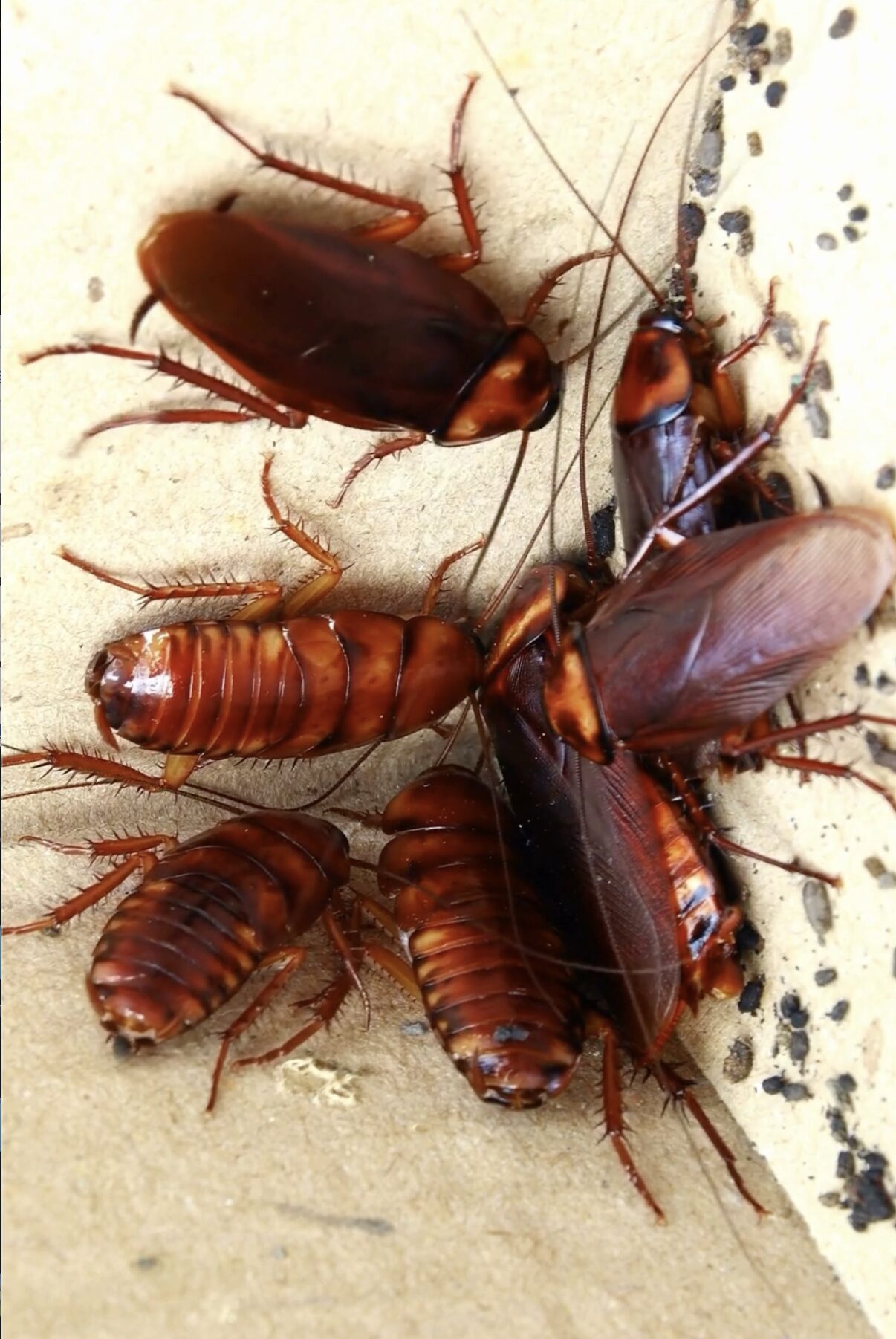
A musty, oily smell in a hallway is one of the few things that will end a showing before it starts, and buyers rarely say what put them off. They just do not come back. The smell people describe as damp cardboard, stale grease or “old building” is frequently a cockroach odour, and it is produced by the population rather than by any one insect, which is why air freshener does nothing and why it returns within hours of being masked. Clearing it before a marketing campaign is a fortnight of work, not an afternoon. For rented and multi-unit settings, see whether roaches are the landlord or tenant responsibility alongside this plan.
What the smell actually is, and why masking fails
The odour is generated continuously by an established population: secretions, shed skins, droppings and dead insects accumulating inside voids you cannot see into. Because the source is continuous and enclosed, anything applied to room air is diluted and gone within hours while the source keeps producing.
That is why the standard pre-listing playbook backfires. Plug-in diffusers, scented candles and heavy cleaning products layer a strong fragrance over a musty base note, and the combination reads to buyers as concealment. A faint musty smell raises a question. A strong floral smell over a musty base answers it.
Locating the source in a property you may not live in
Vacant and staged properties are harder to assess because there is no daily activity to notice. Work systematically rather than by nose alone.
- Check when the property is closed and warm. Arrive after the property has been shut for a few hours. Odour concentrates in still air, and an open-window walkthrough will tell you nothing.
- Work the enclosed voids in order: under-sink cabinets, the void behind and beneath the fridge, the gap beside the dishwasher, the oven kick plate, bathroom vanities, behind toilets, washing machine plinths, and any cupboard housing a boiler, meter or riser panel.
- Look for evidence, not insects. Dark peppercorn-like speckling, shed skins, papery egg cases and a greasy film on cabinet interiors all confirm an established population even with nothing moving. The droppings identification guide covers what you are looking at and how to clean it safely.
- Set sticky traps for two nights in every suspect void before you commit to a treatment plan. In an empty property this is the only reliable way to know which rooms are in use. The trap mapping method explains placement and how to read the catch.
- Check the water. A slow trap leak, condensation behind an appliance or a failed seal under a shower tray is usually the reason a population established in the first place.
The pre-listing timeline that actually works
If a campaign is three to four weeks out, there is time to fix this properly. If the first open house is on Saturday, be realistic: you can reduce the smell, but you cannot clear a population in four days.
| When | What happens | Why this order |
|---|---|---|
| Week 0, days 1–2 | Trap survey, fix leaks, remove food sources and cardboard | Removes what sustains the population |
| Week 0, days 3–4 | Place bait in every void identified, count cavities first | One complete round, not a partial one |
| Week 1 | Deep clean everything except treated voids; degrease behind cooker | Removes accumulated residue that carries odour |
| Week 2 | Ventilate hard, run extraction, keep property dry | Odour clears once the source stops producing |
| Week 3 | Top-up placements where fresh droppings persist | Eggs laid before treatment hatch on their own schedule |
| Week 3–4 | Seal gaps, then begin showings | Nothing to smell, nothing to find, nothing to disclose badly |
The reason the deep clean comes after the treatment, not before, is that scrubbing out a void removes both the evidence you need and the placement you just made. Clean the surfaces buyers will see; leave the treated cavities alone until the round is finished. The guide to judging whether a treatment is working explains how to track progress without disturbing it, and the week-by-week timeline sets the expectation on pace.
Working out how much product a property needs
Count cavities rather than square footage. Each cabinet carcass, appliance void, plumbing chase and plinth is a separate placement, and an empty two-bedroom apartment can easily need thirty to forty placements for a proper first round plus a third of that again for the top-up. The room-by-room coverage math gives working figures. Agents managing several listings at once generally find that buying at bundle quantities is simply the correct order size rather than an upsell.
What not to do before a showing
- Do not fog or bomb the property. It settles on every horizontal surface, requires a full clean afterwards, misses the voids entirely, and leaves a chemical smell that reads worse than the musty one.
- Do not spray the areas you intend to bait. Repellent residue suppresses uptake exactly where you need it. The format comparison covers why.
- Do not rely on fragrance. Buyers read heavy scent as concealment, and it triggers exactly the question you are trying to avoid.
- Do not paint over stained cabinet interiors without treating first. Fresh paint plus a live population is a short-lived cosmetic fix.
- Do not leave cardboard in the property. Packing boxes in a warm cupboard are both a harbourage and a smell source.
Disclosure, inspections and the practical risk
An active infestation is the sort of thing a buyer’s inspection may pick up, and a deal that collapses at inspection is considerably more expensive than treating early. Disclosure obligations differ by jurisdiction and by contract, and whether a past, treated infestation is a disclosable matter is not something to guess at. Take advice appropriate to your market; this is general guidance rather than legal or professional advice. The pre-sale inspection guide covers what inspectors typically look at.
The practical position is straightforward: a documented, completed treatment with dates is a much better story than a smell nobody has explained. Keep the trap survey notes, the treatment log and any repair invoices.
Frequently asked questions
How long before the smell actually goes?
Once the population stops producing, ventilation and cleaning clear the residual odour over days rather than weeks. The limiting factor is the treatment timeline, not the smell itself.
Can I clear this in a week for a rushed listing?
You can reduce it significantly by removing food and water sources, deep-cleaning surfaces and ventilating hard. You cannot complete a treatment round in a week, so plan the top-up for after the first showings.
Is a contained dry format better for a staged property?
Operationally, yes. There is nothing airborne, no residue on surfaces buyers touch, nothing to clean off staging furniture, and placements lift out whole before a showing if you want them out of sight.
The property is tenanted and I have limited access. What then?
Coordinate a single treatment window rather than opportunistic visits, and give proper written notice. The turnover preparation checklist covers the vacancy window, which is the easiest time to do this properly.
Does a musty smell always mean roaches?
No. Damp, failed seals, blocked traps and mould all produce musty odours, and more than one can be present. That is why the trap survey matters before you decide what you are treating.
The short version
The smell is produced continuously by the population, so masking it never holds. Assess the property closed and warm, trap for two nights, fix the water, place a complete round of bait in every void, deep-clean everything except the treated cavities, ventilate hard, top up at three weeks, seal the gaps, and then start showings. Keep the log. Always use products as directed on the label, and keep placements away from children and pets.
Secure Your Open Houses Symmetrically
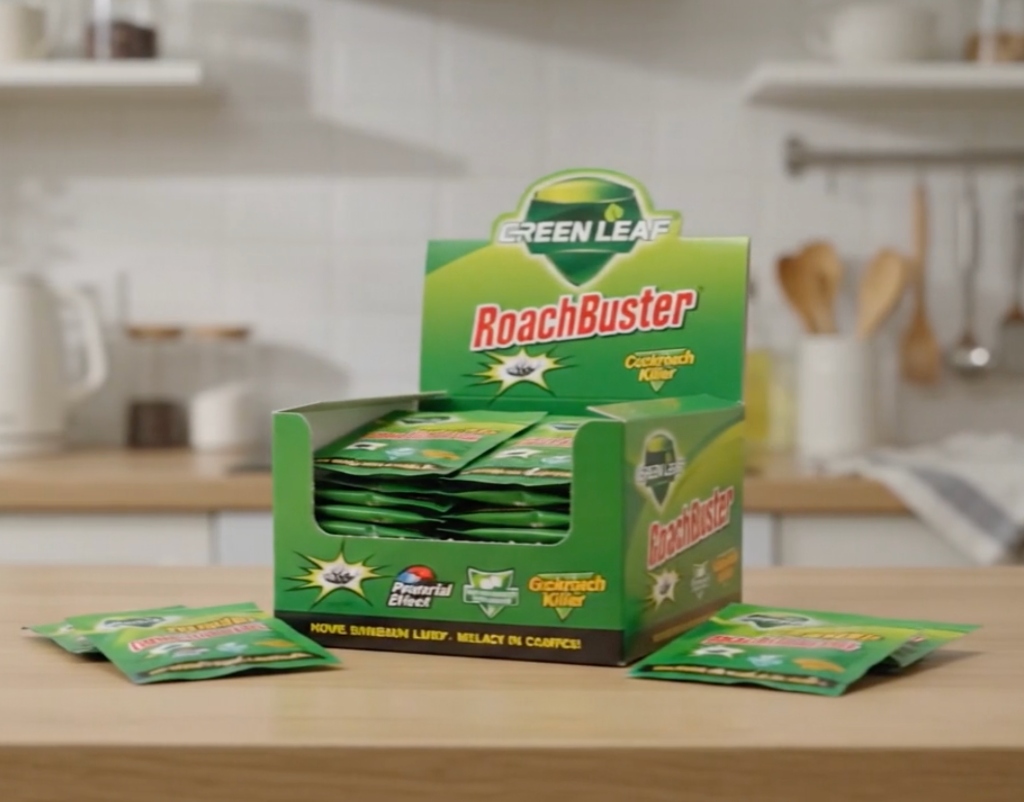
Eradicate musty aggregation odors safely. Protect listings with RoachBuster’s 100% odorless dry active sachet system.
Free shipping, secure Stripe checkout, and a 30-day money-back guarantee.
Next steps: how to tell whether a treatment is working, what to do in the first 48 hours, and why roaches come back after treatment.
Treating an active infestation? One box treats one room, once. The 3-Box Kit — $120 (150 sachets, save $59.97) covers a full apartment through the complete 3-4 week treatment cycle; a $47 single box (50 sachets) covers a single-room problem. Ships within 1 business day, typical delivery 6-10 days · Free tracked shipping · 30-day money-back guarantee.
Choose your kit →