
Is Your Roach Treatment Working: Signs of Progress and Stalling
Live sightings are the worst measure of progress. How to read fresh droppings, dead insects and trap catch rates...

When dealing with a frustrating cockroach infestation, most homeowners and tenants instinctively turn to standard chemical gel baits. These sticky syringes are widely recommended in DIY guides, but in practice, they present major performance limitations and visual drawbacks that leave customers seeking a cleaner alternative. Roaches walking past your placements? See the five real reasons in roach bait not working, then compare formats in our best roach killer powder guide.
Traditional gel baits rely on high moisture content to remain attractive to cockroaches. However, inside heated kitchens, near warm appliances, or in arid seasonal climates, the water binding agents in these gels evaporate rapidly. Within a few days, a wet, attractive gel dot turns into a hard, dark brown, crusty residue.
Once dry, cockroaches completely ignore the bait, rendering the treatment useless while the underlying nesting colony continues to multiply. This forces homeowners to constantly reapply fresh sticky gel, resulting in toxic buildup and recurring pest sightings.
Beyond performance failures, gel baits leave behind an unsightly, staining mess. Applying gel along cabinet hinges, pantry baseboards, and countertop edges results in dark, greasy smears. When it comes time to clean or move out, scrubbing dried gel can scrape high-end cabinet paints, stain wood laminates, and leave sticky chemical patches that pick up dirt and pet hair.
RoachBuster’s surgical dry powder sachet system entirely bypasses the evaporation cycle. Housed inside specialized, clean paper sachets, the active dry powder formulation never dries out, melts, or changes consistency. The premium attractants remain highly active and stable for months, regardless of local air dryness or utility cabinet temperatures.
Because the dry powder remains completely self-contained within the paper sachet, it leaves zero greasy residues, zero stains, and zero chemical smells. You simply place the sachets deep inside dark corners and under appliance gaps, allowing cockroaches to enter, ingest the active bait, and return to their nests to eliminate the entire colony cleanly and invisibly.
Next steps: how many sachets a full round actually takes, how to tell whether a treatment is working, and how powder, sprays and foggers differ.
Product comparisons usually turn into a list of features. It is more useful to compare on the small number of properties that actually determine whether a household ends up with a quiet kitchen: whether the product is non-repellent, whether it attracts insects, how quickly it acts, how long a placement stays usable, how controllable the exposure is, and how many placements you can realistically achieve for the money. Both dry sachet baits and syringe gel baits are non-repellent attractant baits, so the first two properties are broadly shared. The differences are in the remaining four.
| Property | Dry sachet | Syringe gel |
|---|---|---|
| Application precision | Positioned by hand into cavities | Can be injected into a very fine crack |
| Placement lifespan | Months in a dry position | Days to weeks before drying or crusting |
| Residue on surfaces | None while intact | Sugar film that can mark paint, melamine and grout |
| Reachability by children and pets | Enclosed unit that can be placed behind catches | Visible palatable dot, often at floor level |
| Removal and relocation | Pick it up and move it | Requires scraping and cleaning |
| Reapplication effort | Replace when consumed or damp | Frequent reapplication on a short cycle |
| Best use | Cabinets, appliance cavities, plinths, boundaries, voids | A specific crack a professional wants to target |
The number of placements you can achieve matters more than most people expect, because coverage failures cause more disappointment than product choice does. A typical kitchen and bathroom round needs fifteen to twenty-five positions, and a whole home with a utility room and a garage can need thirty or more. Any format that makes you ration placements will underperform a format that lets you cover every harbourage properly. Working out your own number first, using our coverage arithmetic guide, is a better way to choose between products than comparing labels, because it tells you how many units you actually need.
Any product used without those seven behaviours will disappoint, and any non-repellent bait used with them will usually succeed. That is the honest summary of every comparison in this category.
Speed depends far more on placement quality and population size than on format. Well-placed non-repellent baits typically show falling counts within two weeks; the signals are described in our progress guide.
Yes. Both are non-repellent baits and they do not conflict. Do not add a spray.
Compare cost per placement rather than cost per pack, and factor in reapplication frequency. Formats that need frequent reapplication cost more over a season than the pack price suggests.
Yes. The design allows foraging insects to contact and feed on the material without loose powder being exposed in the room, which is what keeps the surfaces clean and the exposure controlled.
Both formats are non-repellent attractant baits, so judge them on placement lifespan, residue, reachability, reapplication effort and cost per placement. Gels win for surgical crack application; sachets win for household coverage, durability, tidiness and controlled exposure. Work out your placement count first. A box of fifty sachets covers a typical home comfortably, with a 30-day money-back guarantee.
Always use any product as directed on its label, and keep placements out of reach of children and pets. Formulations and labels differ between markets and change over time; read the label of the specific product you buy.
Treating an active infestation? One box treats one room, once. The 3-Box Kit — $120 (150 sachets, save $59.97) covers a full apartment through the complete 3-4 week treatment cycle; a $47 single box (50 sachets) covers a single-room problem. Ships within 1 business day, typical delivery 6-10 days · Free tracked shipping · 30-day money-back guarantee.
Choose your kit →
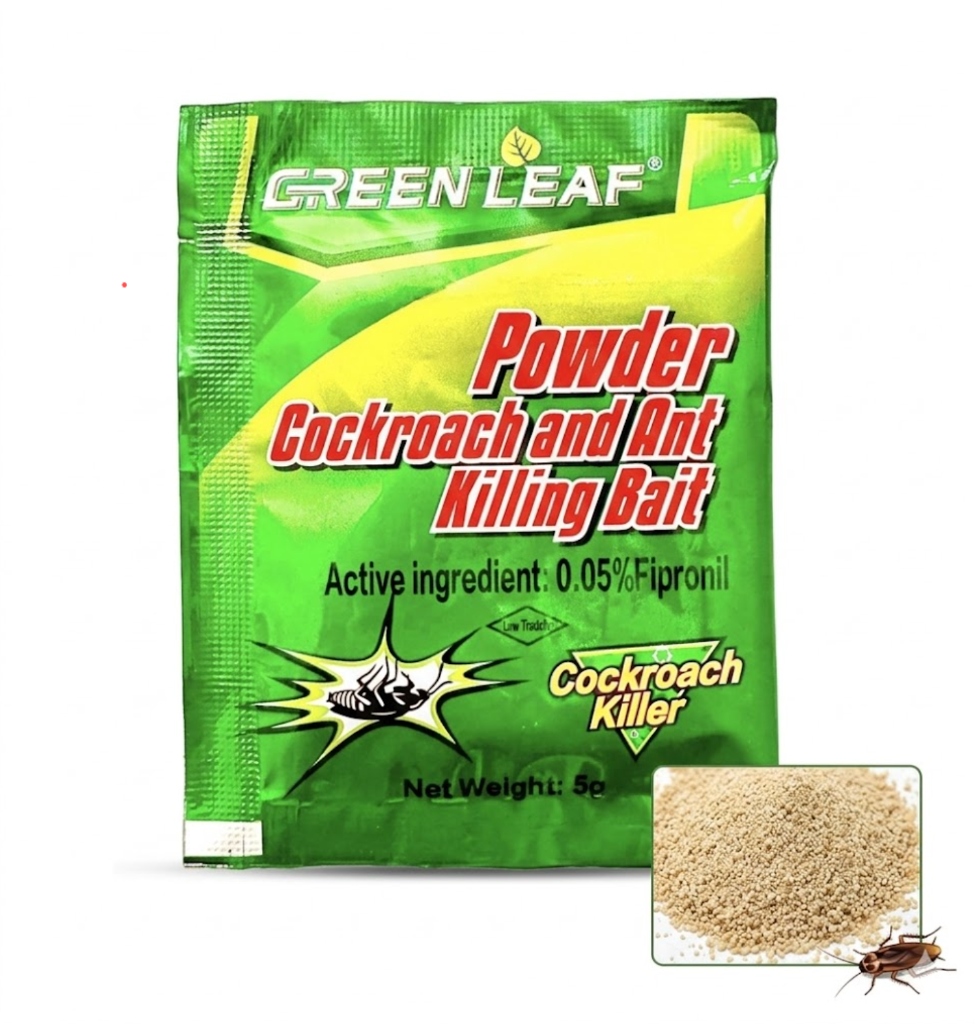
Live sightings are the worst measure of progress. How to read fresh droppings, dead insects and trap catch rates...
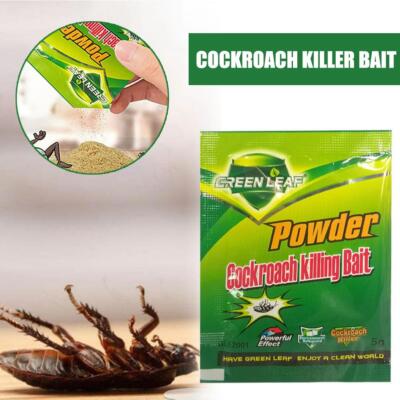
A resurgence at three weeks and a resurgence at three months are different problems. The six causes of reinfesta...
Powder sachets, aerosols and total-release foggers work on completely different principles. Which one reaches th...
Your anonymous feedback helps us improve our educational home defense resources.