
Roach Control for Multi-Unit Buildings: A Landlord Treatment Plan
Treating one flat in a connected block fails predictably. How to survey across unit boundaries, quantify a build...

Living in high-density urban apartments or flat developments often feels like an uphill battle against pest outbreaks. Even if you maintain an absolutely spotless home, you can still face recurring roach invasions if neighboring units inside the building have active nesting infestations. If the property is rented, our guide to whether roaches are the landlord or the tenant responsibility covers who owes what — and what residents can do while they wait.
High-rise buildings share interconnected structural conduits, utility shafts, radiator pipes, and baseboard gaps. Cockroaches naturally travel through these dark wall cavities, migrating from one apartment to another in search of water and nesting areas. This makes localized apartment boundaries highly vulnerable to incoming migrations.
When an exterminator sprays a single apartment with chemical pesticides, the strong warning smell causes roaches inside the wall to scatter away from the treated space. However, as soon as the chemical smell fades, the bugs migrate straight back from adjacent units. Liquid sprays also do not seal the wall penetrations, leaving your borders completely unprotected.
To permanently stop shared-wall pest invasions, both tenants and landlords must focus on sealing and surgical dry baiting:
The legal position varies by jurisdiction, but the practical position in almost every apartment building is the same. A population living in a shared wall, a plumbing riser or a common area is a building problem, and a population confined to one unit with an identifiable introduction is usually a tenant-level problem. The dispute almost always arises because neither party has evidence about which situation applies. Whoever produces the better documentation tends to prevail, and producing it costs nothing except discipline.
The full building-level version of this is in our multi-unit treatment plan, and placement counts per unit are in our coverage arithmetic guide.
| Action | Effect | Effort |
|---|---|---|
| Door sweep on the entry door | Blocks the main horizontal route | Fifteen minutes |
| Wire wool plus sealant at sink pipe penetrations | Blocks the main vertical route | Thirty minutes |
| Placements at every shared-wall baseboard corner | Intercepts traffic at the boundary | Twenty minutes |
| Placements in cabinet and appliance cavities | Reduces any population already inside | Thirty minutes |
| Overnight water removal, sink dry and bowls up | Removes the limiting resource | Nightly habit |
| Cardboard removed from the unit | Removes harbourage and transport | One afternoon |
It depends on jurisdiction, on the tenancy agreement and on whether cause can be evidenced. Photographs and logs are what make any such claim arguable in either direction; take local advice before deducting from a deposit.
Generally access must be given for repairs and treatment with proper notice, and refusing can shift responsibility. Notice requirements differ, so follow the local rule precisely.
Document it and pass it to the building. This is exactly the situation building management exists to handle, and a written record of the refusal protects everyone else.
Two weeks for visible reduction and four to six weeks for a substantially quiet stack, provided every unit and the shared rooms were treated in one pass.
Location mapping plus neighbour corroboration plus dated logs settles almost every shared-wall dispute. Tenants: report in writing on day one, treat immediately, fit a door sweep, never spray the wall. Landlords: treat the whole stack in one pass, log it, re-inspect at fourteen and thirty days, then exclude. One box covers a single unit; a five-box case covers a small stack, both with a 30-day money-back guarantee.
Always use any bait product as directed on its label, and keep placements out of reach of children and pets. This is general operational guidance, not legal advice; tenancy law and repair obligations vary by jurisdiction.
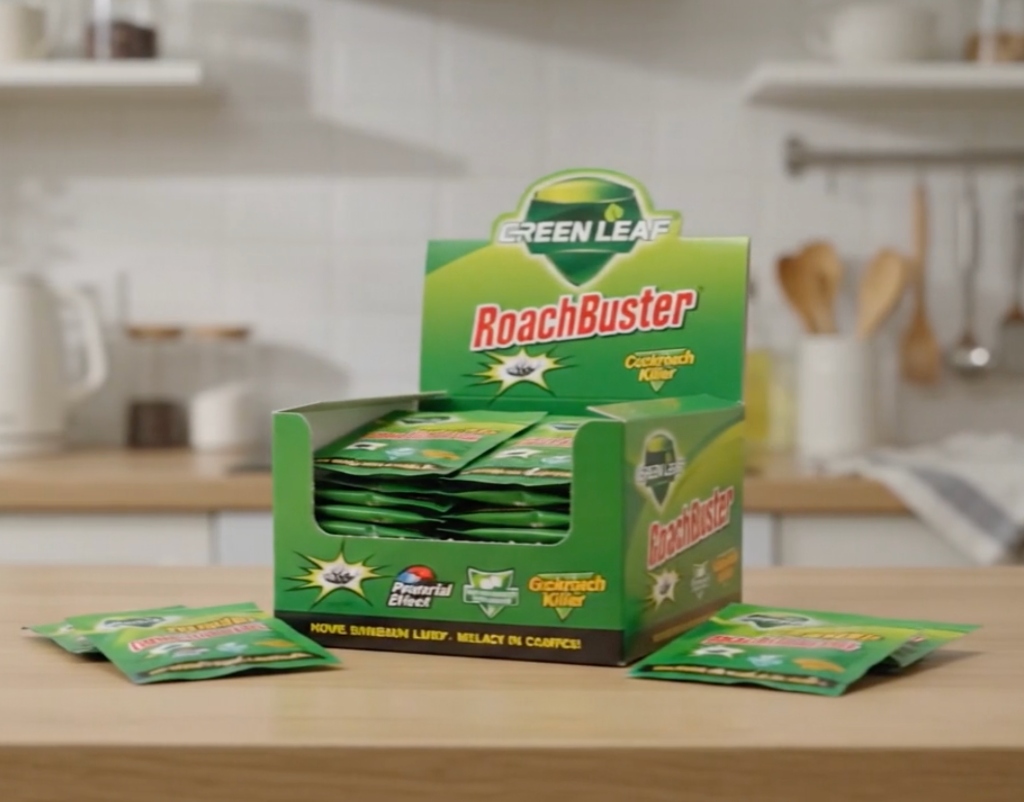
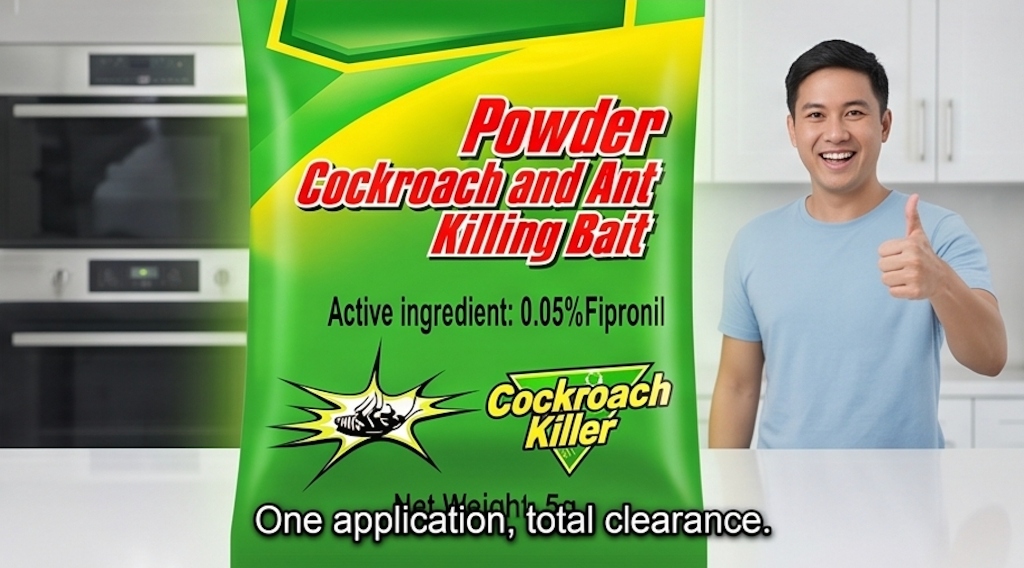
Stop shared-wall migrations. Create a permanent dry sachet barrier with the RoachBuster 50-Sachet Box today.
Free shipping, secure Stripe checkout, and a 30-day money-back guarantee.
Next steps: the building-wide plan for multi-unit properties, why roaches come back after treatment, and how many sachets a full round actually takes.
Treating an active infestation? One box treats one room, once. The 3-Box Kit — $120 (150 sachets, save $59.97) covers a full apartment through the complete 3-4 week treatment cycle; a $47 single box (50 sachets) covers a single-room problem. Ships within 1 business day, typical delivery 6-10 days · Free tracked shipping · 30-day money-back guarantee.
Choose your kit →
Treating one flat in a connected block fails predictably. How to survey across unit boundaries, quantify a build...
Student housing concentrates every risk factor for roaches. What to check on move-in, how to report properly, ho...
How infestations travel on moving day, how to inspect a new home before you sign, packing rules for cardboard an...
Your anonymous feedback helps us improve our educational home defense resources.