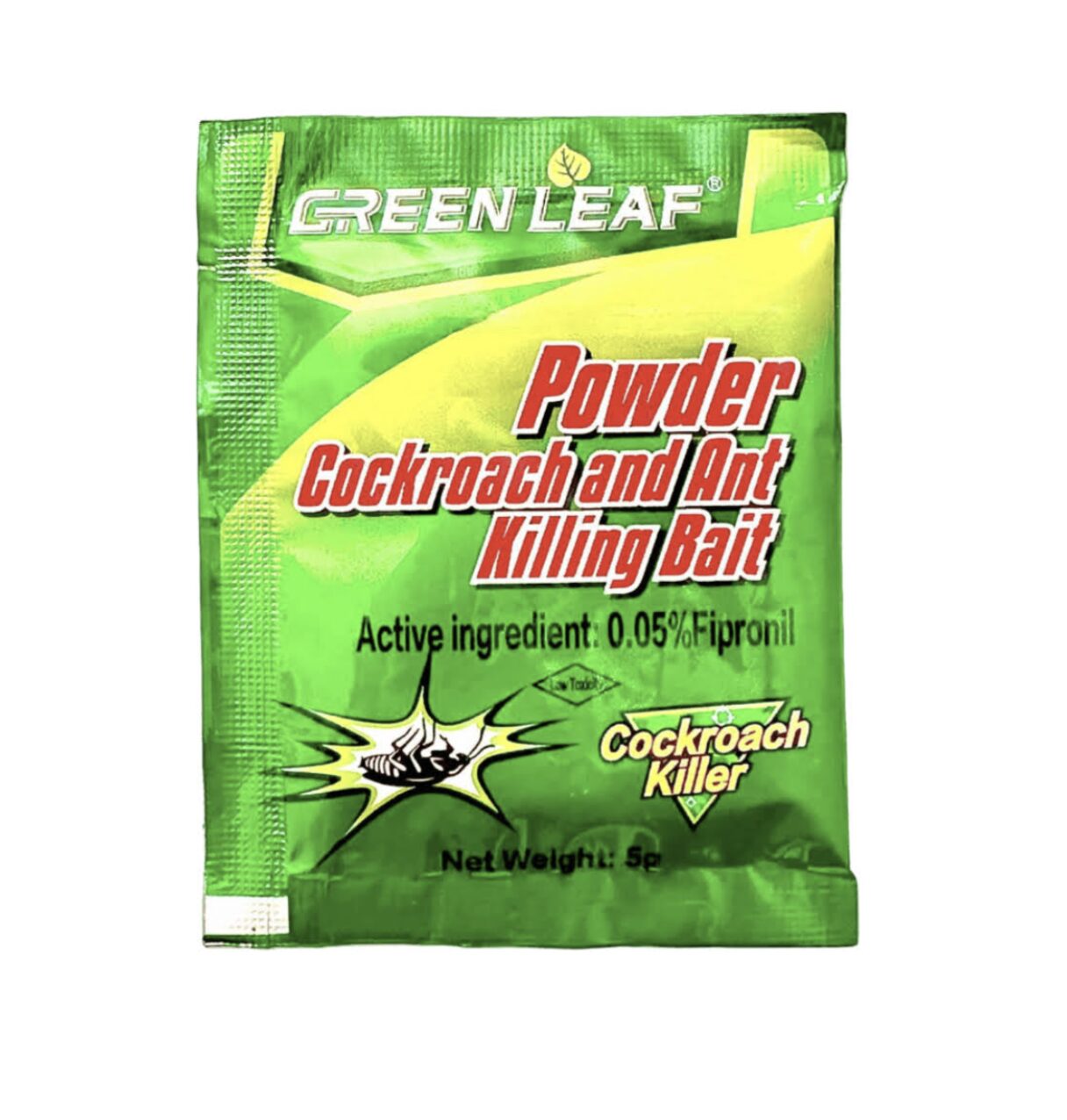
Roach powder, aerosol spray and total-release foggers are not three versions of the same thing. They work on different principles, they reach different parts of an infestation, and used in the wrong order they actively cancel each other out. If you have ever fogged a kitchen and seen more roaches a week later, that is not bad luck — it is what the tools were always going to do in that sequence. Here is what each format is actually for. Roaches walking past your placements? See the five real reasons in roach bait not working, then compare formats in our best roach killer powder guide.
The three formats at a glance
| Format | How it works | Reaches the harbourage? | Main risk |
|---|---|---|---|
| Dry powder sachets | Bait carried back into the void and shared through the population | Yes, by insect transport | Slow visible result in the first days |
| Aerosol spray | Contact kill on whatever the mist lands on | Only where you can spray directly | Scatters survivors deeper into voids |
| Total-release fogger | Fills open air space with a fine mist that settles on surfaces | Largely no — mist does not penetrate sealed voids | Repels insects into wall cavities and neighbouring units |
The single most important line in that table is the third column. An infestation lives inside cavities you cannot see: cabinet carcasses, appliance cavities, wall voids, pipe chases. Anything that only treats open surfaces is treating the corridor, not the building.
What dry powder sachets are for
Sachet-format bait is a transport tool. Insects encounter it inside the void they already occupy, feed, return to the harbourage, and the effect spreads through contact and secondary exposure. That is why the visible result is delayed and then compounding: very little on day two, obvious by the end of week one, substantially quieter by week three.
The trade-off is patience. If you want a dead insect in the next thirty seconds, bait is the wrong tool. If you want the nest to stop producing, it is the only one of the three that reliably gets there. The week-by-week timeline sets out what each stage should look like so you can tell progress from stalling.
Sachets also solve a practical problem in homes where a mist is unacceptable: rentals with shared ventilation, kitchens where food prep cannot stop, homes with infants, and anyone who simply cannot have an aerosol residue on surfaces. Format matters as much as active ingredient when you are choosing what you can actually live with.
What aerosol spray is for
Spray has one honest use: a single visible insect you want gone right now, on a hard surface, with no better option to hand. It is a spot tool. What it is not is a treatment.
The failure mode is well documented and easy to reproduce. Spraying around a cabinet run kills the handful of insects in the open and drives the rest further into the void. Worse, many contact products leave a residue that insects avoid, which can make them route around the exact area where you later want to place bait. Spraying first and baiting second is a common sequence and a poor one.
- Use spray for a single insect on a hard, wipeable surface.
- Do not spray the areas you intend to bait, or bait uptake drops.
- Do not spray into electrical housings, appliance vents or plumbing chases.
- Never treat spray as a substitute for finding the harbourage.
What foggers are for
Total-release foggers are the most widely bought and the least often appropriate. A fogger discharges its entire contents into the room air. The mist settles on horizontal surfaces — countertops, floors, the top of the fridge, your dish rack — and does not meaningfully enter sealed cavities. Meanwhile the disturbance and the repellent effect push the population outward and deeper: into wall voids, under floors, and in apartments, into the unit next door.
There are also practical hazards worth being blunt about. Foggers are pressurised, flammable in some formulations, require the space to be vacated, and require every food-contact surface to be cleaned afterwards. That is a lot of cost and disruption for a treatment that mostly misses the target. The car version of this problem is covered in the guide to clearing a vehicle, where fogging is a particularly bad idea in a sealed cabin.
Wider reading: the complete Roach Control Guide maps every article on the site by the question you are trying to answer — first 48 hours, identification, method, room by room, comparisons, safety, rentals and local conditions.
Using RoachBuster for this? Powder sachets are the harbourage tool in this comparison — the one that travels into the void. A single box is $47 with 50 odorless, stainless dry powder sachets, free shipping, and a 30-day money-back guarantee. See the box and bundles.
Always use as directed on the product label, and keep placements away from children and pets.
Choosing by situation, not by shelf appeal
| Your situation | Sensible primary tool | Why |
|---|---|---|
| Ongoing activity, droppings in cabinets | Dry powder sachets | Needs to reach the void and spread |
| One insect on the worktop, right now | Spot spray, then bait later | Immediate removal, no treatment value |
| Apartment with shared walls | Sachets plus sealing gaps | Fogging pushes the problem next door and back |
| Home with infants or food prep ongoing | Sachets, sited out of reach | No airborne mist, no surface residue to clean |
| Heavy structural infestation, recurring | Professional inspection plus baiting | Sanitation and exclusion work needed too |
| Car interior | Sachets in dry, enclosed spots | Sealed cabin makes aerosols and foggers a poor fit |
The order that actually works
- Find the harbourage first. Sticky traps for two or three nights will tell you which rooms are in use. The trap mapping method is the cheapest step in the whole process and the one that saves the most product.
- Cut the food and water. Bait competes with whatever else is available. Fix the drip, dry the sink at night, seal dry goods. The clean-home attractants guide covers the sources people miss.
- Place bait into every void you found. Work out the count before you start so you do not run out halfway — see the coverage math by room.
- Leave it alone. No spraying over the top, no cleaning the treated void, no moving placements around every two days.
- Top up at two to four weeks in the voids still showing fresh droppings, because eggs laid before you started will hatch on their own schedule.
- Seal the gaps once activity has dropped, so the next arrival has nowhere to settle.
Frequently asked questions
Can I use spray and bait together?
Only if you keep them physically apart. Spray in one room and bait in another is workable. Spraying over or beside your placements suppresses uptake and wastes both.
Are foggers ever the right answer?
For crawling insects living in cavities, very rarely. They are far better suited to flying pests in open space, which is not the problem you have.
Why does bait seem to do nothing on day two?
Because the mechanism is transport, not contact. Day two is when uptake is happening. Visible change usually starts between day four and day ten.
Will powder work if I have already fogged?
Yes, but give it time and clean the treated surfaces first. Residues left by a fogger can make insects avoid the area for a while, so uptake may start slower than usual.
What if I see more roaches after treating?
A short-term increase in sightings is common and usually means insects are moving while affected. A sustained increase after three weeks means placements are missing the harbourage — go back to trapping and find it.
The short version
Spray is a spot tool. Foggers treat the air and miss the nest. Dry powder sachets are the only format in this comparison that travels into the void where the population actually lives. Map first, cut the competing food and water, place enough bait to finish a full round, then leave it to work. Always follow the product label, and keep placements away from children and pets.
Treating an active infestation? One box treats one room, once. The 3-Box Kit — $120 (150 sachets, save $59.97) covers a full apartment through the complete 3-4 week treatment cycle; a $47 single box (50 sachets) covers a single-room problem. Ships within 1 business day, typical delivery 6-10 days · Free tracked shipping · 30-day money-back guarantee.
Choose your kit →