While many home infestations are triggered by cold weather, California’s warm, arid climate presents a very different pest-control threat. Prolonged dry seasons and severe drought conditions across Southern and Northern California disrupt normal insect populations, driving water-seeking cockroaches directly into residential properties. Pair this with our prevention plan that sticks so a cleared home stays cleared.
The Search for Moisture: Climbing Up Sewer and Floor Drains
During severe drought periods, natural outdoor moisture sources dry up entirely. Large American cockroaches and highly invasive Turkestan cockroaches (which have colonized utility infrastructure across California) are forced to seek survival water. They follow the humidity gradients emanating from residential plumbing networks, climbing up through bathroom floor drains, kitchen sinks, and utility lines.
Once inside a home, they gather around leaky pipes, sink traps, and pet bowls. In arid climates, a small drip behind a kitchen cabinet represents an open invitation to a nesting colony.
The Gel Trap: Why Traditional Cockroach Gels Fail in Dry Climates
Exterminators frequently recommend gel baits to deal with indoor infestations. However, in California’s dry climate, the water binding agents inside cockroach gels evaporate rapidly. Within a few short weeks, the wet gel turns into a hard, dark brown, crusty residue that pests completely ignore. Even worse, cleaning dried gel can scratch wood cabinetry and stain high-end countertops, leaving behind an unsightly mess.
The Dry Powder Sachet Barrier
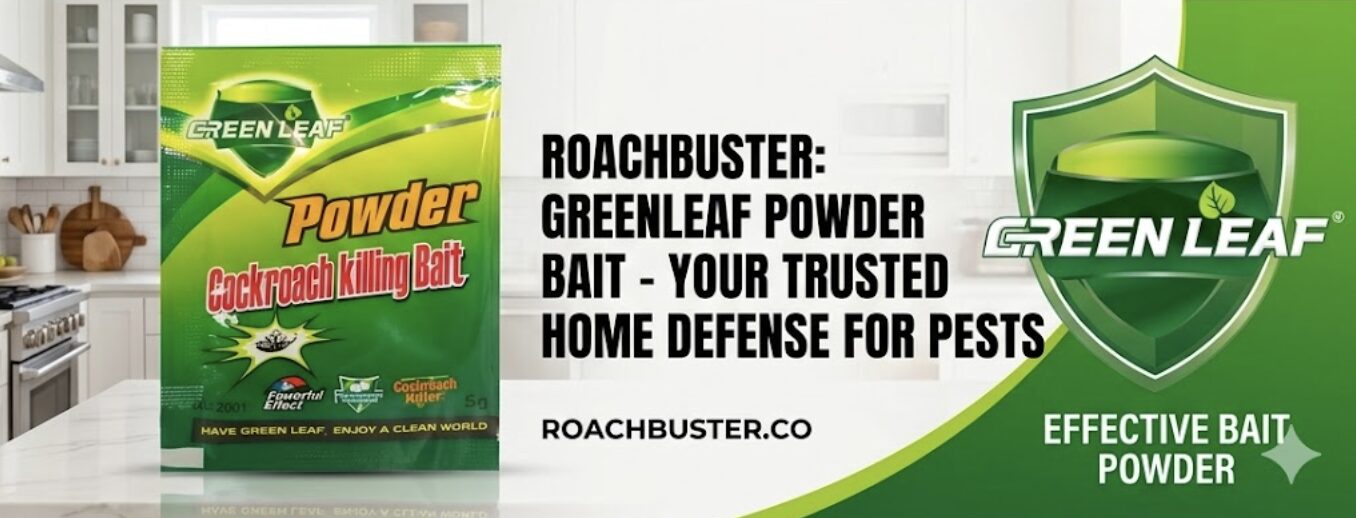
A dry active powder bait completely avoids these climate issues. Housed inside clean, specialized paper sachets, RoachBuster’s dry powder bait never dries out, melts, or leaves messy residues. It remains stable, odorless, and highly attractive to moisture-seeking pests for months. Placing these sachets deep inside dark cabinet corners, under sinks, and near laundry stacks blocks the threat cleanly and permanently.
Next steps: how many sachets a full round actually takes, why roaches come back after treatment, and how to tell whether a treatment is working.
Drought makes your plumbing the only oasis
In a dry California summer the outdoor environment offers almost no free water. Irrigation is restricted, soil moisture is low, and surface water is gone. Every water-dependent insect in the neighbourhood is therefore concentrating on the small number of reliable moisture sources left, and in a residential street those are almost all inside buildings: condensate lines, sink traps, dishwasher seals, irrigation valve boxes, pool equipment, pet bowls and the damp soil immediately around a drip emitter. Cockroaches can survive weeks without food but only days without water, so water access, not food, is the variable that decides where they go.
This reframes the whole treatment. In a drought summer you are not competing with crumbs. You are competing with your own plumbing, and the way to win is to shut the water down at night and put bait on the routes to it.
The water audit
- Sinks and basins. Wipe every sink and basin dry at night. A wet sink is an open water source and it takes ten seconds to remove.
- Drips and weeping valves. A slow drip under a sink or at a stop tap keeps a cabinet permanently damp. Fix or replace.
- Air conditioning condensate. The single largest indoor water source in a hot dry climate. Check the tray, the line and the discharge point.
- Pet bowls. Up overnight, or moved to a room away from harbourage.
- Dishwasher and washing machine seals. Residual water in the door channel and the filter.
- Irrigation valve boxes and drip emitters. Damp boxes against the house are outdoor harbourage with water included.
- Pool and spa equipment. Pump housings and backwash areas stay damp and are usually adjacent to the structure.
- Refrigerator condensate tray. Permanent standing water inside the warmest cavity in the house.
Where placements go in a drought-driven pattern
| Location | Placements | Why |
|---|---|---|
| Under every sink at pipe penetrations | 2 per sink | Primary water route |
| Air handler and condensate line entry | 2 | Largest indoor water source |
| Refrigerator compressor bay and floor | 2 | Water plus warmth |
| Dishwasher side gap | 1 to 2 | Permanent moisture |
| Laundry behind the machine | 2 | Supply and drain |
| Water heater base | 1 to 2 | Condensation and drip |
| Exterior irrigation valve box surrounds | 1 to 2 | Sheltered, dry side only |
| Pool equipment enclosure | 2 | Sheltered from spray |
| Exterior door thresholds, inside | 1 per door | Entry interception |
Fifteen to twenty placements for a typical California single-family home, weighted almost entirely to water rather than to food storage. Counts by room are in our coverage arithmetic guide.
Seasonal timing in a Mediterranean climate
- Late spring. Full round before the dry season concentrates pressure on your plumbing.
- Summer. Monthly inspection, top up anything consumed, keep the nightly dry-down habit going.
- First autumn rain. Short spike as outdoor harbourage floods; top up thresholds and garage.
- Winter. Lower pressure and the best window for sealing, drainage and irrigation adjustments.
- Any heat wave. Expect intensified water-seeking behaviour within days; check placements and dry-down discipline.
Drought-specific mistakes
- Focusing on food storage. Sealed pantries are good practice but they are not the constraint in a dry climate.
- Leaving standing water in a sink overnight. This one habit undoes a substantial part of your treatment.
- Ignoring the irrigation controller box and valve boxes. They are damp, sheltered and against the wall.
- Perimeter spraying in dry heat. Liquid barriers degrade quickly in sun and dry soil; see our method comparison.
- Watering at night. Night irrigation keeps the perimeter damp during peak insect activity hours. Water early morning instead.
Questions California homeowners ask
Does drought make infestations better or worse?
Worse indoors and better outdoors. Populations concentrate into buildings because that is where the water is, so indoor sightings rise even as the outdoor habitat shrinks.
Should I stop using my air conditioning?
No. Manage the condensate instead: clear the line, keep the tray clean and extend the discharge away from the foundation.
Will drying everything out solve it by itself?
It substantially lowers the population ceiling but rarely eliminates an established population, because some moisture is always available. Water removal plus bait on the routes is the combination that works.
How long until sightings drop?
Two weeks for visible reduction and four to six weeks for a quiet house, with the nightly dry-down maintained throughout. Progress signals are in our is it working guide.
The short version
In a drought, water is the currency. Audit and shut down every indoor water source, wipe sinks dry at night, fix drips, manage condensate, lift pet bowls, then place fifteen to twenty sachets weighted to plumbing and mechanical routes rather than to food storage. One box covers a full California home for a dry season, with a 30-day money-back guarantee.
Always use any bait product as directed on its label, and keep placements out of reach of children and pets.
Treating an active infestation? One box treats one room, once. The 3-Box Kit — $120 (150 sachets, save $59.97) covers a full apartment through the complete 3-4 week treatment cycle; a $47 single box (50 sachets) covers a single-room problem. Ships within 1 business day, typical delivery 6-10 days · Free tracked shipping · 30-day money-back guarantee.
Choose your kit →