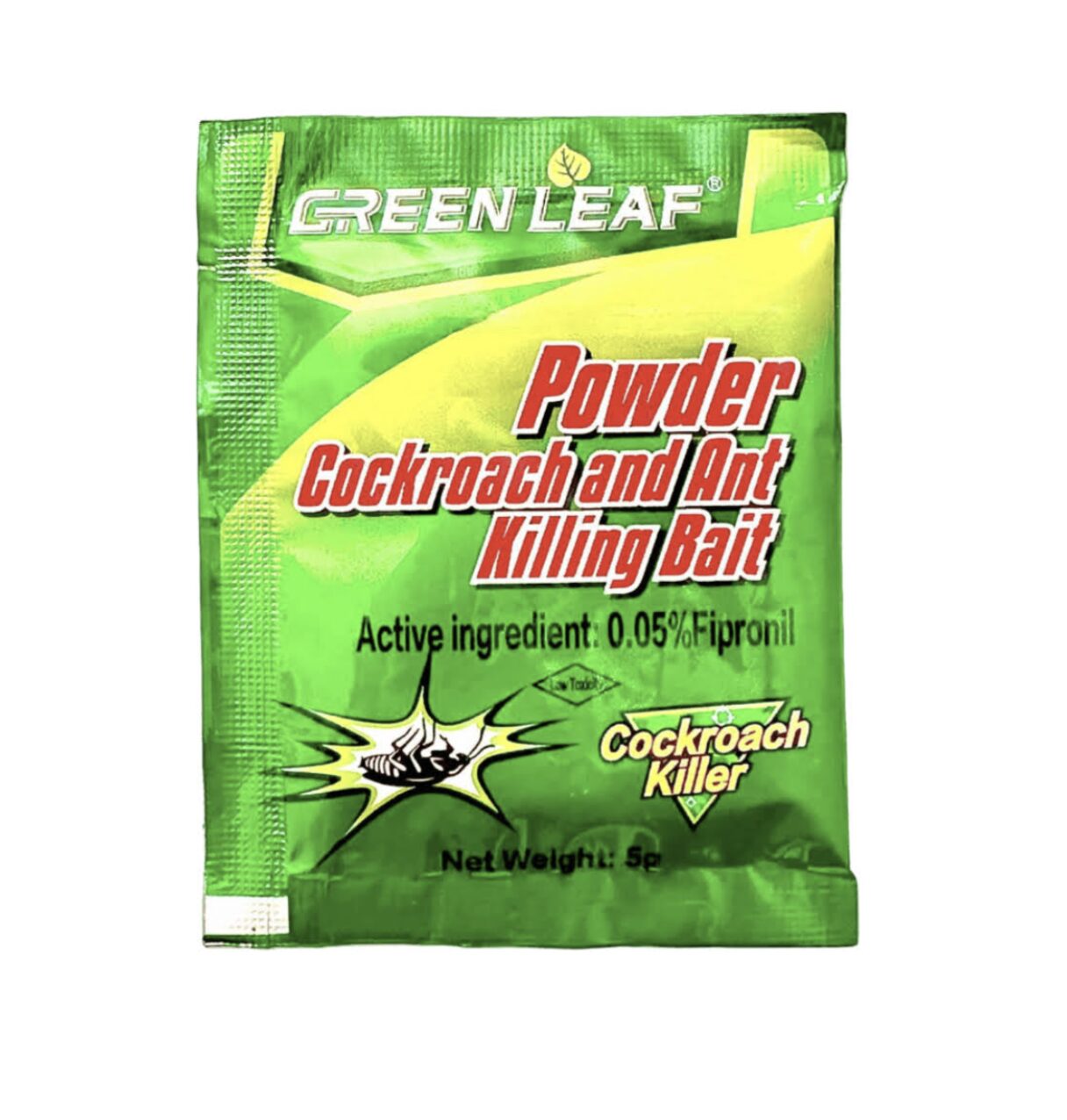
Many homeowners attempt to solve a cockroach problem using traditional home remedies like boric acid or baking soda. While these substances are technically lethal to insects, they frequently fail to resolve a nesting infestation in real-world environments. We break down when the $7 bottle is enough — and when it is not — in our boric acid roach killer comparison.
The Problem of Bitter Taste and Repellent Texture
Pure boric acid and baking soda have a bitter taste and a powdery texture that insects naturally avoid. Cockroaches possess highly sensitive taste receptors on their antennae and mouthparts. If they encounter a bitter, suspicious pile of powder, they will simply walk around it or avoid the area entirely.
The Power of Professional Attractants
Effective pest control requires enticing the insect to ingest the active ingredient. Professional bait powders are formulated with high-quality, pest-specific food attractants—such as specific lipids, proteins, and carbohydrates. Pests mistake the powder for a valuable food source, ingesting it eagerly and sharing it with the rest of the colony.
Precision Over Volume
Instead of pouring messy mounds of baking soda, surgical placement of a high-attractant dry powder bait inside small, clean paper sachets provides a neat and highly targeted solution. It draws the pests in naturally while keeping your kitchen counters and pantry shelves completely spotless.
If you are wondering how long a properly chosen bait should take to work, our week-by-week timeline sets realistic expectations.
The same reasoning applies to most of the popular home remedies. We assessed ten of them, including bay leaves, peppermint oil and cucumber peel, in natural roach remedies tested.
Next steps: how many sachets a full round actually takes, how to tell whether a treatment is working, and how powder, sprays and foggers differ.
A bait has to win a competition it did not choose
Every bait placed in a kitchen is competing against whatever else is available: crumbs under the toaster, grease film behind the hob, pet food, a damp cloth, soap residue, cardboard glue and the contents of the bin. A cockroach does not owe your bait a visit. It will feed on whichever available source is most attractive at that moment, and it will avoid anything that smells wrong, tastes bitter or has irritated it before. That single competitive framing explains almost every home-remedy failure.
Boric acid powder and baking soda both fail this competition, but for different reasons, and understanding the difference tells you what a working bait needs.
Why boric acid on its own underperforms
- No attractant. Boric acid is a stomach toxicant with essentially no food value and no attraction. Insects ingest it incidentally while grooming after walking through it, which is a slow and unreliable delivery route.
- Application density is almost always wrong. A visible layer of powder is avoided; insects walk around it. The effective application is a barely visible film, which is very hard to achieve by hand.
- It is easily deactivated. Moisture cakes it, cleaning removes it, and in a kitchen it is disturbed constantly.
- No transfer effect worth the name. Because uptake is incidental, very little material reaches insects that never crossed the treated surface, including the nymphs sheltering in voids.
- Exposure risk in the wrong places. Loose powder in the open is exactly the application style that creates residue on floors and paws.
None of this means borate chemistry does not work. It means loose powder without an attractant and without controlled dosing is a poor delivery system for it. Formulated products solve the delivery problem, which is the whole point of a formulation.
Why baking soda does not work at all
The baking soda theory holds that the insect eats bicarbonate, the bicarbonate reacts with stomach acid, gas is produced and the insect dies. There is no credible evidence for this. Cockroaches can expel gas, their digestive physiology is not comparable to the popular explanation, and the sugar that home recipes mix in to make the bicarbonate attractive is doing the only thing that actually happens: providing a free meal. In practice, sugar and bicarbonate mixtures function as a feeding station. They can measurably increase the population you are trying to reduce.
What a working bait needs, in order of importance
| Requirement | Why it matters | Failure if missing |
|---|---|---|
| A genuine attractant | It has to beat crumbs, grease and pet food | Bait ignored |
| Non-repellent active | Insects must not learn to avoid it | Bait avoided after first contact |
| Delayed action | The insect must return to harbourage before dying | No secondary transfer, only surface kills |
| Correct dose per feed | Too strong kills at the bait and warns others | Bait aversion develops |
| Protection from moisture and cleaning | Kitchens are wet and cleaned nightly | Bait deactivated within days |
| Controlled placement | Must sit where insects forage, not where people walk | Poor uptake plus unnecessary exposure |
That list is why a sachet format tends to outperform loose powder in real kitchens: the active material stays dosed, dry and enclosed, and it sits inside the cavity where foraging actually happens. Our comparison of powder, spray and fogger covers the delivery question in more detail, and our coverage guide covers how many placements the competition requires you to run.
If you have already tried home remedies
- Clean up loose powder and any sugar mixtures. Both are actively working against a proper bait.
- Wipe down surfaces with plain detergent, not scented cleaner, in the cabinets you intend to treat.
- Remove the competing food: pet food up overnight, bin emptied, crumbs under appliances vacuumed.
- Place a formulated bait densely at harbourage rather than sparsely everywhere.
- Wait. Expect visible activity in week one and falling counts through weeks two and three; the curve is in our progress guide.
- Do not add a spray on top. Repellent products undo the bait you just placed.
Questions people ask
Does boric acid work if I mix it with sugar myself?
Homemade mixtures suffer from uncontrolled dosing, they cake with humidity, and they lack the palatability work that goes into commercial formulations. They also put loose material in the open, which is the least safe application style in a home with children or pets.
Why do some people report success with home remedies?
Small, new populations sometimes decline for other reasons, most often because the person simultaneously removed a water source or cleaned up a food supply. The remedy gets the credit.
Is diatomaceous earth a better choice?
It is a physical desiccant rather than a bait and it has the same delivery problems as loose boric acid: it must be dust-thin, dry and undisturbed, and it has no attractant.
What single change matters most?
Remove the competing food and water, then place bait at harbourage rather than at the sighting. That one change fixes most stalled treatments.
The short version
Boric acid fails as a home remedy because it has no attractant and cannot be dosed by hand. Baking soda fails because the mechanism is not real and the sugar feeds the population. A working bait needs attraction, a non-repellent active, delayed action, correct dosing, moisture protection and enclosed placement. RoachBuster sachets deliver all six, and they are backed by a 30-day money-back guarantee.
Always use any bait product as directed on its label, and keep placements out of reach of children and pets.
Treating an active infestation? One box treats one room, once. The 3-Box Kit — $120 (150 sachets, save $59.97) covers a full apartment through the complete 3-4 week treatment cycle; a $47 single box (50 sachets) covers a single-room problem. Ships within 1 business day, typical delivery 6-10 days · Free tracked shipping · 30-day money-back guarantee.
Choose your kit →