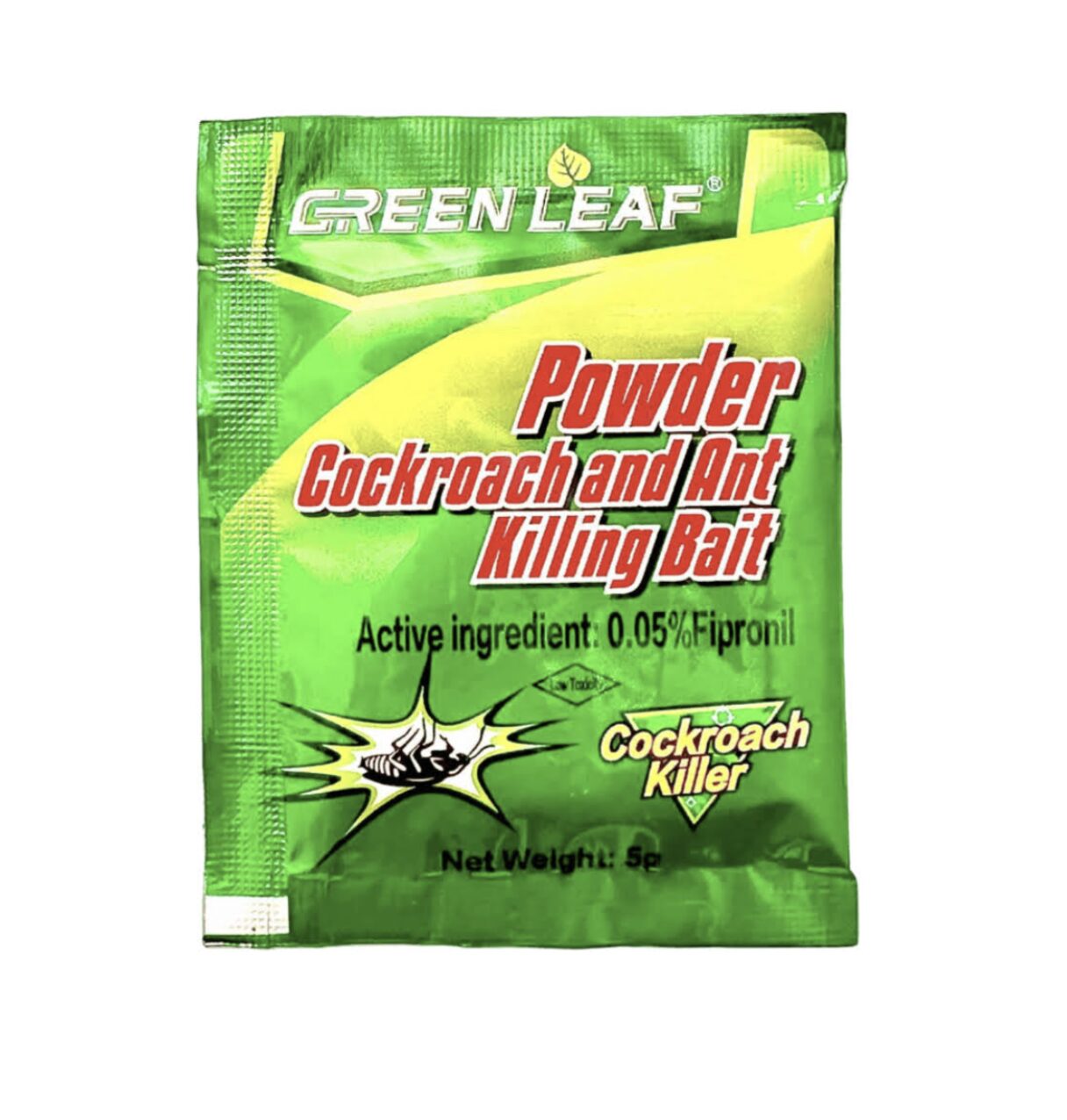
For years, pest control professionals have relied on high-performance gel baits like Advion Cockroach Gel Bait as the gold standard. However, an increasing number of homeowners and property managers are finding that German roaches are ignoring these once-potent treatments. This shift is driven by a biological phenomenon known as glucose-aversion, combined with the physical limitations of gel baits. Roaches walking past your placements? See the five real reasons in roach bait not working, then compare formats in our best roach killer powder guide.
Understanding German Roach Bait Aversion
Bait aversion is an evolutionary adaptation. In many populations of German cockroaches, individuals that possess a genetic aversion to glucose (the sweet binding agent used in most gel baits, including Advion) survive while their siblings eat the bait and die. Over time, the surviving glucose-averse cockroaches breed, resulting in a localized population that completely rejects sweet gel baits. If you notice roaches walking right past fresh gel drops, you are likely dealing with bait aversion.
The Gel Evaporation Problem
Even without genetic aversion, gel baits face a physical challenge: evaporation. Gel baits rely on moisture to attract roaches. In dry indoor air, especially near warm appliances, gel baits can dry out and harden in 48 to 72 hours. Once the moisture is gone, cockroaches lose interest. To maintain effectiveness, you have to constantly reapply fresh, messy gel drops, which can lead to unsightly staining in your kitchen drawers and cabinets.
Why Dry Powders Outlast and Outperform Gels
Dry powder baiting bypasses these vulnerabilities entirely. Instead of sweet glucose syrups, dry baits utilize complex proteins and fats that draw in even glucose-averse roaches. Furthermore, because a dry powder has no water content to lose, it never dries out, runs, or hardens. GreenLeaf RoachBuster features an active dry borate-based powder sealed inside specialized paper sachets. The sachets keep the active ingredient dry, clean, and highly appetizing for months. Pests simply chew through the paper, ingest the dry powder, and carry it back to the nesting center, decimating the colony without messy cleanups or frequent reapplication.
Next steps: how many sachets a full round actually takes, how to tell whether a treatment is working, and how powder, sprays and foggers differ.
Bait aversion is a real, documented phenomenon
German cockroach populations can become averse to baits, and it happens through two separate mechanisms that are often confused. The first is behavioural resistance to a specific attractant. Populations have been documented developing an aversion to glucose, the sugar used in many bait matrices, to the point where individuals actively reject it as if it tasted bitter. That trait is heritable, so it spreads through a population under selection pressure. The second mechanism is learned avoidance: if a bait kills too quickly, insects associate the location or the matrix with harm and the surviving population avoids it.
Both mechanisms have the same practical consequence. The bait sits untouched, the household concludes the product does not work, and the real problem is that the population will not eat that particular matrix.
How to tell aversion from a placement problem
| Observation | Likely aversion | Likely placement or competition problem |
|---|---|---|
| Bait untouched after two weeks, activity clearly present | Possible | Possible; check position first |
| Bait untouched but insects walking past it on monitors | Strong indication | Unlikely |
| Bait untouched and no activity on monitors either | No | Placement is in the wrong location |
| Bait partly consumed then abandoned | Learned avoidance, or matrix dried out | Check whether the placement is old or damp |
| Bait consumed rapidly in one location, ignored elsewhere | No | The ignored locations are not on travel routes |
| Bait ignored while pet food and crumbs are available | No | Competing food is the problem |
The first check is always placement and competition, because they explain far more failures than aversion does. Move placements onto smear-marked routes, remove pet food overnight, dry the sinks and re-check for a week before concluding anything about the matrix.
What to do if a population is genuinely averse
- Change the matrix, not just the brand. Two products with similar sugar-based matrices may fail identically. Switching to a different attractant base or a different format is the meaningful change.
- Reduce competing food to near zero. Aversion is relative. A matrix that is rejected while crumbs are available may be accepted when it is the only option.
- Increase the number of placements and the number of locations. Aversion varies between individuals within a population; more encounters means more uptake.
- Do not switch to a repellent spray out of frustration. This is the most common response and it makes the situation substantially worse, as our method comparison explains.
- Consider a slower-acting active. Slow action reduces the association between the bait and harm, which is the mechanism behind learned avoidance.
- Rotate matrices between rounds rather than using the same one indefinitely, which reduces the selection pressure that produces aversion in the first place.
Why format influences aversion risk
Two design features reduce the risk of both mechanisms. A slow-acting stomach toxicant does not produce a rapid death at the feeding site, so there is little for the population to associate with harm. And a matrix that is not built primarily around glucose is not selected against by glucose aversion. A dry sachet format adds a third, more practical advantage: because the material does not dry out or crust the way an exposed gel dot does, the failure mode of an old, unpalatable placement is much less common. None of this makes any product immune to aversion, and rotating matrices remains sensible practice, but it does explain why some formats hold up better in populations that have already been treated repeatedly.
Questions people ask
How common is glucose aversion?
It is well documented in German cockroach populations, particularly in locations with a long history of bait use, such as apartment blocks and commercial kitchens. It is not universal, and it is much less likely in a newly established household population.
Does aversion mean the insects are resistant to the insecticide?
No. Aversion is behavioural: they refuse to eat the bait. Metabolic resistance to the active ingredient is a separate issue.
How long should I wait before switching products?
Two weeks with correct placement and competing food removed. If monitors show traffic past untouched bait during that period, switch the matrix.
Can I use two different baits at once?
Yes, and in a difficult population it is a reasonable strategy, since it increases the chance that at least one matrix is accepted. Both should be non-repellent, and you should read both labels.
The short version
Aversion is real and comes in two forms: heritable rejection of an attractant such as glucose, and learned avoidance caused by fast-acting baits. Check placement and competing food first, then change the matrix rather than the brand, add placements, never switch to a repellent spray, and rotate matrices between rounds. A slow-acting dry sachet is a sensible matrix to rotate into, and it comes with a 30-day money-back guarantee.
Always use any product as directed on its label, and keep placements out of reach of children and pets. Formulations and labels differ between markets and change over time; read the label of the specific product you buy.
Treating an active infestation? One box treats one room, once. The 3-Box Kit — $120 (150 sachets, save $59.97) covers a full apartment through the complete 3-4 week treatment cycle; a $47 single box (50 sachets) covers a single-room problem. Ships within 1 business day, typical delivery 6-10 days · Free tracked shipping · 30-day money-back guarantee.
Choose your kit →