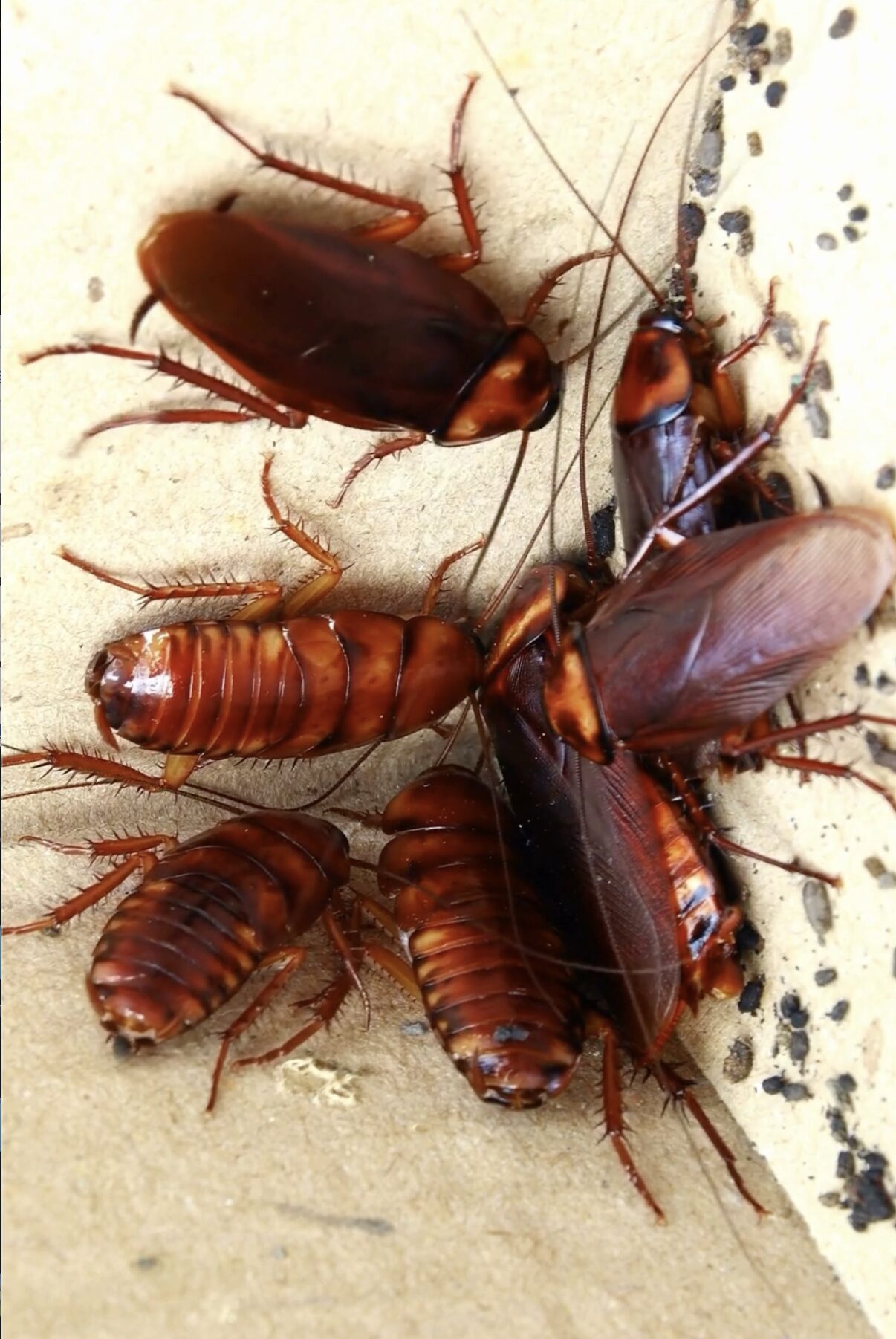
An active cockroach infestation does not just cause visual distress; it also leaves behind a distinct, musty chemical odor. This smell is caused by aggregation pheromones and natural oils secreted by the insects as they travel through nesting areas, and it can linger in cabinets and walls long after the pests are gone. See which low-mess formats actually perform in our best roach killer powder guide.
The Sources of Musty Pheromone Smells
Pests leave invisible scent trails to guide other members of the colony to water, food, and nesting sites. These oils are absorbed by porous surfaces like raw wood cabinets, drywall backing, and linen drawers. Standard household air fresheners only cover up the odor temporarily; proper decontamination is required.
A Clean, Non-Toxic Deodorizing Routine
To eliminate lingering odors, start by thoroughly vacuuming cabinet corners and crevices to remove physical debris. Wipe down hard surfaces using a natural, pet-safe solution of warm water, white vinegar, and a few drops of dish soap. Vinegar naturally neutralizes the oily pheromone scent without damaging fine cabinetry.
Preventing Odor Buildup with Dry Baits
Liquid chemical sprays can mix with cockroach pheromone oils, creating a sticky, unpleasant chemical odor. Choosing a dry active powder bait avoids this issue entirely. Dry bait sachets contain the active formula cleanly, keeping the area completely dry and odorless while preventing future pest nesting cycles.
The odour almost always sits alongside physical evidence. Our guide to identifying and safely cleaning cockroach droppings covers what to look for and how to remove it without spreading allergens.
Next steps: how to tell whether a treatment is working, what to do in the first 48 hours, and why roaches come back after treatment.
Where the smell actually comes from
The musty, oily smell associated with a cockroach population is not the insects themselves in any simple sense. It comes from aggregation pheromones deposited in droppings and body secretions, from the cuticle of dead insects and shed skins accumulating in voids, and from the organic film that builds up in harbourage. Because the source is a deposit rather than an airborne emission, air fresheners and open windows do essentially nothing. The smell persists as long as the deposit does, and it can persist for weeks after the population is gone.
That has one very practical consequence. If a cabinet still smells after successful treatment, you have a cleaning problem, not a treatment failure. And if the smell keeps coming back after cleaning, you have an undiscovered harbourage rather than a cleaning failure.
The deodorising sequence that works
- Treat first, clean second. Cleaning an active harbourage removes the deposit and the population replaces it within days.
- Empty the affected cabinet or void completely. Take out shelving and drawer units if they lift out.
- Vacuum with a crevice tool. Droppings, skins and egg cases are physical debris and vacuuming removes far more of the odour source than wiping does. Dispose of the vacuum contents outside immediately.
- Wash with detergent and warm water. Detergent lifts the oily residue that carries most of the smell. This is the step that actually works.
- Follow with an enzyme cleaner on porous surfaces. Enzyme products break down the organic residue that detergent leaves behind on particleboard, unsealed timber and grout.
- Dry thoroughly, then leave a passive absorber. An open container of bicarbonate of soda or activated charcoal in a closed cabinet for a week absorbs what remains.
- Re-place bait before you refill the cabinet. Put the placements back in position first, then restock.
Surface by surface
| Surface | Approach | Avoid |
|---|---|---|
| Melamine and laminate cabinet interiors | Detergent, then enzyme cleaner, dry fully | Bleach; it discolours and does not remove oil |
| Unsealed particleboard | Enzyme cleaner sparingly, dry thoroughly, consider sealing afterwards | Soaking; the board swells permanently |
| Grout and tile joints | Detergent then enzyme, brush along the joint | Acidic cleaners on cement grout |
| Painted walls | Detergent on a damp cloth, spot repaint if staining remains | Scrubbing through the paint film |
| Appliance cavities | Vacuum, then detergent on cooled surfaces | Any liquid near electrical connections |
| Fabric and cushions | Vacuum, launder if possible, otherwise professional clean | Masking sprays |
| Cardboard and paper storage | Discard and replace with plastic | Trying to clean it |
When the smell means something worse
A smell that persists after thorough cleaning of every accessible surface usually points at an inaccessible harbourage. The most common are the void behind a bath panel, the underside of a kitchen carcase where it meets the wall, a wall cavity behind a dishwasher, the compressor bay of a fridge, an accumulation of dead insects inside a boxed-in pipe run, and the cavity above a ceiling under a bathroom. In each case the solution is access: remove the panel, pull the appliance, open the boxing. If you cannot get access, put placements as close to the suspected void as you can reach and be patient, because the odour will fade only as the deposit dries out. Our guide to reading progress helps you distinguish a fading residual smell from continuing activity.
Questions people ask
Will an ozone generator or fogger clear the smell?
Neither removes the deposit that is producing the smell, and both have their own drawbacks in occupied spaces. Physical removal by vacuuming and detergent washing is what works.
How long should the smell take to go?
After treatment and a proper clean, expect a clear improvement within a day and near elimination within one to two weeks as residual deposits in inaccessible voids dry out.
Does the smell mean a large population?
A noticeable smell in a normal-sized kitchen generally indicates an established rather than a new population, because the deposit takes time to accumulate. Treat it as a signal to place densely, using our coverage guide.
Can the smell come back without insects returning?
It can appear to, if warm humid weather reactivates residue in a void you could not reach. If it returns strongly and repeatedly, assume live activity and re-inspect.
The short version
The smell is a deposit, not an emission, so treat first, then vacuum, then wash with detergent, then use an enzyme cleaner on porous surfaces, dry, and leave bicarbonate or charcoal in the closed cabinet for a week. A smell that survives all that means an inaccessible harbourage; get access to it. One box provides the placements for the treatment side, with a 30-day money-back guarantee.
Always use any bait product as directed on its label, and keep placements out of reach of children and pets.
Treating an active infestation? One box treats one room, once. The 3-Box Kit — $120 (150 sachets, save $59.97) covers a full apartment through the complete 3-4 week treatment cycle; a $47 single box (50 sachets) covers a single-room problem. Ships within 1 business day, typical delivery 6-10 days · Free tracked shipping · 30-day money-back guarantee.
Choose your kit →